
A lesson rarely falls apart all at once. It wears down gradually—a call-out during a read-aloud, a student approaching the teacher mid-explanation, or another child announcing a need loudly enough that half the room looks up.
Individually, none of these moments seems especially disruptive. Added together across a school day, however, they can interrupt the pace and focus a teacher has worked hard to establish.
Classroom hand signals offer students an approved, silent way to communicate common needs and quick responses. Instead of expecting young children to hold every request until a convenient moment, teachers can give them a clear routine for expressing it without interrupting instruction.
The system is simple: a student uses an agreed-upon signal, the teacher acknowledges it, and the lesson continues. Over time, this can support a calmer classroom environment while giving students regular opportunities to manage their own small decisions.
Table of Contents
- What Are Classroom Hand Signals?
- Why Classroom Hand Signals Work
- Why Use a Set of 10 Hand Signals?
- Quick Reference Table
- The 10 Essential Classroom Hand Signals
- How to Teach Classroom Hand Signals
- Common Mistakes to Avoid
- Frequently Asked Questions
- Printable Classroom Hand Signals
- Final Thoughts
What Are Classroom Hand Signals?
Classroom hand signals are simple, agreed-upon gestures that students use instead of speaking to communicate a need or give a quick response.
Rather than calling out or waiting to explain a request verbally, a student uses the appropriate signal. The teacher can then acknowledge it with a glance, nod, or another quiet response without breaking the flow of the lesson.
The exact gestures used can vary between classrooms. Some schools use the same system across several grade levels, while others allow each teacher to choose the signals that suit their students and routines.
The most important part is not the specific motion. It is consistency. Once a signal has been introduced, it should continue to carry the same meaning so that students know exactly what is expected.
Visual and repeatable routines can be particularly helpful for younger learners. Preschool and kindergarten students are still developing the language, patience, and self-regulation needed to wait for an appropriate moment and phrase a request quietly.
A familiar signal gives students a concrete action to use. It reduces the number of words they need in the moment and provides a predictable way to ask for what they need.
Consider a kindergarten writing block. Without an established system, a student who needs a tissue may announce it loudly or approach the teacher while instructions are being given. With a signal in place, the student can communicate the same need silently, receive acknowledgment, and take care of it without drawing the rest of the class away from the activity.
Why Classroom Hand Signals Work
Classroom hand signals are useful because they create a predictable process for handling requests that occur repeatedly throughout the day.
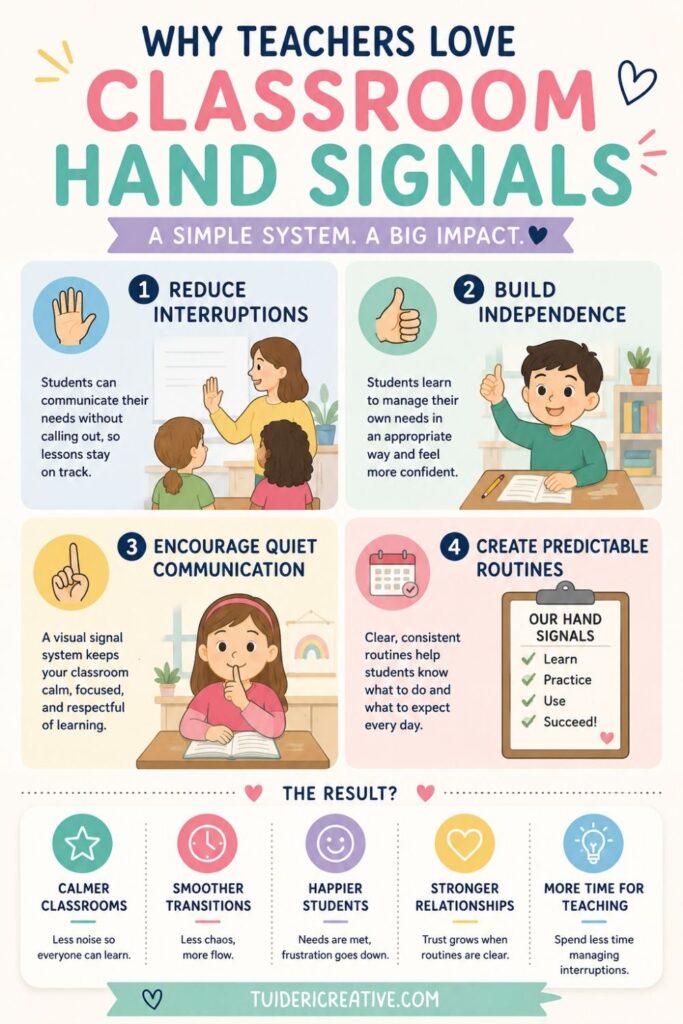
They can reduce verbal interruptions
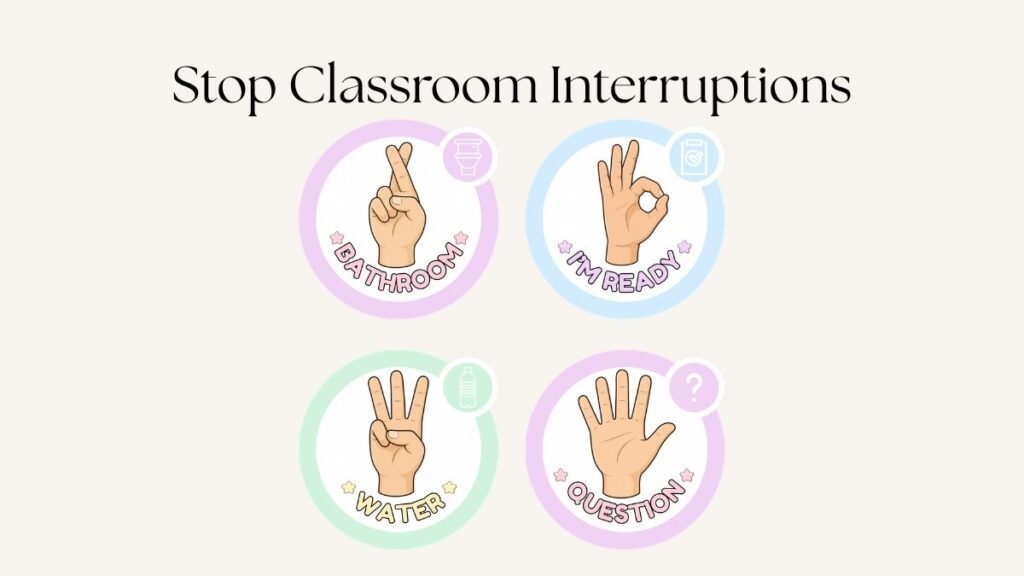
Requests for water, tissues, pencils, and bathroom breaks are reasonable, but they do not always require a full spoken exchange. A signal allows the teacher to respond without stopping an explanation or redirecting the attention of the entire class.
They can support a calmer learning environment
When fewer small requests are spoken aloud, there is less verbal noise competing with instruction. This does not mean the room must be silent. It simply means that routine needs can be handled without becoming whole-class events.
They create clearer classroom routines
Students are more likely to follow a procedure when they know exactly what to do. A signal system replaces uncertainty with a consistent sequence: use the signal, wait for acknowledgment, and follow the classroom expectation.
They encourage student independence
A student who remembers and uses the correct signal is taking responsibility for communicating a need appropriately. The student does not have to wait for the teacher to notice or solve the problem without guidance.
Predictable routines can help young children feel secure and develop a growing sense of mastery over their environment. The National Association for the Education of Young Children discusses how predictable routines can support children’s sense of safety and confidence.
They reduce unnecessary attention switching
Every interruption asks a teacher to shift attention away from the current lesson, assess the request, respond, and then return to the original thought. A familiar signal system can make those exchanges faster and less intrusive.
They allow more students to participate
Signals such as Yes, No, and Me Too give every student an immediate way to respond. This can be especially helpful for children who are reluctant to speak in front of the class but still want to take part in a discussion.
Quick Tip
If several students make the same request at once, acknowledge the signals and allow students to take turns. This keeps movement manageable without encouraging additional call-outs.
Why Use a Set of 10 Hand Signals?
It can be tempting to create a signal for every situation that might occur during the school day. A very large system, however, may become difficult for young learners to remember and use consistently.
Students are already learning many routines during the first weeks of school. They are remembering names, classroom areas, daily schedules, lining-up procedures, behavior expectations, and new academic instructions.
Keeping the signal system focused gives students fewer new associations to learn at once. A set of ten offers enough variety to cover common classroom needs and responses while remaining manageable for young learners.
The goal is not to create a gesture for every possible situation. It is to establish a practical group of signals that students will actually remember and use.
Quick Reference Table
| Signal | Purpose | When It Is Most Useful |
|---|---|---|
| Water | Requesting a drink | During independent work or brief transitions |
| Question | Indicating an academic question | During whole-group instruction |
| I’m Ready | Showing that a task is complete | During independent work and early-finisher time |
| No | Giving a quick negative response | During questions and comprehension checks |
| Trash | Requesting permission to use the trash can | During work time or after snack |
| Me Too | Showing a shared experience or opinion | During morning meeting or class discussions |
| Tissue | Requesting a tissue | At any point during the day |
| Pencil | Indicating a pencil problem | During independent or partner work |
| Bathroom | Requesting permission to use the restroom | Whenever the need arises |
| Yes | Giving a quick affirmative response | During questions and comprehension checks |
The 10 Essential Classroom Hand Signals
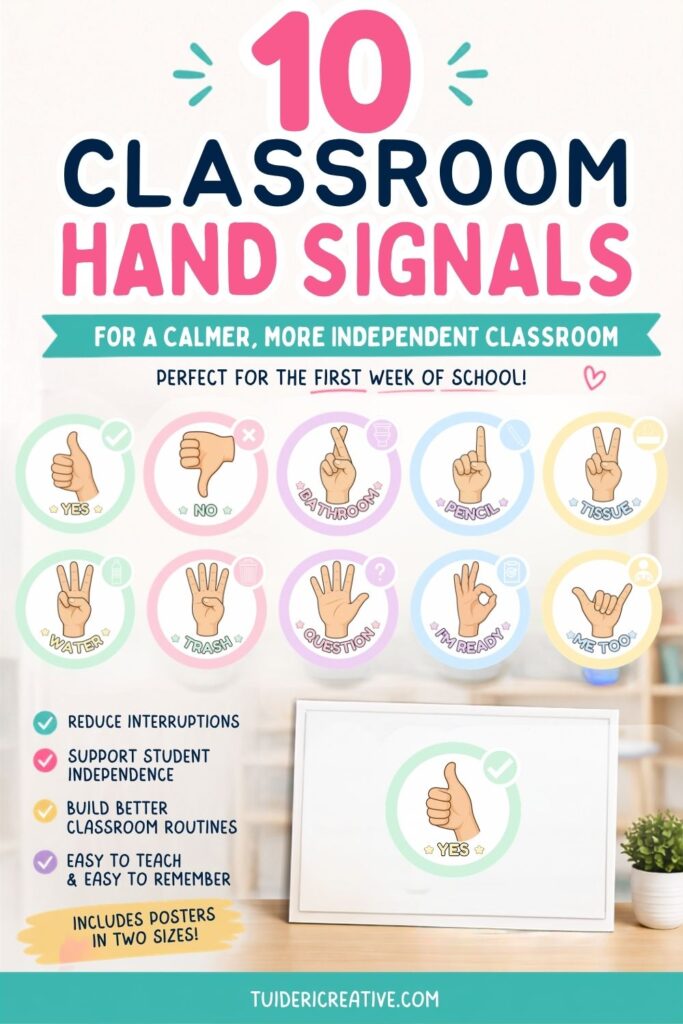
Each of these ten signals addresses a need or response that may occur regularly in preschool, kindergarten, or elementary classrooms.
The gestures themselves may differ between classrooms. What matters is that each signal is easy to recognize, clearly different from the others, and used consistently after it has been introduced.
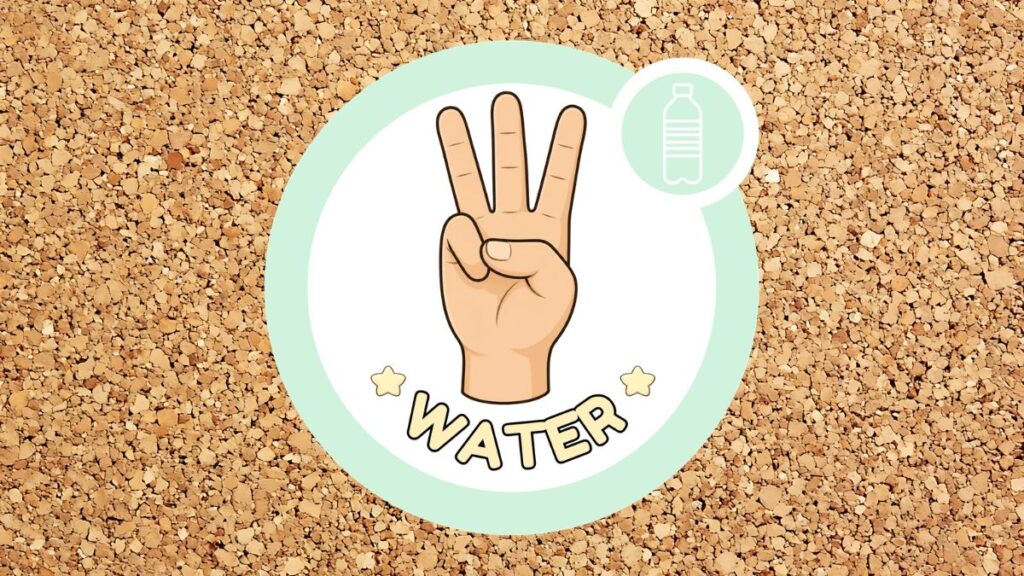
1. Water
What it communicates: The student would like a drink of water.
Why it is useful: A water signal handles a simple physical need without requiring a spoken exchange. The teacher can acknowledge the request while continuing to supervise or teach.
When students use it: It may be most suitable during independent work, centers, or brief transitions. Individual classroom expectations can determine whether students leave for water during direct instruction.
Classroom example: During quiet reading time, a student signals for water. The teacher acknowledges the request, and the student follows the established classroom procedure without disturbing nearby classmates.
2. Question
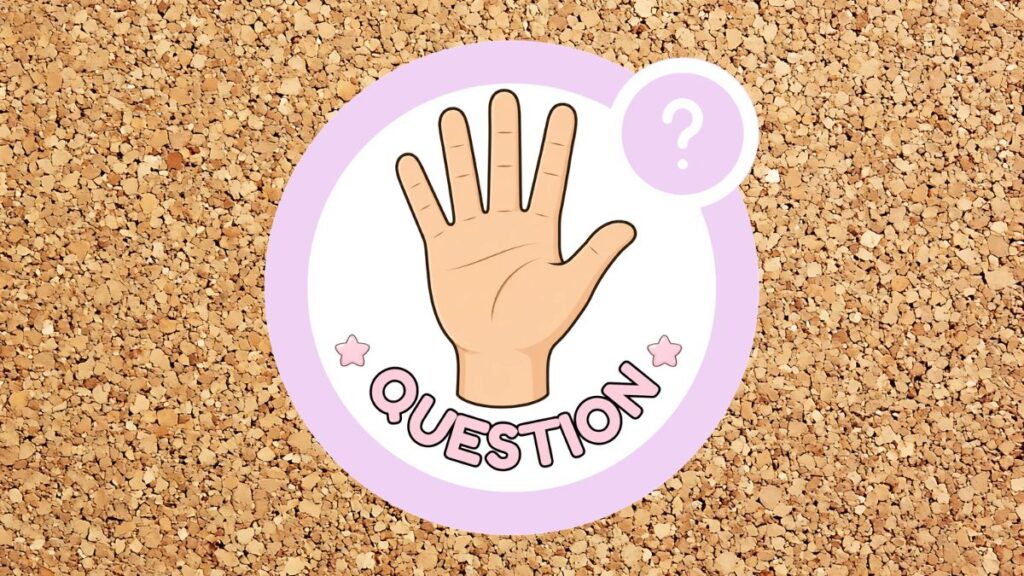
What it communicates: The student has a question connected to the lesson or current activity.
Why it is useful: A dedicated question signal distinguishes an academic question from a request for water, a tissue, or another personal need. The teacher can see what type of response is needed before calling on the student.
When students use it: It is particularly helpful during whole-group lessons, demonstrations, and explanations.
Classroom example: During a math lesson, a student signals a question. The teacher finishes the current explanation and then invites the student to speak before moving to the next step.
3. I’m Ready
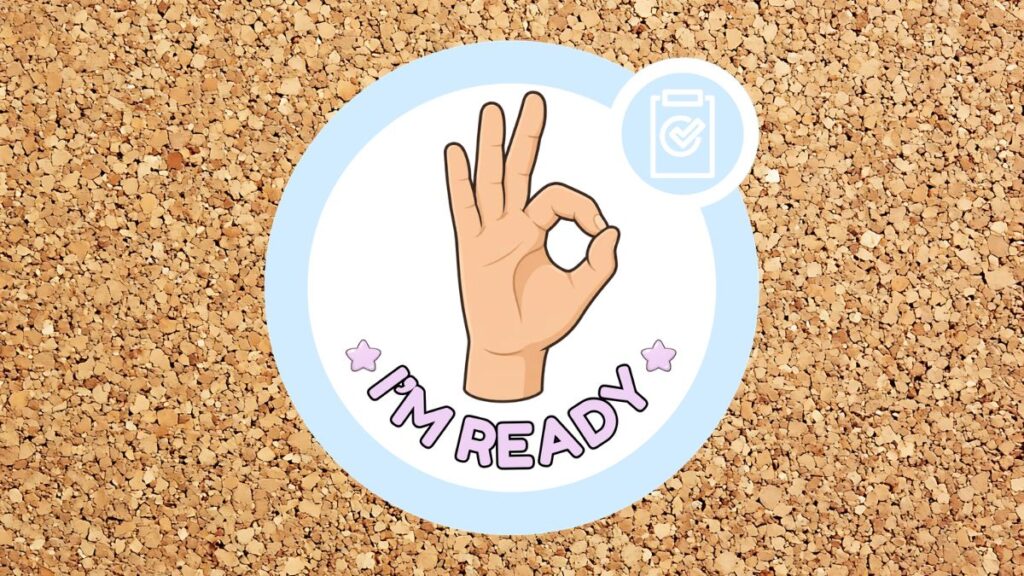
What it communicates: The student has completed the assigned task and is ready for the next instruction or activity.
Why it is useful: Completion times can vary considerably during independent work. Without a routine, early finishers may call out, approach the teacher, or repeatedly ask what to do next.
An I’m Ready signal gives students a quiet way to show that they have finished. It also allows the teacher to identify waiting students without interrupting classmates who are still working.
The signal can be paired with an established early-finisher routine. Depending on the classroom, students might begin a quiet extension activity, select a book, check their work, or wait for the teacher’s direction.
When students use it: It works especially well during independent worksheets, writing tasks, centers, assessments, and activities with varied completion times.
Classroom example: A student completes a phonics activity several minutes before most classmates and signals readiness. The teacher quietly directs the student to the designated early-finisher activity while the rest of the group continues working.
4. No
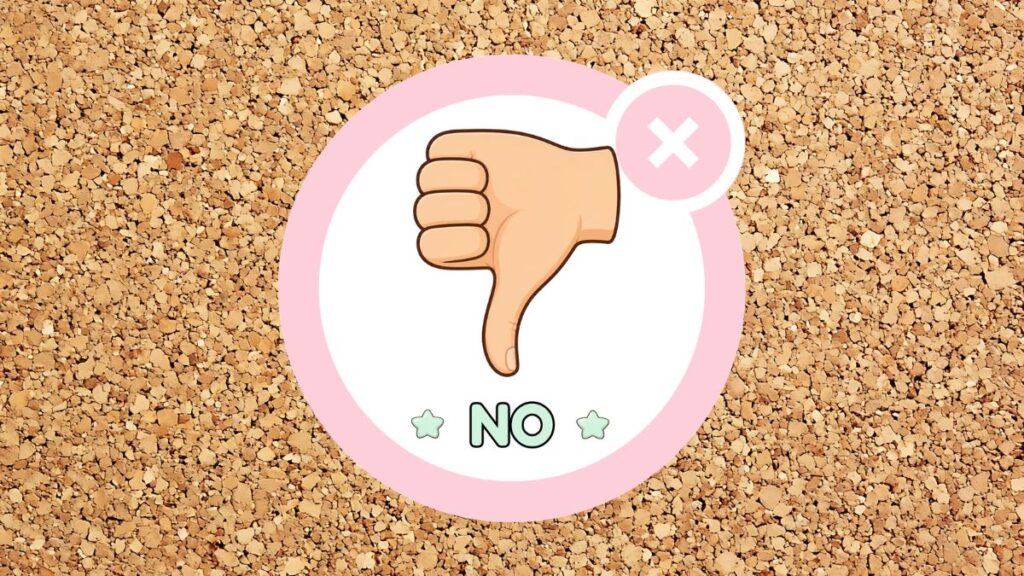
What it communicates: The student is giving a negative response to a yes-or-no question.
Why it is useful: A silent response allows the teacher to see how the whole group answers without calling on students individually or creating a chorus of voices.
When students use it: It can be used during quick opinion questions, comprehension checks, story discussions, or routine class check-ins.
Classroom example: After a read-aloud, the teacher asks whether a character made a fair choice. Students use the appropriate response signal, giving the teacher a quick overview before the discussion continues.
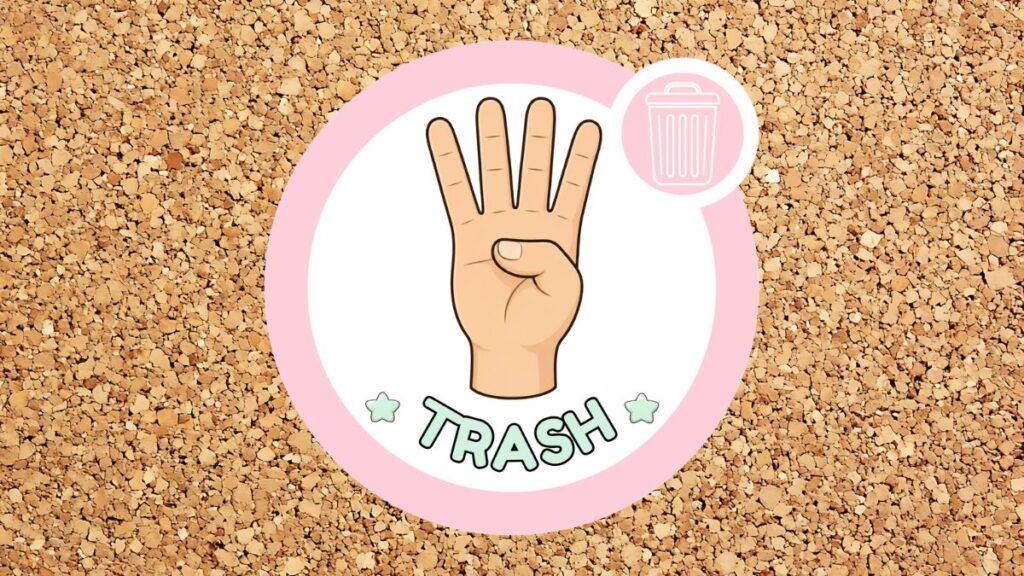
5. Trash
What it communicates: The student would like permission to throw something away.
Why it is useful: A trash signal creates a clear expectation for leaving a seat. Instead of getting up unexpectedly or interrupting to ask, the student follows the established routine.
When students use it: It may be useful during independent work, craft activities, snack, or cleanup.
Classroom example: A student finishes a cutting activity and needs to discard paper scraps. The student signals, waits for acknowledgment, and makes a brief trip to the trash can.
6. Me Too
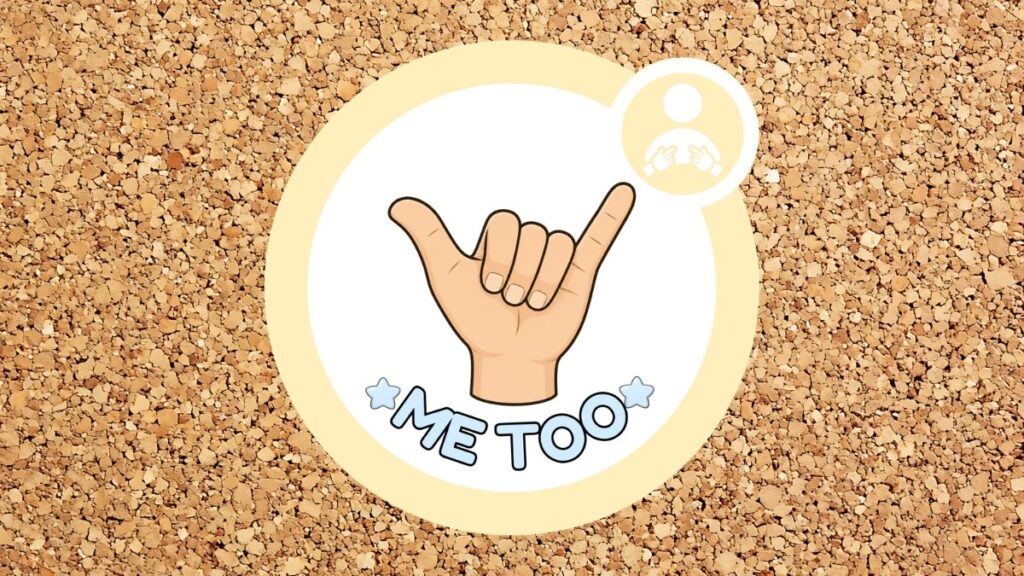
What it communicates: The student shares the same experience, answer, or opinion as the person speaking.
Why it is useful: During sharing time, several students may want to repeat the same idea. A Me Too signal lets them participate without extending the discussion with nearly identical responses.
It also gives quieter students a simple way to make a social connection and show that they are listening.
When students use it: It is useful during morning meeting, sharing circles, read-aloud discussions, and community-building activities.
Classroom example: One student shares that they visited a park over the weekend. Several classmates use the Me Too signal rather than raising their hands to repeat the same detail.
7. Tissue
What it communicates: The student needs a tissue.
Why it is useful: This handles a routine personal need quietly and can prevent the student from drawing unnecessary attention to it.
When students use it: It can be used at any point during the school day, following the teacher’s expectations about movement during instruction.
Classroom example: A student signals during a lesson. The teacher acknowledges the request and indicates the tissue area without pausing the activity.

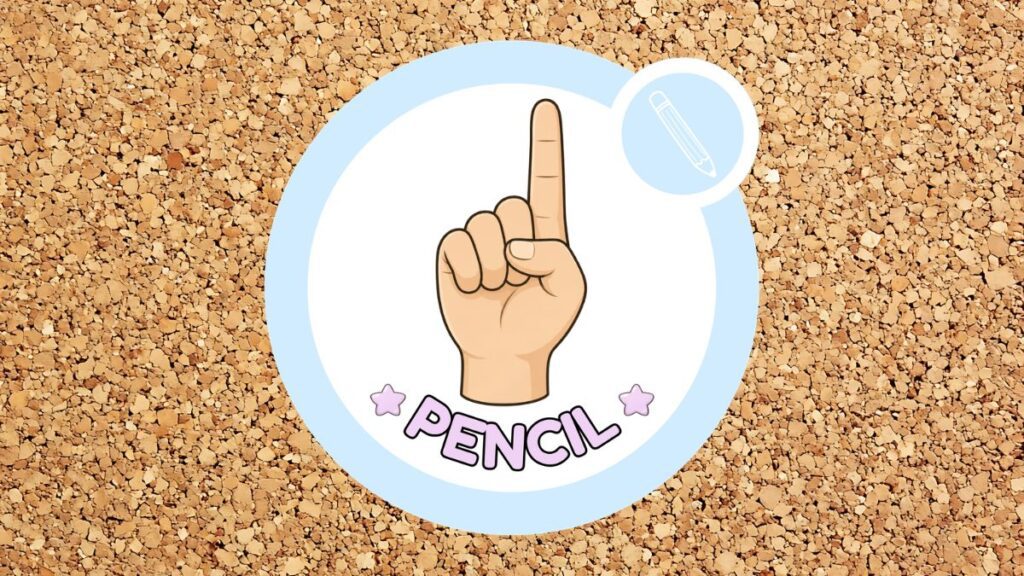
8. Pencil
What it communicates: The student has a broken, dull, or missing pencil.
Why it is useful: Pencil problems can interrupt writing and seatwork. A dedicated signal allows the teacher to direct the student toward a spare pencil or another classroom procedure without beginning a verbal conversation.
When students use it: It is most useful during writing, independent assignments, partner activities, or assessments.
Classroom example: A student signals during a writing activity. The teacher points toward the classroom’s supply of sharpened pencils, allowing the student to exchange it and continue working.
9. Bathroom
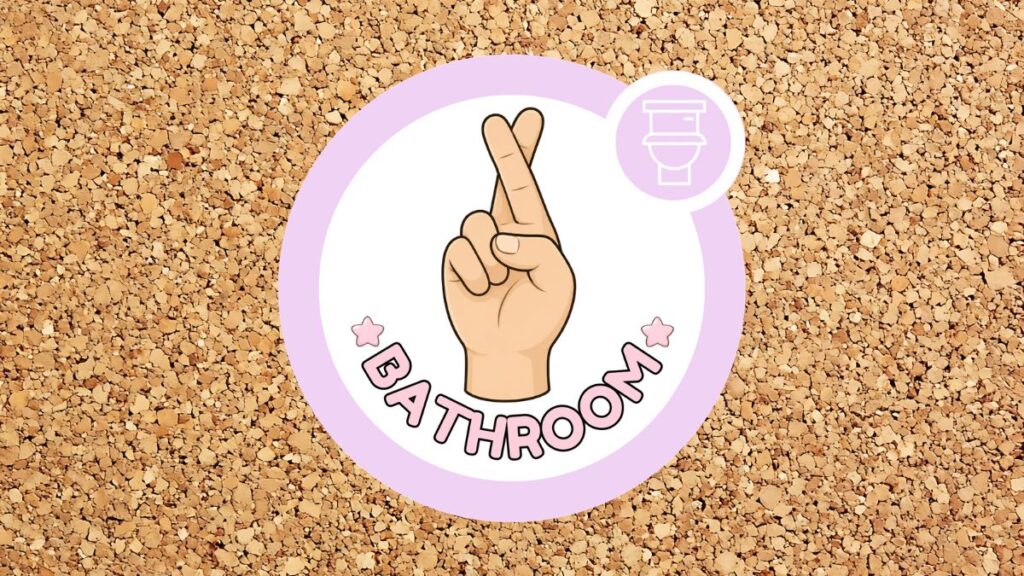
What it communicates: The student needs to use the restroom.
Why it is useful: Bathroom needs are not always predictable. A clear signal lets the student communicate the request quickly and discreetly.
The signal should be paired with the school’s supervision and restroom policies. Students also need to know whether they should wait for acknowledgment, take a hall pass, or follow another procedure.
When students use it: Students can use it whenever the need arises, according to the classroom’s established expectations.
Classroom example: During shared reading, a student signals a bathroom request. The teacher acknowledges it without interrupting the story, and the student follows the classroom’s restroom routine.
10. Yes
What it communicates: The student is giving an affirmative response to a question.
Why it is useful: A class-wide response lets the teacher gather quick information without calling on each student individually.
It may also encourage broader participation because every student can respond at the same time.
When students use it: It can be used during comprehension checks, opinion questions, classroom decisions, or checks for understanding.
Classroom example: Before beginning an activity, the teacher asks whether students understand the directions. Students respond with the appropriate signal, allowing the teacher to decide whether clarification is needed.

How to Teach Classroom Hand Signals During the First Week
Classroom hand signals work best when they are taught as deliberately as any other classroom routine. Posting the signs is helpful, but students also need modeling, practice, and consistent feedback.
Begin with the most frequently needed signals
Introducing all ten signals in one lesson may make them harder to remember. Begin with a small group of high-priority signals, such as bathroom, water, question, and yes or no.
Additional signals can be introduced gradually as the first group becomes familiar.
Model each signal and the complete routine
Students need to see more than the gesture itself. Demonstrate what should happen before, during, and after using it.
For example, teach students to make the signal, wait quietly for acknowledgment, and then follow the classroom procedure. This prevents the gesture from becoming a replacement for calling out while still expecting an immediate response.
Use short role-play scenarios
Give students simple situations and ask them to show the appropriate response:
- “Your pencil breaks during writing time. What should you do?”
- “You finish your work before the timer ends. Which signal could you use?”
- “You have a question about the directions. How can you let the teacher know?”
Responsive Classroom recommends explicitly teaching routines by naming expectations, demonstrating the behavior, and giving children opportunities to practice. Its guidance on teaching transitions illustrates this model-and-practice approach.
Practice briefly but consistently
A few minutes of practice on several different days is more useful than one long introduction. Repetition allows students to recall the signals more easily when they genuinely need them.
Use visual reminders
Place the posters where students can see them from the areas in which the signals will be used. This might be beside the classroom rug, near a whiteboard, beside the door, or in an independent-work area.
A visual display lets students check the routine themselves instead of immediately asking the teacher.
Acknowledge correct use
Specific, calm feedback helps students understand exactly what they did successfully. For example:
“You used the question signal and waited quietly. That helped everyone keep listening.”
The goal is not to reward every signal indefinitely. Early acknowledgment simply reinforces the routine while students are learning it.
Respond consistently
If students use a signal correctly but repeatedly receive no acknowledgment, they may return to verbal interruptions. Teachers can establish a simple response system, such as a nod for approval or a quiet indication that the student should wait.
Quick Tip
Introduce one or two new signals at a time. Add the next ones after students can recognize and use the earlier signals without frequent reminders.
Common Mistakes to Avoid
Introducing every signal at once
A complete set may look simple to an adult, but each signal represents a new rule for students to remember. Introduce the system in smaller groups and provide time for practice.
Displaying signs without teaching the routine
Posters are reminders, not a substitute for instruction. Students still need to learn what each signal means, when to use it, how to wait for acknowledgment, and what happens next.
Responding inconsistently
If a signal is accepted on one day but ignored on another, students may become unsure whether the routine is still expected. Consistent teacher responses help the system remain predictable.
Changing gestures unnecessarily
Once students have learned a signal, changing it may create avoidable confusion. Keep the system stable unless there is a clear accessibility or practical reason to adapt it.
Expecting immediate mastery
Young children will forget new routines. A quiet prompt or a gesture toward the visual display is usually more helpful than treating a forgotten signal as deliberate misbehavior.
Using signals for every kind of communication
Hand signals should support classroom discussion, not eliminate it. Students still need opportunities to ask questions aloud, explain ideas, tell stories, and engage in meaningful conversation.
Frequently Asked Questions
Do classroom hand signals work in kindergarten?
They can work particularly well in kindergarten because they combine visual cues, physical actions, and repetition. The signals should be introduced gradually and paired with clear modeling.
Can preschool students use classroom hand signals?
Many preschool students can learn a small group of simple signals. Beginning with only the most useful requests and practicing them through role-play can make the system more manageable.
Should older elementary students use them?
Older students may benefit from a simplified system. Signals for bathroom, water, questions, readiness, and quick yes-or-no responses can still reduce unnecessary interruptions.
How long does it take students to learn the signals?
There is no single timetable that applies to every class. Familiarity depends on students’ ages, the number of signals introduced, how often they are practiced, and how consistently adults respond.
Teachers can continue adding signals gradually rather than waiting for the entire class to reach perfect mastery.
Should students still raise their hands?
Yes. Classroom hand signals are designed for specific requests and quick responses. Raising a hand can still be used when a student wants to contribute an idea, answer an open-ended question, or participate in a discussion.
What if students forget which signal to use?
Pointing to the relevant poster or briefly modeling the signal provides a quiet reminder. As the routine becomes more familiar, students should need fewer prompts.
What if a student cannot use the displayed gesture?
The system should be adapted so that it is accessible to every student. A child may use a modified gesture, a visual card, an assistive communication method, or another agreed-upon signal that communicates the same need.
Printable Classroom Hand Signals
A visual reference can make a new signal system easier to teach and easier for students to remember.
Displaying the same illustrations and labels throughout the classroom creates a consistent point of reference. When students forget a signal, they can look at the display instead of interrupting to ask what to do.
A ready-made printable resource can also reduce back-to-school preparation time. There is no need to design ten separate visuals, format the text, or create matching classroom displays from scratch.
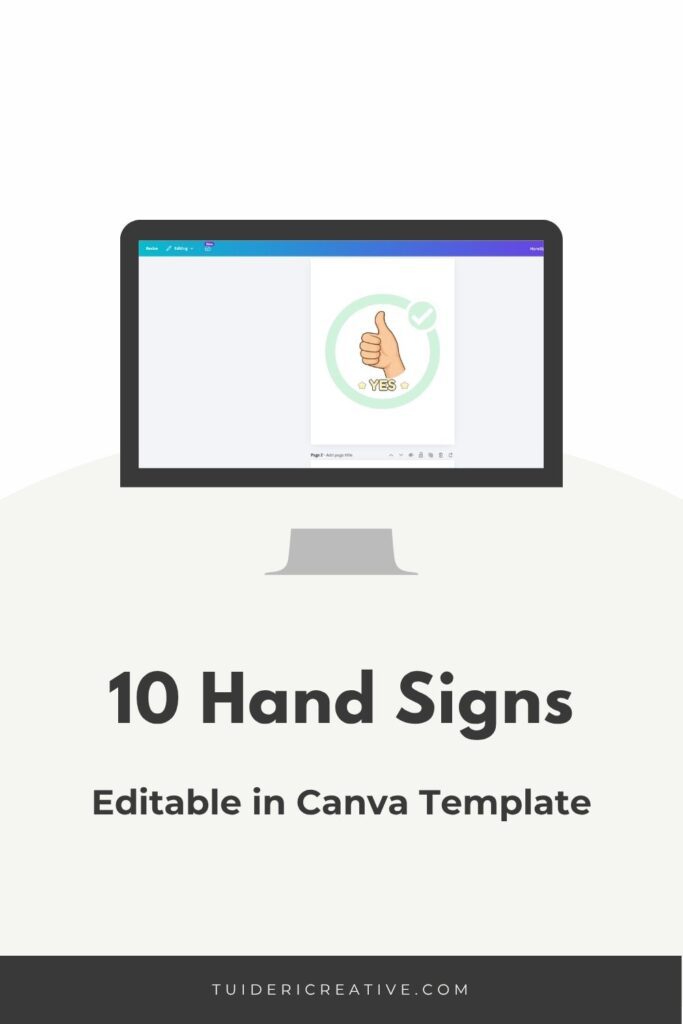
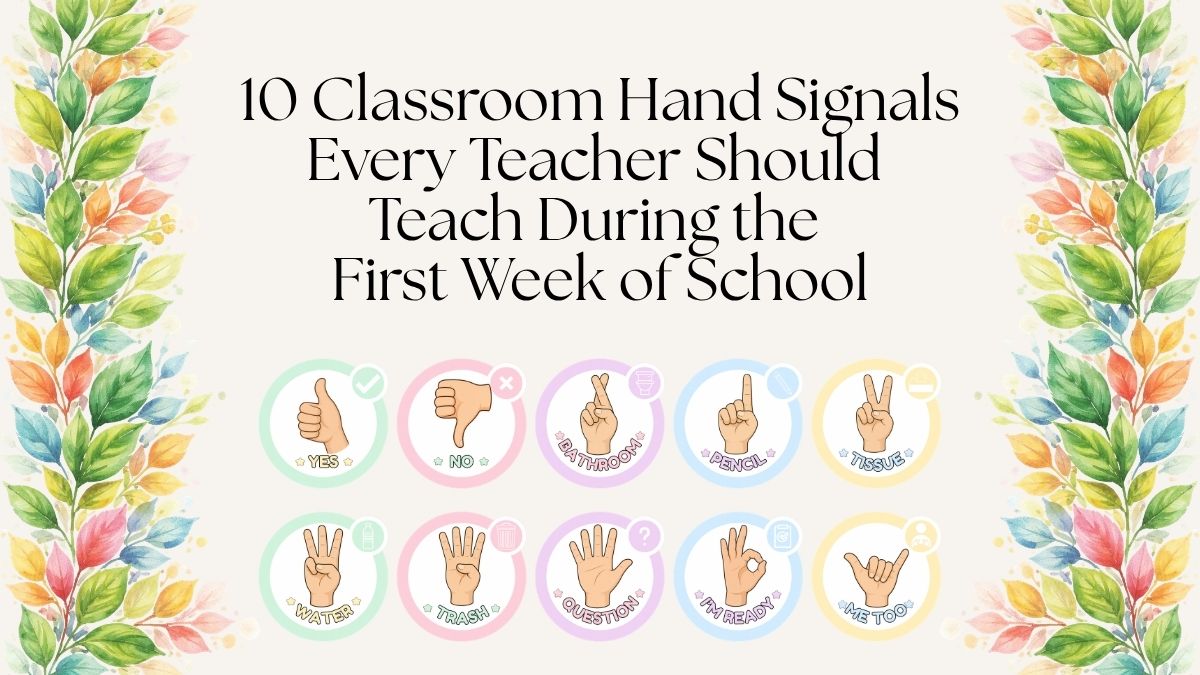
The editable Classroom Hand Signals set featured here includes all ten signals discussed in this article:
- Water
- Question
- I’m Ready
- No
- Trash
- Me Too
- Tissue
- Pencil
- Bathroom
- Yes
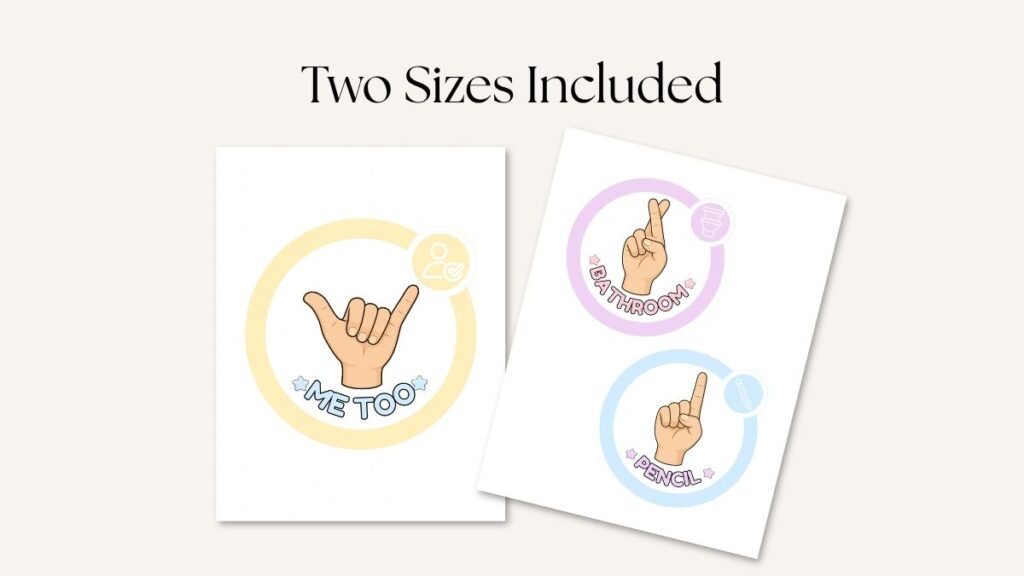
The resource includes two sizes, allowing teachers to choose larger signs for a classroom display or smaller versions for areas such as a door, table, bulletin board, or small-group space. Because the signs are editable, teachers can adapt the wording to better match their existing classroom routines.
Explore the Editable Classroom Hand Signals Set
Final Thoughts
Classroom hand signals are not intended to prevent students from communicating. They give students a clearer, quieter way to handle the brief requests and responses that occur repeatedly throughout the school day.
A focused set of signals can reduce unnecessary interruptions, make routines more predictable, and give young learners additional opportunities to communicate independently.
Consistency matters more than perfection during the first weeks of school. Begin with a few useful signals, model the complete routine, allow time for practice, and add the remaining signs gradually.
Once the system becomes familiar, those small silent exchanges can help lessons continue with fewer pauses while still ensuring that students’ needs are seen and acknowledged.
Leave a Reply
You must be logged in to post a comment.