
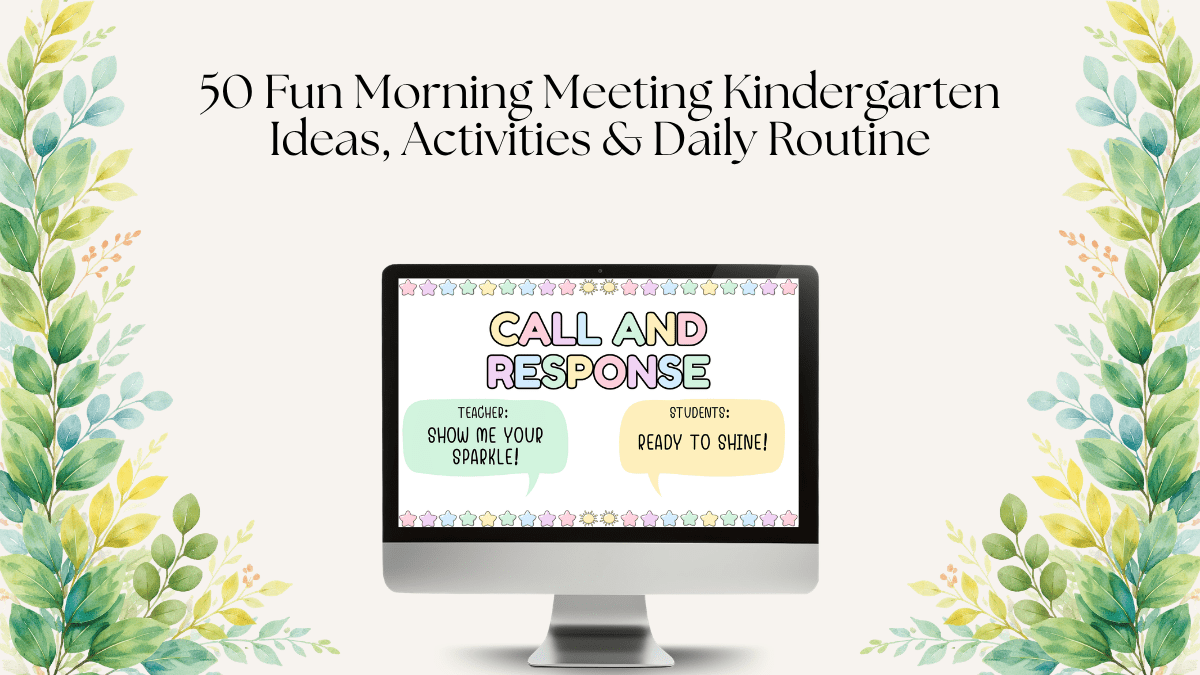
The first 15 minutes of the school day set the tone for everything that follows. For five- and six-year-olds walking in with backpacks full of stuffed animals, half-finished breakfasts, and big feelings about leaving mom or dad, that transition matters more than most schedules give it credit for.
A morning meeting kindergarten routine is how experienced teachers turn that chaotic arrival window into a calm, predictable start. It’s not extra fluff on top of your day — it’s the foundation that makes the rest of your instruction run smoother.
This guide covers everything you need: what a kindergarten morning meeting actually is, why it works, a ready-to-use 15-minute schedule, 50 activity ideas, and how digital slides can take the daily prep off your plate.
What Is a Morning Meeting in Kindergarten?
A kindergarten morning meeting is a short, structured gathering at the start of the school day where the whole class comes together — usually on a rug or in a circle — to greet each other, share, move, and preview the day ahead.
The format comes from the Responsive Classroom model, built around four core components:
- Greeting – Students greet each other by name, building a sense of belonging from the first minute.
- Sharing – A brief, low-pressure chance for kids to talk or respond to a simple prompt.
- Group activity – A song, game, or movement break that gets everyone engaged together.
- Morning message – A short, predictable message that previews what’s happening that day.
For kindergarten, this structure gets simplified and made highly visual. Most students are still emerging readers, so successful circle time activities for kindergarten lean on pictures, songs, and movement rather than text-heavy discussion. A five-year-old doesn’t need to read the morning message independently — they need to see it, hear it, and join in.
This is also why morning meeting works so well as part of broader kindergarten classroom routines. Young children thrive on repetition. Knowing exactly what happens first, second, and third each morning reduces anxiety and frees up mental space for actual learning.
Benefits of a Daily Morning Meeting Kindergarten Routine
A daily morning meeting routine does a lot with very little time. Here’s what it actually builds:
Classroom community. Daily greetings help every child feel seen and known by name, which matters enormously in a class of 20+ five-year-olds.
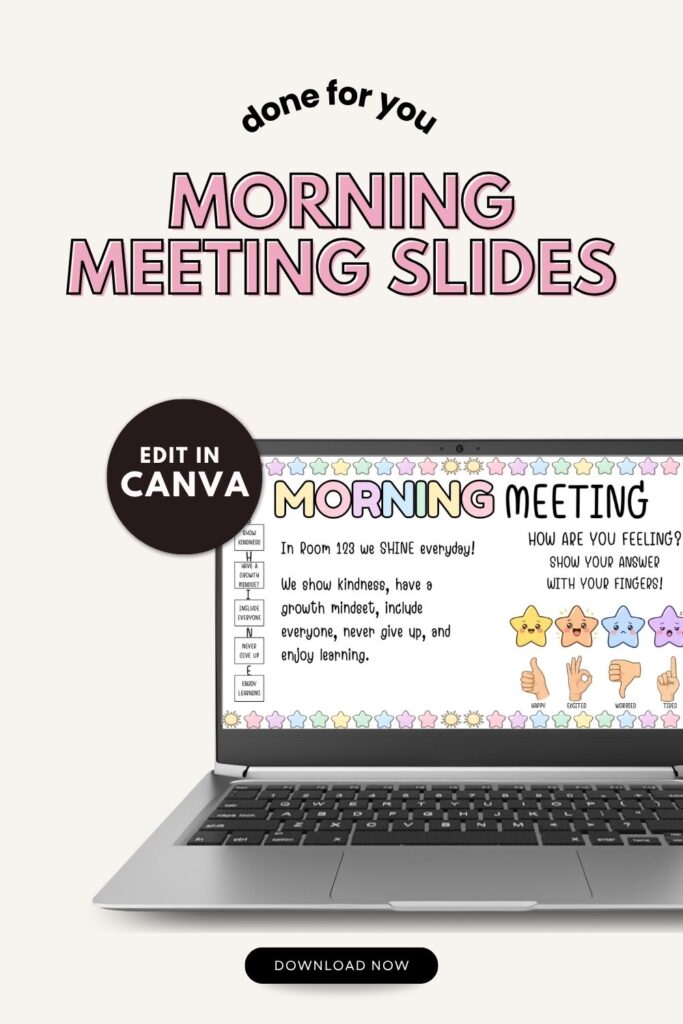
Social-emotional learning. Sharing time and mood check-ins give kids practice naming feelings and listening to others — core SEL skills built into Responsive Classroom and most SEL curricula.
Classroom management. A consistent opening routine reduces the chaos of arrival time. Kids know where to go and what to do, which means fewer behavior redirections before the day even starts. Look also this Back to School Slideshow.
Language development. Sharing time gives every child low-stakes practice speaking in front of a group, while morning messages reinforce sight words and sentence structure.
Smoother transitions. Classes with a strong morning meeting routine often transition faster into literacy and math blocks, since the “settling in” work already happened.
Academic skills. Calendar, weather, counting, and letter-of-the-day components quietly reinforce number sense, patterns, and early literacy — all before your official instruction even begins.
What Happens During a Kindergarten Morning Meeting?
A typical kindergarten morning meeting includes:
- Greeting – Students greet each other by name with a wave, high five, or simple phrase.
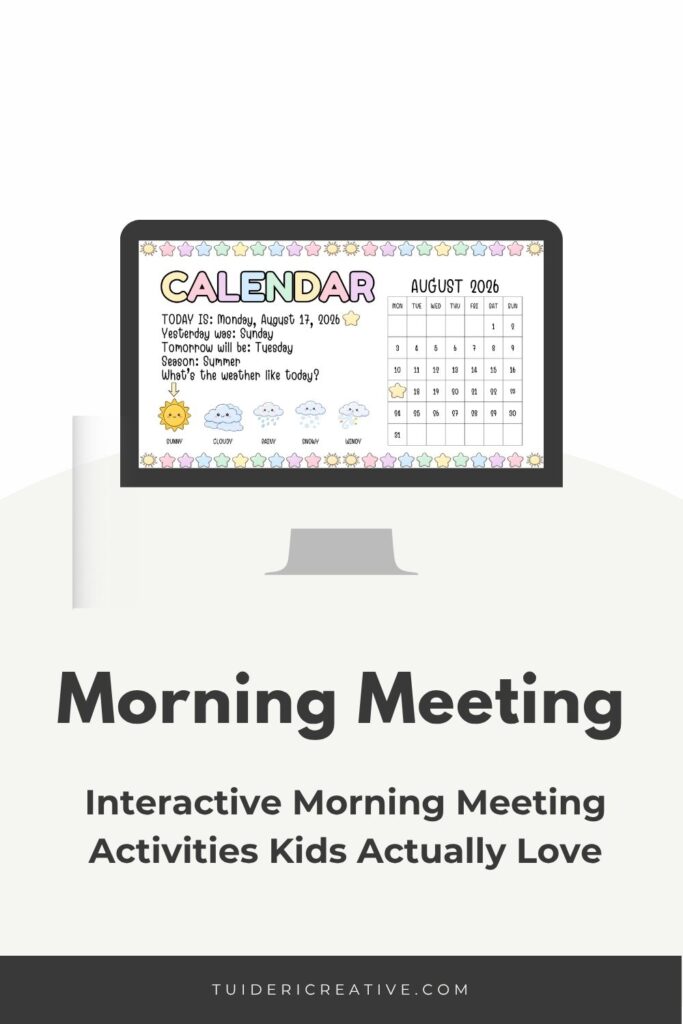
- Calendar and weather – The class reviews the day, date, and current weather together.
- Sharing activity – A quick question or prompt that lets a few students share aloud.
- Movement or song – An action song or brain break that gets bodies moving.
- Morning message – A short, predictable message read together that previews the day’s plan.
These five steps form the backbone of nearly every successful morning meeting, whether you’re using a printed chart, a whiteboard, or digital slides.
15-Minute Kindergarten Morning Meeting Schedule
Here’s a ready-to-use schedule you can start tomorrow. It fits neatly into most kindergarten morning schedule blocks without crowding out literacy or math time.
| Time | Segment | What Happens |
|---|---|---|
| 0–2 min | Settle In | Calm welcome song plays as students find their carpet spot |
| 2–5 min | Greeting | Students greet each other by name around the circle |
| 5–8 min | Calendar & Weather | Review the day, date, and weather; count days in school |
| 8–11 min | Sharing | Either/or question or quick thumbs-up poll; 4–5 students share |
| 11–14 min | Movement or Song | Action song, brain break, or themed movement game |
| 14–15 min | Morning Message | Read a short, predictable message together to preview the day |
This structure protects your instructional block while still hitting every core component teachers and coaches look for in a strong morning meeting.
Interactive Morning Meeting Activities Teachers Can Use Every Day
These interactive morning meeting activities require almost no prep and can become daily anchors:
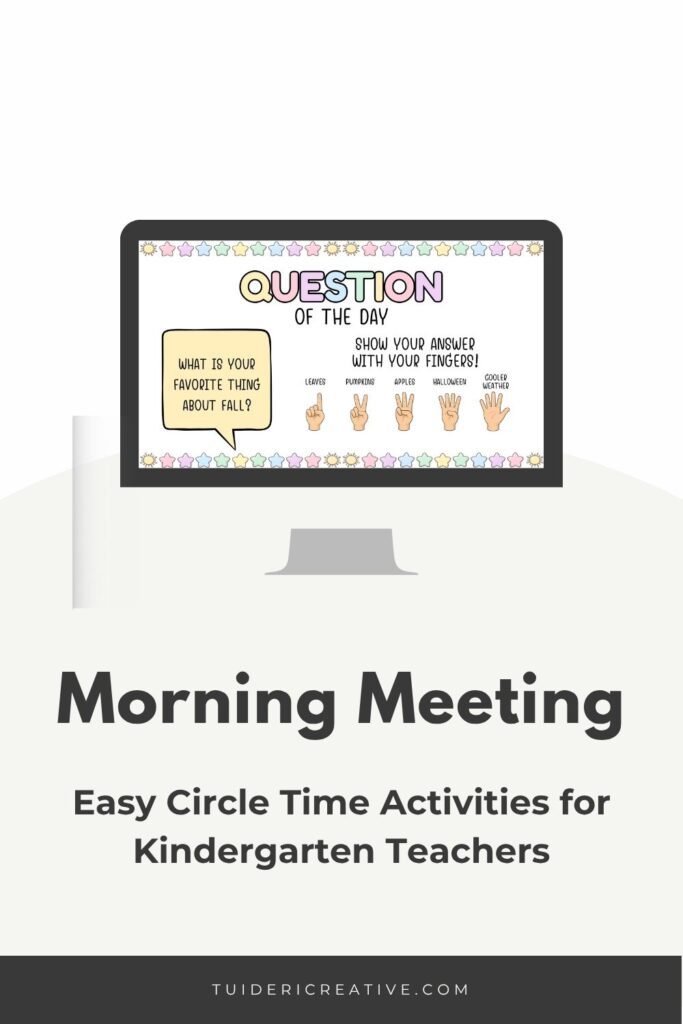
- Question of the day – Post a simple graphable question (“Do you like dogs or cats better?”) and let students answer with a sticky note or clip on a chart.
- Mood check-in – Students point to or move a clip to show how they’re feeling that morning.
- Calendar math – Count the days in school using straws bundled in tens, building number sense over the year.
- Echo greeting – Say a greeting phrase and have students echo it back, great for English language learners.
- Silent cheer – After someone shares, the class gives a silent cheer (jazz hands) instead of clapping, which keeps noise low.
- Letter or number hunt – Hold up a card and have students find that letter or number somewhere in the room.
- One-word check-in – Each student says one word describing how they feel that day.
- Pass the ball greeting – Roll a soft ball to a classmate while saying their name.
Here’s a fuller list of 50 kindergarten morning meeting ideas, organized by category, so you always have something fresh:
Greetings (1–10)
- Name-and-wave greeting
- Secret handshake with a partner
- High-five train
- Greeting in a silly voice
- “Pass the smile” around the circle
- Echo greeting in two languages
- Elbow bump greeting
- Greeting with a stuffed animal mascot
- “Good morning” sign language greeting
- Mirror greeting (copy a partner’s wave)
Sharing (11–20)
- Either/or questions
- Roses and thorns (one good thing, one tricky thing)
- Show-and-tell with a theme
- Weekend recap in one sentence
- Mystery bag guessing game
- “If you could…” prompts
- Favorite book or character share
- Compliment circle
- “What made you smile today?”
- Partner share-and-retell
Movement and Songs (21–30)
- Days of the week song with motions
- Freeze dance
- Yoga poses tied to a story
- Simon Says with classroom vocabulary
- “Shake your sillies out”
- Animal walk movement break
- Months of the year song
- Clap-and-stomp pattern game
- Stretch-and-breathe routine
- Themed dance (season or holiday)
Calendar and Academic (31–40)
- Counting days in school
- Letter-of-the-day hunt
- Weather graphing
- Number of the day math talk
- Vocabulary word with picture clue
- Pattern of the day on the calendar
- Skip counting practice
- Shape hunt around the room
- Sight word of the day
- Temperature graphing over the week
Social-Emotional and Community (41–50)
- Mood check-in chart
- Gratitude share
- Class affirmation recited together
- Kindness challenge of the day
- “Fill a bucket” compliment activity
- Breathing exercise (smell the flower, blow the candle)
- Class job assignments
- Friendship circle handshake
- “I am” affirmation cards
- Class goal-setting check-in
Rotate these throughout the month so even repeat-routine days like calendar and weather feel fresh and engaging.
Morning Meeting Slides Kindergarten: Why Teachers Love Them
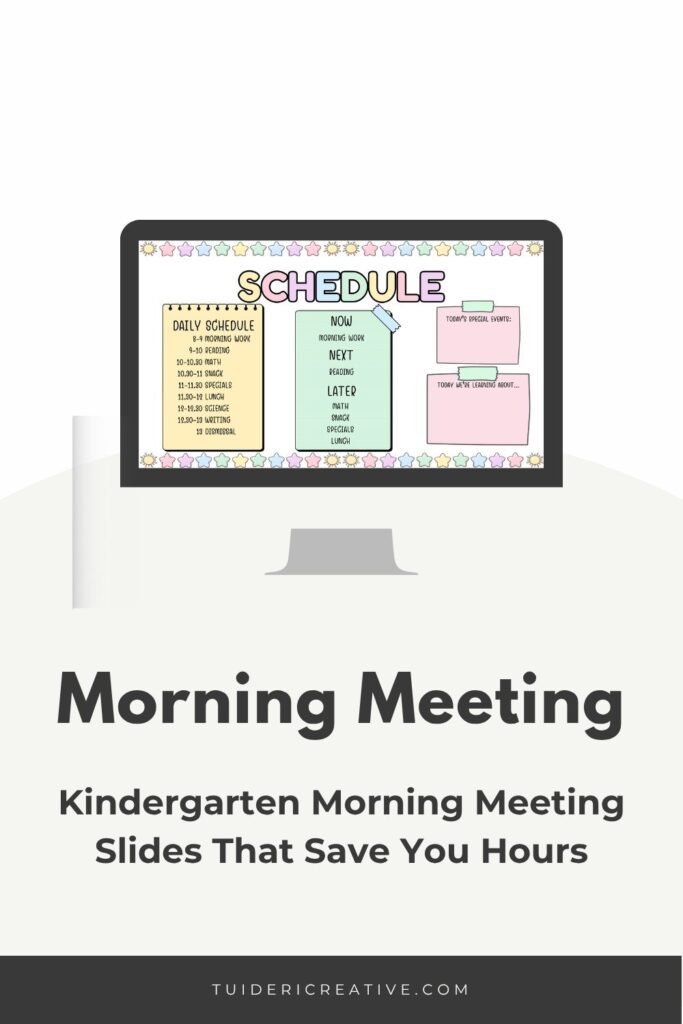
If you’ve ever dug through a calendar pocket chart hunting for the weather card, or rewritten the morning message on chart paper at 7 a.m., you already understand the appeal of morning meeting slides kindergarten style — digital, editable decks that run the whole routine from one screen.
Here’s why so many K-1 teachers have switched:
- Less prep time. Instead of gathering loose materials each morning, everything lives in one slide deck you click through.
- Visual support. Pre-K and kindergarten learners respond well to bright, consistent visuals paired with simple text, which slides naturally provide.
- Interactive whiteboard use. Slides display beautifully on a projector or smartboard, letting the whole class see the calendar, weather, and message together.
- Routine and consistency. Because the slide order stays the same daily, students quickly learn what comes next, reinforcing independence.
- Editable slides. Most digital decks (especially Canva-based ones) let you swap the date, question of the day, or theme in under a minute, so they stay fresh all year without rebuilding from scratch.
For new teachers, long-term subs, or anyone short on planning time, this single tool often replaces five or six separate materials.
What Materials Do You Need for a Kindergarten Morning Meeting?
You don’t need much to get started. Most classrooms run effective morning meetings with just:
- A calendar – physical pocket chart or digital slide showing the day, date, and month
- A weather chart – simple icons (sun, rain, clouds) students can point to or move
- A question of the day – one simple, graphable prompt
- Affirmations – a short phrase the class says together to build confidence
- Brain breaks – a go-to movement activity or song for transitions
- Digital slides – an optional but increasingly popular way to combine all of the above in one place
Starting with just three or four of these is plenty. You can always layer in more as your routine solidifies.
Frequently Asked Questions
How long should a kindergarten morning meeting be?
Most kindergarten morning meetings run 10 to 20 minutes, with 15 minutes being the sweet spot. That’s enough time for greeting, sharing, movement, and a message without cutting into literacy or math blocks.
What do you do during morning meeting?
A typical morning meeting includes a greeting, a brief sharing time, a movement activity or song, and a short morning message that previews the day. Many teachers also include calendar and weather review.
Are morning meeting slides worth it?
Yes, for most teachers they save significant daily prep time. Digital slides keep the routine organized, visually engaging for young learners, and easy to update or reuse, which matters most on busy mornings.
What are good kindergarten morning meeting activities?
Strong options include name greetings, either/or sharing questions, action songs, calendar math, and mood check-ins. The best activities are short, require little prep, and can be repeated consistently throughout the week.
Conclusion
A strong morning meeting kindergarten routine doesn’t have to be complicated. Start small: pick a greeting, a sharing question, and one movement activity, then build consistency before adding variety.
A few final tips:
- Keep it to 15 minutes or less so it protects your instructional time.
- Choose two or three daily anchor activities and rotate the rest weekly.
- Lean on visuals and movement since most kindergartners aren’t yet reading independently.
- It’s okay to simplify on hard days. A quick greeting and song still counts.
- For variation, look for seasonal activities, like Halloween.
Looking for a low-prep way to run your morning meeting? My editable Morning Meeting Slides for Kindergarten include calendars, daily questions, affirmations, brain breaks, and classroom routines—all in one easy-to-use slide deck.
Leave a Reply
You must be logged in to post a comment.