
The complete firefighter unit study to teach young learners about firefighters. Find hands-on activities, printables, and everything you need for an unforgettable week of learning, or for a fire safety week.
If you’re planning a community helpers unit and wondering how to make the firefighter theme truly come alive for your little ones, you’ve landed in the right place. Whether you’re a classroom teacher, a homeschool parent, or a caregiver looking for enriching activities for your preschooler or kindergartner, this guide walks you through everything you need to teach the firefighter community helper in a way that is hands-on, memorable, and academically meaningful.
From dramatic play ideas to literacy connections, crafts, and a complete done-for-you unit study, let’s dive into one of the most exciting community helpers your children will ever learn about.
Why Teach Community Helpers in Early Childhood?
Community helper themes are a staple in Pre-K through 1st grade — and for very good reason. Teaching young children about the people who serve their communities builds:
- Social-emotional awareness: Children learn empathy and gratitude for others
- Vocabulary development: Exposure to career-specific language expands early literacy
- Real-world connection: Abstract concepts become concrete when tied to real people and jobs
- Civic pride: Children begin to understand how communities work together
Among all the community helpers, firefighters hold a special place. They are one of the first “helpers” children can identify, and their role — brave, selfless, and action-oriented — instantly captures a child’s imagination. That makes firefighters the perfect anchor for a rich, engaging unit study.
What Should a Firefighter Unit Study Cover?
A well-rounded firefighter community helper unit for Pre-K to 1st grade should touch on several key learning domains:
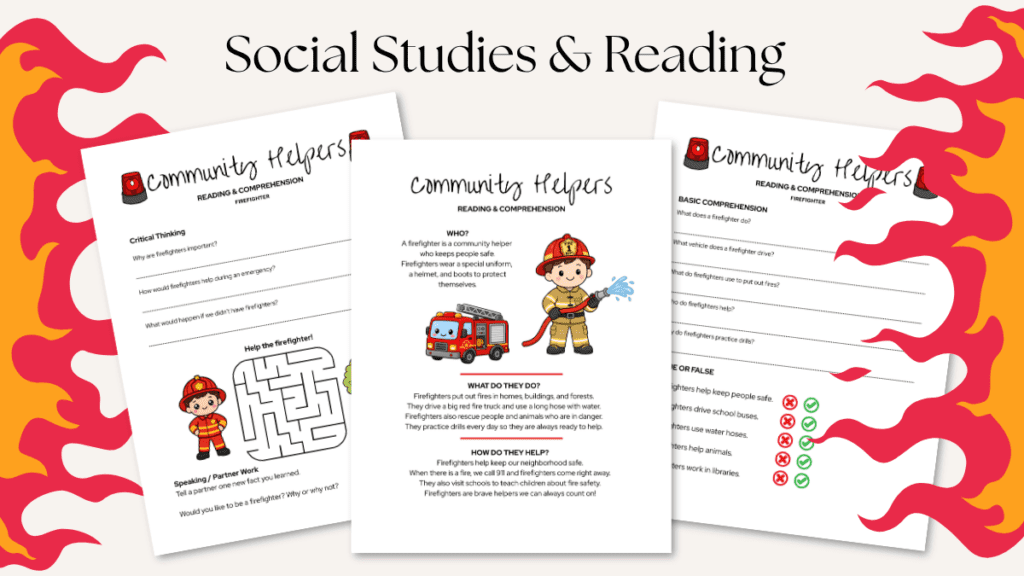
Social Studies & Firefighter Roles
- Who are firefighters and what do they do?
- Where do firefighters work? (firehouses, fire stations)
- What tools and equipment do they use?
- How do firefighters help keep our community safe?
Literacy & Language Arts
- Firefighter-themed read-alouds and books
- New vocabulary words (hose, ladder, hydrant, turnout gear, alarm)
- Writing prompts: “When I grow up, I want to be a firefighter because…”
- Sequencing: What do firefighters do when there’s an emergency?
Science & Safety
- How does fire start? (age-appropriate introduction to fire safety)
- Stop, Drop, and Roll — practicing fire safety at home and school
- Smoke detectors and escape plans
Firefighter Math Activities
- Counting and number recognition with firefighter-themed manipulatives
- Patterning with fire trucks and flames
- Simple addition and subtraction story problems (“3 firefighters climbed the ladder…”)
Fine Motor & Art
- Firefighter crafts and hands-on activities
- Role play and dramatic play
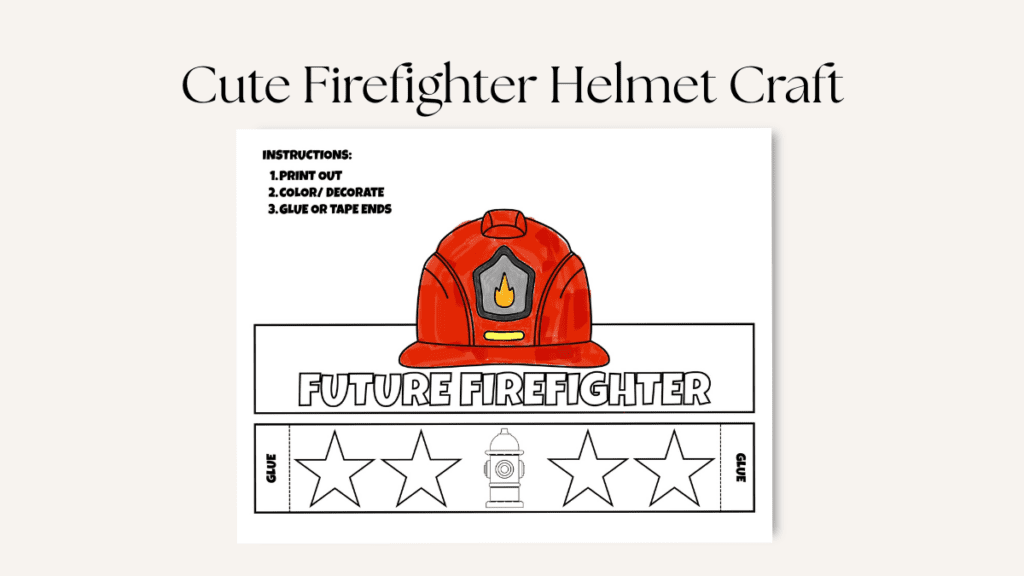
The great news? You don’t have to build all of this from scratch. A community helper unit study does the heavy lifting for you, giving you a structured plan so you can focus on the fun.
Bring the Firefighter Theme to Life with Hands-On Activities
The secret to an unforgettable community helper unit is getting kids out of their seats and into the experience. Here are some of the best ways to make your firefighter week feel real and exciting.
1. Set Up a Firefighter Dramatic Play Station
Young children learn through play — and nothing sparks imagination like a firefighter role play corner. Set up a simple dramatic play area with:
- A red or orange dress-up area
- Pretend hoses (pool noodles work great!)
- A toy fire truck or cardboard box “fire engine”
- A firefighter paper crown helmet — a simple, affordable craft that transforms any child into a firefighter instantly
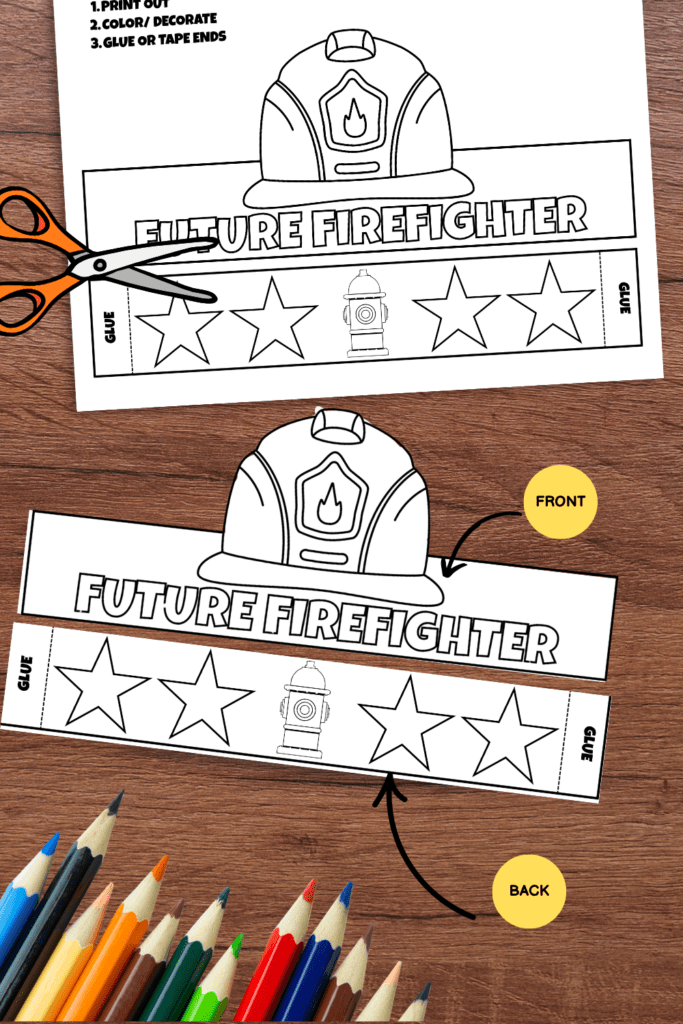
The firefighter paper crown helmet is one of those magical classroom props that children absolutely love. They can color it, personalize it, and wear it proudly during dramatic play, a community helpers parade, or a special presentation day. It’s a crowd favorite for a reason — and it makes for the cutest photos.
2. Use an Accordion Activity Book for Engaging Practice
One of the challenges of teaching early learners is keeping them engaged with pencil-and-paper tasks long enough to build skills. That’s where an accordion activity book shines.
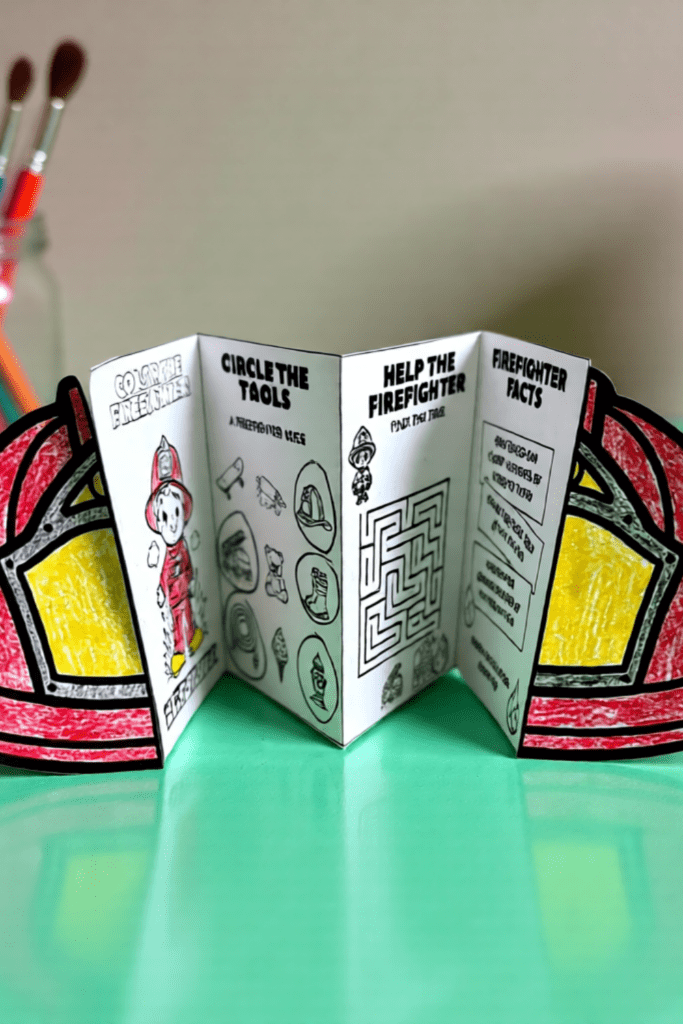
Unlike traditional worksheets, an accordion book folds out into a connected series of pages — which feels more like playing than working to young children. A firefighter-themed accordion activity book might include:
- Trace-and-write firefighter vocabulary words
- Firefighter coloring
- Firefighter maze
- Fun facts
- Cut and paste activity
The accordion format also makes a beautiful take-home keepsake — children love showing their parents a completed book that unfolds like a little story of everything they learned. It doubles as a portfolio piece to document learning progress.
3. Read Aloud and Discuss
Books are the heartbeat of any great early childhood unit. Some beloved firefighter read-alouds include:
- Firefighters to the Rescue! by Kersten Hamilton
- Fire! Fire! by Gail Gibbons
- The Little Fire Engine by Lois Lenski
- Big Frank’s Fire Truck by Leslie McGuirk
After reading, pause for discussion: What is the firefighter’s most important job? How do you feel when you see a fire truck? What would you do if there was a fire at your house? These conversations deepen comprehension and build critical thinking.
4. Incorporate Fire Safety Lessons
The firefighter unit is the natural time to teach fire safety skills — and these are lessons that genuinely matter. Cover:
- Stop, Drop, and Roll — practice it physically (kids love this!)
- How to call 911 in an emergency
- Why we shouldn’t play with matches or lighters
- Making a family fire escape plan
- The sound of a smoke detector and what to do when you hear it
For homeschool families, this is a wonderful opportunity to do a real walkthrough of your home escape plan together.
Please note: fire safety rules can vary by location, so always follow your local safety guidelines and emergency instructions. You can also find information from other resources like National Fire Protection Association.
5. Do a Firefighter Craft
Crafts anchor learning in memory. Some simple, high-impact firefighter crafts for Pre-K to 1st grade:
- Firefighter helmet craft — using the paper crown helmet as a base, children can add details with markers or crayons
- Fire truck paper plate craft
- Handprint flames — red, orange, and yellow paint for a dramatic fire art project
- Dalmatian dog craft — don’t forget the firehouse dog!
Display finished crafts in the classroom or hallway for a mini community helpers gallery walk.
How to Structure Your Firefighter Week
One of the most common questions teachers and homeschool parents ask is: How do I organize everything into a cohesive week? Here’s a simple 5-day framework you can adapt:
| Day | Focus |
|---|---|
| Monday | Introduction: Who are firefighters? Read aloud + vocabulary |
| Tuesday | Equipment and Tools: Firehoses, firetrucks, gear |
| Wednesday | Fire Safety Day: Stop, drop & roll + escape plans |
| Thursday | Craft and Play Day: Helmet crown, accordion activity, dramatic play |
| Friday | Celebration Day: Share projects, community helpers parade, review |
A done-for-you unit study with the firefighter theme included takes this structure and fills in all the details. Discussion questions, activity pages, and more — so you’re not reinventing the wheel every night after bedtime.
The Complete Firefighter Teaching Bundle: What You Need
If you want everything in one place, look for a set of resources that includes:
✅ A Community Helpers Unit Study with the firefighter section included — gives you the full scope and sequence, lesson ideas, and printables in one organized package
✅ A Firefighter Accordion Activity Book — hands-on, engaging, and doubles as a keepsake portfolio piece
✅ A Firefighter Paper Crown Helmet — for dramatic play, dress-up, and making memories (and adorable photos)
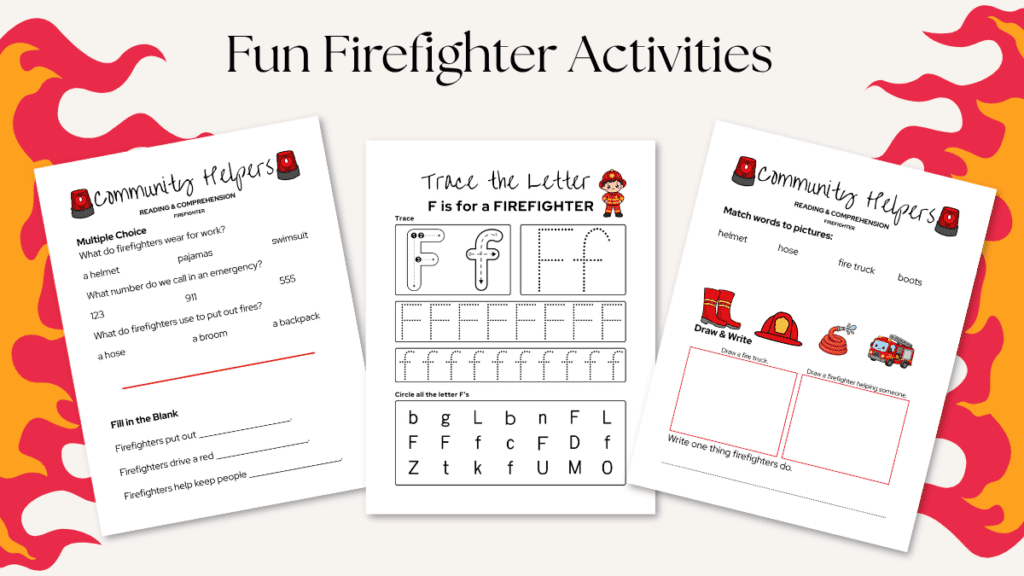
Together, these three resources cover every learning domain — social studies, literacy, fine motor, dramatic play, and fire safety — so your firefighter week is not just educational, but truly unforgettable.
Tips for Homeschool Families Teaching Community Helpers
If you’re homeschooling with a K-1 learner, the community helpers theme is incredibly flexible. Here are a few tips to make it work beautifully at home:
Tie it to real life. Drive past your local fire station and talk about what happens inside. If your community allows it, call ahead and arrange a brief visit — many fire stations welcome homeschool families for educational tours.
Use it as a reading anchor. Choose a firefighter read-aloud as your daily story for the week. Let your child narrate back what they remember.
Let them lead. Ask your child what they want to know about firefighters. Child-led questions make the best inquiry-based learning.
Document the journey. The accordion activity book is perfect for this — it becomes a record of your child’s learning that they’ll be proud to keep.
Tips for Classroom Teachers
Teaching community helpers in a classroom setting? Here’s how to maximize engagement:
Create a dramatic play center. Rotate your dramatic play area to a “fire station” for the week. Add props, including the paper crown helmets for every student.
Invite a firefighter guest speaker. Many local fire departments are happy to visit schools. Even a 15-minute Q&A leaves a lasting impression.
Make it cross-curricular. Use the firefighter unit study to hit multiple standards at once — ELA, social studies, science (fire safety), and even math with themed story problems.
Send the accordion book home. Parents love seeing a tangible record of what their children learned. The accordion format travels beautifully and doubles as show-and-tell.
Frequently Asked Questions About Teaching Firefighter Community Helpers
What age is the firefighter community helper theme best for?
The firefighter theme is ideal for Pre-K through 1st grade (ages 3–7). The concepts are concrete, the vocabulary is accessible, and the dramatic play element appeals strongly to this age group.
How long should a community helper unit last?
Most teachers and homeschool parents spend one week on each community helper. This gives enough time for deep exploration without losing momentum.
How do I connect the firefighter unit to literacy standards?
Use the unit to practice vocabulary, critical thinking, informational text features, and writing prompts. A community helpers unit study typically aligns these activities to common early childhood literacy standards.
Can I use these resources for a mixed-age group?
Yes! The accordion activity book and unit study can be differentiated easily. Younger children (Pre-K) can focus on coloring and listening, while K-1 learners take on writing and reading tasks.
Final Thoughts: Make Firefighter Week One They’ll Never Forget
The firefighter community helper unit is more than just a curriculum theme — it’s an opportunity to build real-world awareness, safety skills, and a genuine appreciation for the people who serve our communities. When you pair great teaching with hands-on resources like an accordion activity book, a paper crown helmet, and a thoughtfully designed unit study, you create the kind of learning experience that children carry with them long after the week is over.
Whether you’re a classroom teacher, homeschool parent, or caregiver, you have everything you need to make firefighter week extraordinary.
Ready to get started? Grab the firefighter paper crown helmet, the accordion activity book, and the full community helpers unit study — and watch your little learners light up.
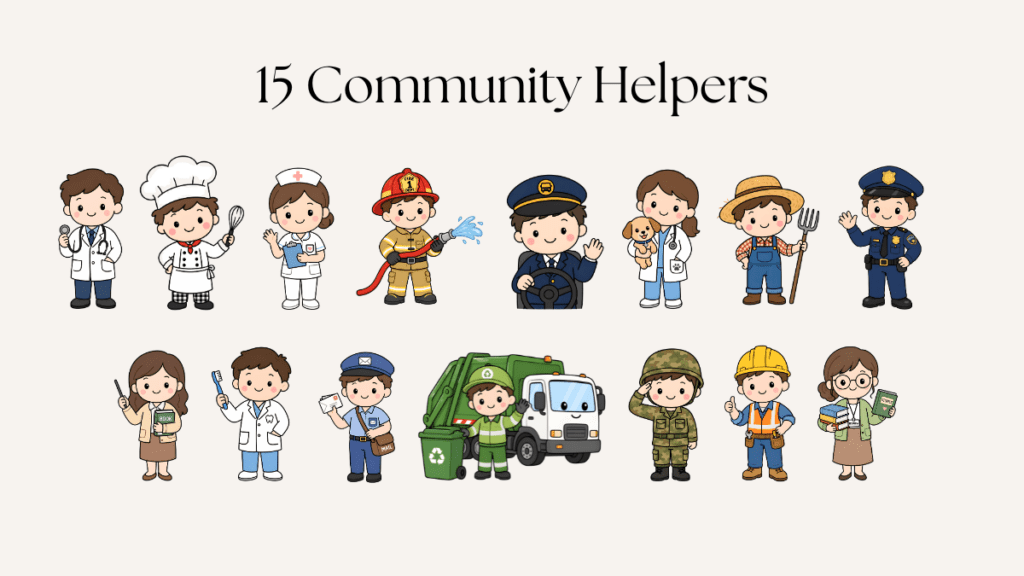
Looking for more community helper units? See my previous post about community helpers unit study and community helpers crafts.
Leave a Reply
You must be logged in to post a comment.