If you’ve been searching for fun police officer craft ideas or hands-on learning activities to go along with a community helpers theme, you’ve found exactly what you need! Today I’m sharing a complete look at our police officer learning activities — including a paper crown craft, an accordion activity book, and a full reading and comprehension unit that takes kids from vocabulary all the way through critical thinking.
Whether you’re a classroom teacher planning a community helpers week, a homeschool parent looking for themed printables, or a preschool teacher who just wants something easy and engaging — keep reading, because there’s something here for everyone.
Why Teach Kids About Police Officers?
Community helper units are a staple of early childhood education, and for good reason. When young children learn about the people who help keep their neighborhood safe and running smoothly, they develop a sense of belonging, community awareness, and social-emotional understanding that lasts well beyond the school year.
Police officers are often one of the very first community helpers children can identify. Even toddlers recognize the flashing lights on a police car! But there’s so much more to learn beyond the uniform. Teaching kids about what police officers actually do — patrolling streets, helping people in trouble, directing traffic, catching people who break rules and laws, and even visiting schools to teach children about safety — gives them a well-rounded picture of this important role.
It also helps answer the question every little kid eventually asks: “What should I do if I need help?” Knowing they can call 911 and that a police officer will come is genuinely reassuring for young children. That’s powerful learning.
And let’s be honest — there’s something magical about watching a five-year-old strut around in a paper police officer crown declaring that they’re going to “protect the neighborhood.” Community helper themes bring out the best kind of imaginative play.
Police Officer Paper Crown Craft
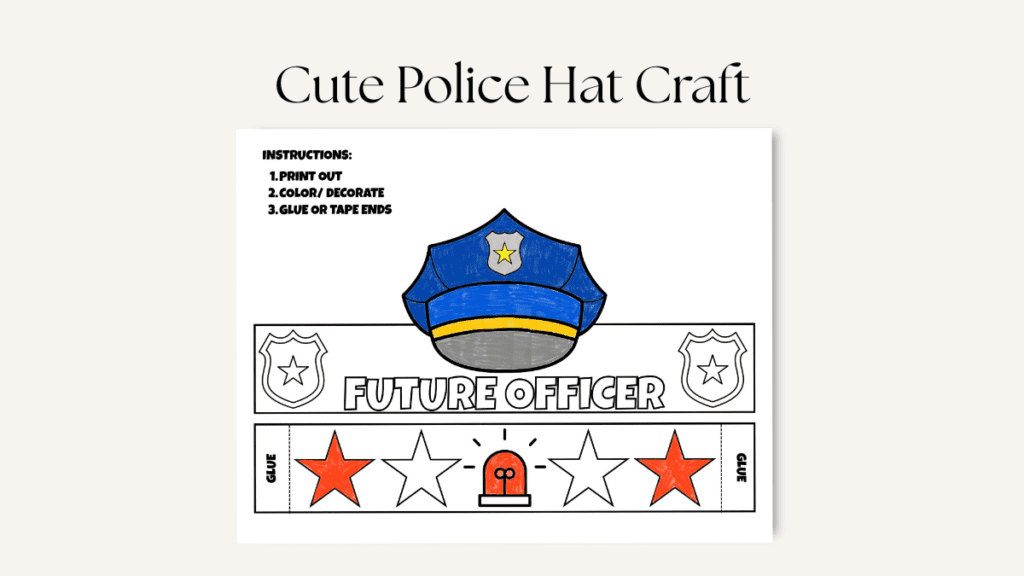
Let’s start with the craft that everyone loves: the police officer hat paper crown!
Paper crowns are one of those classroom crafts that work for every age and every skill level. They’re simple enough for preschoolers to assemble with a little help, but still exciting and fun for kindergarteners and first graders. And when the crown has a police officer theme? Kids wear them all day long.
Our police officer paper crown is designed to complement your community helpers unit perfectly. It’s the kind of craft that doubles as a prop — put it on during circle time, wear it during a community helpers parade, or use it for dramatic play in the classroom or at home. Kids love pretending to be police officers, and having a crown to wear makes the role play feel real and special.
Ideas for using the paper crown:
- Wear it on Community Helpers Day or Career Day
- Use it as a reward or celebration for finishing the unit
- Pair it with the accordion book for a complete take-home craft bag
- Let kids decorate and personalize it with crayons or markers
- Use it in a classroom parade where each child represents a different community helper
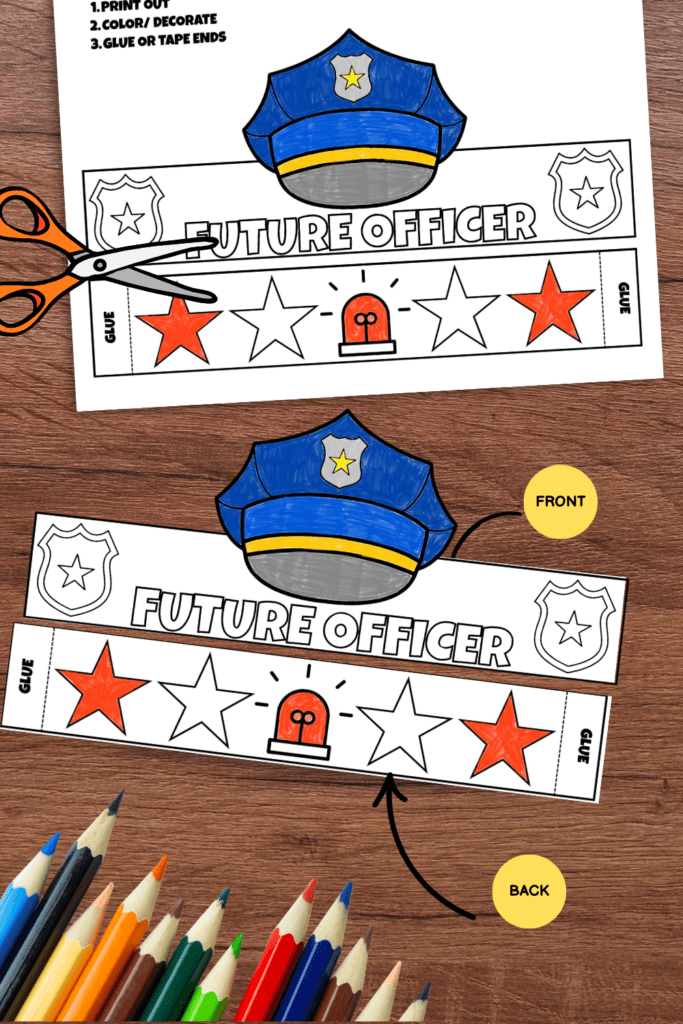
Paper crowns are also wonderfully low-prep. Print, cut, size to fit, and you’re done. No complicated assembly, no special materials — just a fun, thematic craft that makes kids feel like the community helper they’re learning about.
Police Officer Craft: Accordion Activity Book
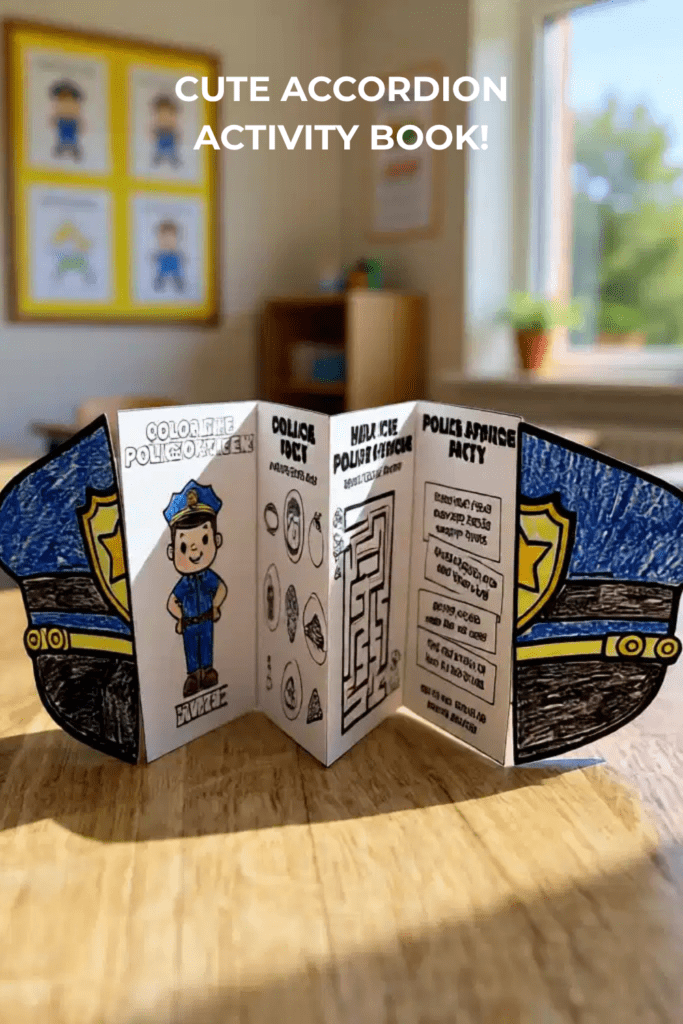
Now, this is one of my absolute favorite things to include in any themed unit — and kids consistently love it too. The police officer accordion activity book is a fold-out mini book that packs a surprising amount of learning into a compact, hands-on format. This police officer craft works as a fun cut and paste activity as well.
Accordion books are magical because they feel special. They’re not just another worksheet — they fold out like a little treasure, and kids love the novelty of it. They’re also incredibly versatile: use them in a literacy center, send them home as a take-home project, use them as an early finisher activity, or assemble them together as a class and display them in the hallway.
Here’s what’s inside the accordion book:
COLORING PICTURE
A police officer illustration for kids to color and make their own. Coloring is more than just fun — it builds fine motor skills, focus, and creativity. Having a police officer to color also reinforces the visual vocabulary kids are building throughout the unit. What color is the uniform? What does the badge look like? These conversations happen naturally when kids are coloring.
TOOLS OF THE TRADE
One of the most engaging parts of learning about any community helper is discovering the tools they use. This section introduces kids to the equipment a police officer relies on — things like a badge, a radio, handcuffs, and more. Understanding the tools of the job helps children build a more complete mental picture of what it means to be a police officer. It’s also a great vocabulary builder and sparks lots of great “why” questions from curious kids.
MAZE ACTIVITY
Who doesn’t love a maze? This police-themed maze adds a playful fine motor and problem-solving challenge to the book. Mazes are great for developing pencil control, persistence, and spatial reasoning — all while keeping kids engaged and having fun. It’s the perfect activity for kids who finish their work early or need a movement break in pencil form.
FUN FACTS
This is the section that often surprises kids the most. Fun facts about police officers — things they might not have known before — spark curiosity, conversation, and that wonderful “wow, I didn’t know that!” energy that makes learning memorable. Fun facts are also great for the speaking and partner work activities in the comprehension unit, because kids are eager to share what they’ve learned.
The accordion book works beautifully as a standalone take-home activity or as part of a larger police officer learning bundle. It’s one of those things that parents actually keep — you might find it on the fridge or tucked into a special drawer weeks after community helpers week is over.
Police Officer Reading & Comprehension Unit
For teachers and homeschoolers who want a complete, structured learning experience around the police officer theme, the reading and comprehension unit is the heart of this resource. It’s part of a larger Community Helpers Unit Study — a 111-page resource — and the police officer section covers every skill level from basic comprehension to critical thinking.
Here’s a detailed look at everything included:
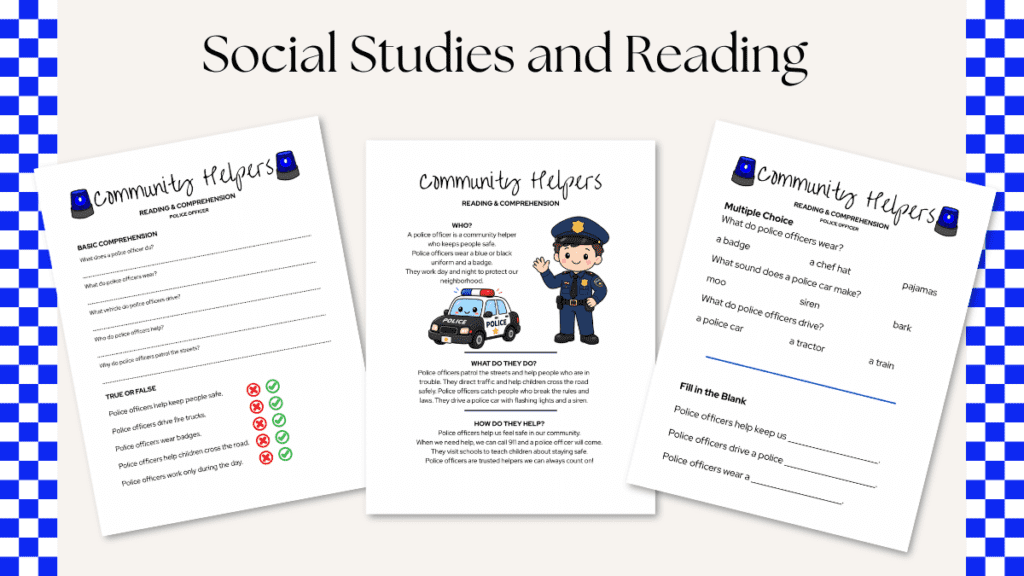
The Reading Passage
Every good comprehension unit starts with a strong reading text, and this one is written specifically for early readers — think kindergarten through first grade, with scaffolding options for preschool read-alouds.
The passage is organized into three clear sections that mirror how kids naturally process information about a new topic:
WHO?
A police officer is a community helper who keeps people safe. Police officers wear a blue or black uniform and a badge. They work day and night to protect our neighborhood. This section gives children the foundational “who” knowledge they need before diving deeper.
WHAT DO THEY DO?
Police officers patrol the streets and help people who are in trouble. They direct traffic and help children cross the road safely. Police officers catch people who break the rules and laws. They drive a police car with flashing lights and a siren. This section connects kids to the visible, everyday actions of police officers — things they may have already observed in real life.
HOW DO THEY HELP?
Police officers help us feel safe in our community. When we need help, we can call 911 and a police officer will come. They visit schools to teach children about staying safe. Police officers are trusted helpers we can always count on. This section ties everything together with the emotional and social core of the lesson: police officers are people we can trust and turn to.
The reading passage works beautifully as a shared reading activity, a guided reading text, or an independent reading challenge for stronger readers.
Comprehension Activities
After reading, kids work through a variety of activities that check understanding and build skills across multiple learning modalities.
Basic Comprehension Questions
Simple recall questions that check whether kids absorbed the key information from the passage:
- What does a police officer do?
- What do police officers wear?
- What vehicle do police officers drive?
- Who do police officers help?
- Why do police officers patrol the streets?
These questions are perfect for written response practice, but also work well as verbal discussion prompts for preschool and kindergarten students who aren’t writing independently yet.
True or False
A classic comprehension format that kids absolutely love — partly because it feels like a game! Students read each statement and decide whether it’s true or false:
- Police officers help keep people safe.
- Police officers drive fire trucks.
- Police officers wear badges.
- Police officers help children cross the road.
- Police officers work only during the day.
True or false activities are wonderful for building critical reading skills. Kids have to actually think about what they read rather than just copying information back down — and the “trick” statements keep them on their toes.
Multiple Choice Questions
Another engaging format that offers scaffolded support for students who find open-ended writing challenging:
- What do police officers wear? (a badge / a chef hat / pajamas)
- What sound does a police car make? (moo / siren / bark)
- What do police officers drive? (a police car / a tractor / a train)
The silly wrong answers are intentional — they make kids smile, reduce test anxiety, and actually help reinforce the correct answer through contrast. When a child laughs at “pajamas” as a wrong answer, they’re cementing “badge” in their memory.
Fill in the Blank
Targeted sentence completion that reinforces key vocabulary from the unit:
- Police officers help keep us __________.
- Police officers drive a police __________.
- Police officers wear a __________.
Fill-in-the-blank activities are great for word recognition, vocabulary retention, and early writing practice.
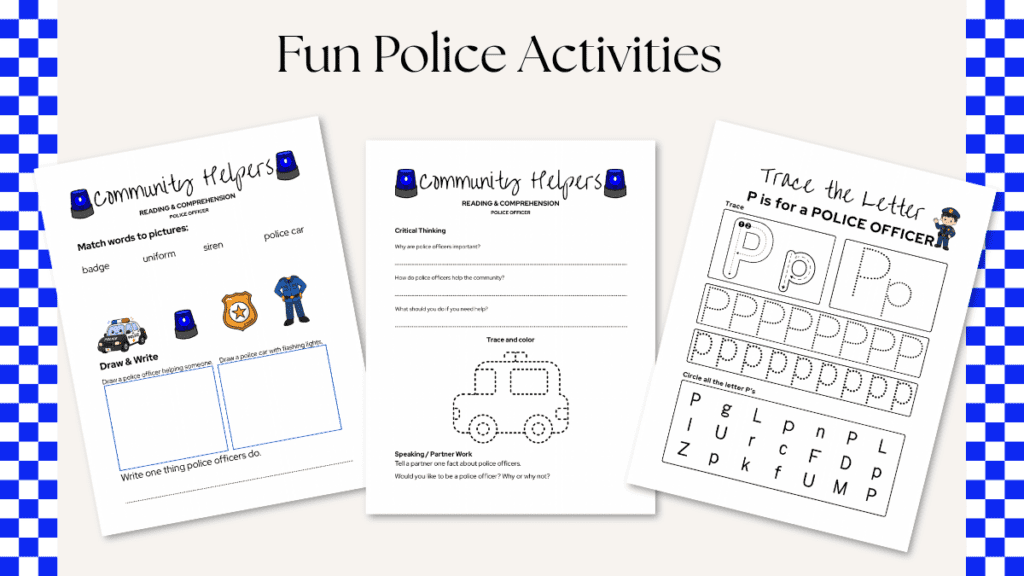
Drawing & Writing Prompts
Not every child expresses their understanding best through traditional comprehension questions — and that’s exactly why drawing and writing prompts are such an important part of this unit.
Kids are invited to:
- Draw a police officer helping someone — a creative and open-ended prompt that lets children show what they’ve internalized about the role
- Draw a police car with flashing lights — a focused drawing prompt that builds visual vocabulary and fine motor skills
- Write one thing police officers do — a simple, achievable writing task that works for emergent writers and more advanced writers alike
These prompts work beautifully in a writer’s workshop format, as a center activity, or as a culminating project to display alongside the paper crown craft.
Critical Thinking Questions
This is where the unit goes deeper — moving beyond recall and into genuine reflection and reasoning. Critical thinking questions invite kids to form opinions, make connections, and think about the world around them:
- Why are police officers important?
- How do police officers help the community?
- What should you do if you need help?
These questions are excellent discussion starters for whole-class conversations or partner talk. They don’t have one “right” answer — they invite kids to think, which is exactly the point.
Speaking & Partner Work
Community helpers units are a natural fit for speaking and listening activities, and this section takes full advantage of that. Kids are encouraged to:
- Tell a partner one fact about police officers — practicing the academic language skill of sharing information clearly
- Discuss whether they would like to be a police officer and why — a personal response activity that builds confidence in sharing opinions
Partner work activities like these are fantastic for ELL students, shy learners who open up more with a single partner than in front of the class, and kinesthetic learners who need to move and talk to process information.
Alphabet Practice: P is for Police Officer
Rounding out the unit is a fun and purposeful literacy component: Trace the Letter — P is for Police Officer.
This page includes:
- Guided letter formation with numbered stroke order for both uppercase P and lowercase p
- Dotted letter tracing rows for independent practice
- A “Circle all the letter P’s” activity where students scan a grid of mixed letters to find and circle every P and p
Letter tracing pages like this one are a staple of kindergarten literacy instruction, but this one has extra value because it’s connected to a word and concept the child has been learning about all week. That context makes the letter stick.
Who Is This Resource For?
This police officer learning bundle is designed with preschool, kindergarten, and first grade learners in mind — but it’s flexible enough to be adapted up or down depending on your students’ needs.
It works beautifully for:
- Classroom teachers running a community helpers unit or career week
- Homeschool families who love thematic, literature-based learning
- Preschool and pre-K teachers looking for read-aloud companions and hands-on crafts
- Special education teachers who need varied activity formats and scaffolded comprehension support
- Substitute teachers who want an easy, self-contained themed day
The variety of activity types — reading, writing, drawing, crafting, speaking, tracing — means that learners with different strengths all get a chance to shine. That’s something I think about carefully when designing these units.
How to Use This in Your Classroom or Homeschool
Not sure how to fit everything in? Here are a few ideas:
One-Day Police Officer Exploration:
Read the passage together as a shared reading, complete the true/false and multiple choice as a class, make the paper crown craft, and send the accordion book home. Done — and it’s a full, rich day of learning.
Week-Long Community Helpers Unit:
Spread the activities across a full week. Start with vocabulary and the reading passage on Monday, work through comprehension activities Tuesday through Thursday, and finish the week with the craft, accordion book, and a “community helpers parade” where every child wears their crown.
Literacy Center Rotation:
Break the comprehension activities into center rotations — one group works on writing prompts, one does letter tracing, one works through the multiple choice and fill-in-the-blank, and one does partner speaking activities. Everyone is engaged, and the teacher can pull small groups for guided reading with the passage.
Get The Police Officer Craft Resource
The police officer activities are part of my full Community Helpers Unit Study — a 111-page resource packed with reading passages, comprehension activities, vocabulary cards, crafts, and more for multiple community helpers.
If you love themed, low-prep learning resources that keep kids engaged while covering real curriculum skills, this unit was made for you.
Did this post help you? Save it to your favorite Pinterest board so you can find it again — and share it with a teacher friend who loves community helpers themes!
You can read more about the Firefighter Unit Study ideas in my previous post and about the full Community Helpers Unit Study with 15 different occupations.
Leave a Reply
You must be logged in to post a comment.