
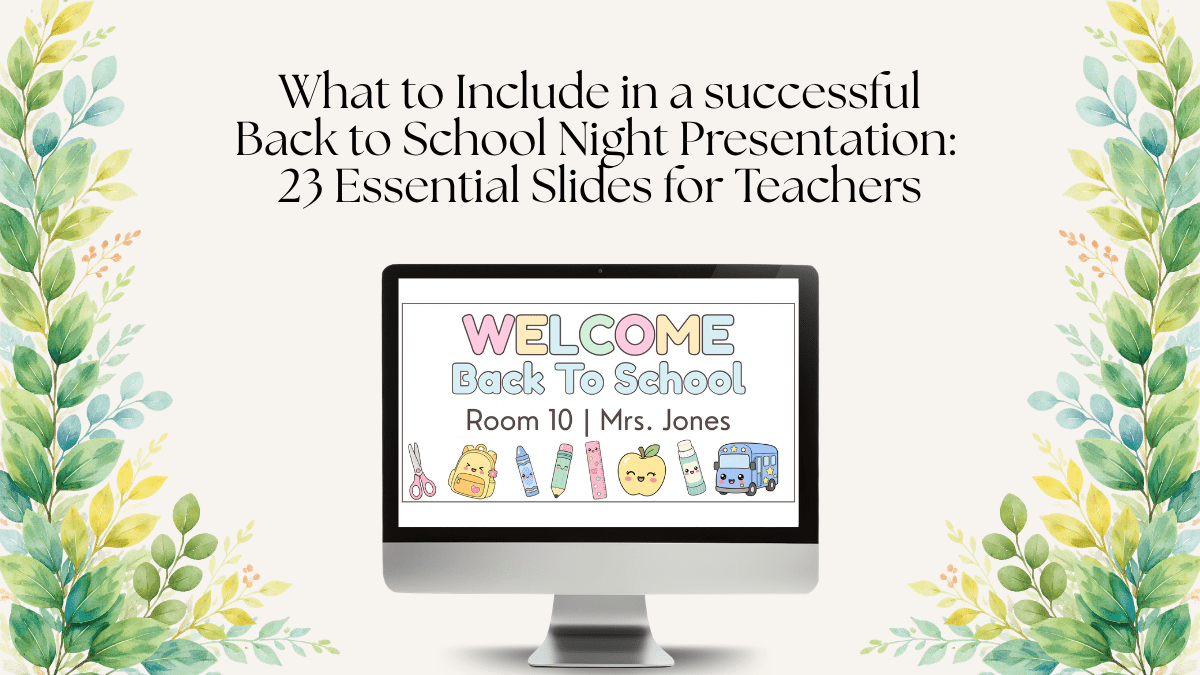
Back to School Night is one of the most important events of the school year. It’s your first real chance to connect with families, build trust, and set the tone for the months ahead. But if you’ve ever stared at a blank slide deck the night before and wondered what am I even supposed to say? — you’re not alone.
This guide covers exactly what to include in a Back to School Night presentation, slide by slide, so you can walk in feeling confident and prepared.
Why Your Back to School Night Presentation Matters
Parents come to Back to School Night with questions, nerves, and (let’s be honest) a lot of hope. They want to know their child is in good hands. A clear, warm, well-organized presentation does more than share information — it tells parents: I’ve got this, and I’m so glad you’re here.
A strong presentation also reduces the number of follow-up emails you’ll get in September. When parents leave feeling informed, they feel like partners rather than spectators.
23 Essential Slides for Your Back to School Night Presentation
While every school and grade level is different, most successful Back to School Night presentations cover the same core topics: classroom expectations, curriculum, communication, and ways families can support learning at home. The goal isn’t to share every detail — it’s to help parents leave feeling informed, confident, and excited about the year ahead.
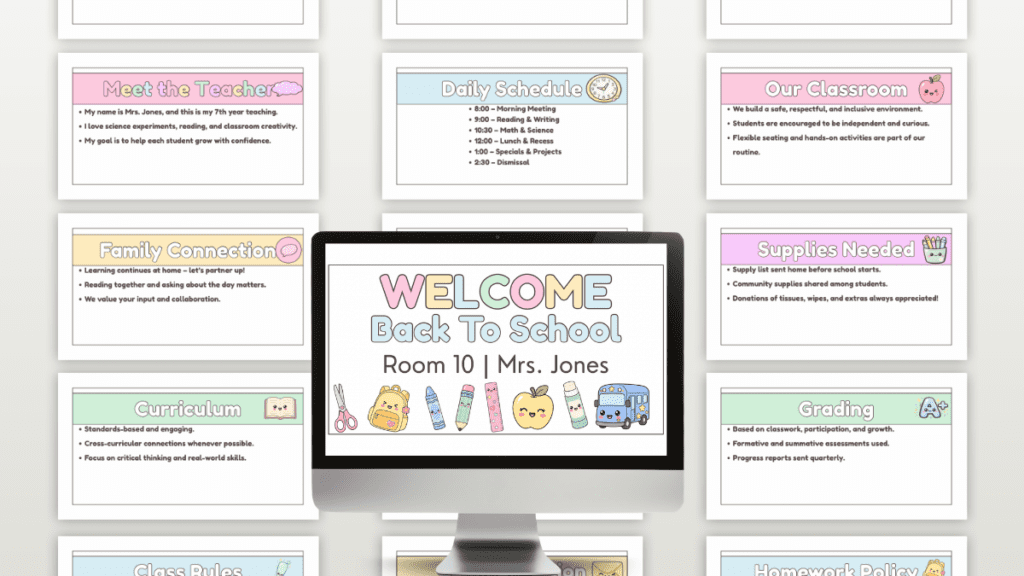
Here’s a breakdown of what your Back to School Night presentation should cover:
1. A Welcome Slide
Open with something warm and visual. Include your name, classroom number, and grade level. This slide is on the screen as parents walk in, so make it inviting — think of it as the front door to your classroom community.
2. Meet the Teacher
Share a little about yourself: how many years you’ve been teaching, what you love about your grade level, and one or two personal touches that make you you. Parents want to know who their child spends six hours a day with. This slide builds immediate connection.
3. Our Classroom
Briefly describe your classroom environment and teaching philosophy. Do you use flexible seating? Center rotations? A morning meeting? This is where parents start to picture their child’s daily experience.
4. Daily Schedule
This is one of the most-referenced slides of the night. Parents want to know when their child does reading, when lunch is, when dismissal happens. A clear, easy-to-read schedule prevents a lot of confusion.
5. Class Rules
Keep this simple and positive. Three to five expectations, written in kid-friendly language, reassure parents that your classroom has structure.
6. Class Behavior System
Explain how you handle behavior — what positive reinforcement looks like, and what consequences are. Being transparent here prevents misunderstandings down the road.
7. Homework Policy
How much homework? How often? What’s your philosophy? Parents have big feelings about homework, so a clear, calm explanation goes a long way.
8. Attendance
Cover your expectations around punctuality and how parents should notify the school for absences. This slide also helps set the tone that attendance matters.
9. Grading
How will student work be assessed? Whether you use standards-based grading, letter grades, or a portfolio approach, parents appreciate knowing what to expect on a report card.
10. Curriculum Overview
Give a broad overview of what students will learn this year. You don’t need to go deep — just enough to paint the picture.
11. Reading & Writing
If literacy is a priority in your grade (and it is in most PreK–3 classrooms), dedicate a slide to your reading and writing approach. Mention things like guided reading groups, writer’s workshop, or phonics programs.
12. Math & Science
Same here — a quick overview of your approach to math and science, especially if you use hands-on or inquiry-based methods that might be different from what parents experienced growing up.
13. Specials
Let families know when their child has Art, Music, P.E., and Library. Parents like knowing the weekly rhythm.
14. Technology Use
Cover what devices students use, what platforms (like Google Classroom or Seesaw) parents might hear about, and how you approach digital citizenship.
15. Communication
This is a crucial slide. Tell parents how to reach you, how quickly you respond, and what tools you use (email, ClassDojo, Remind, a class website). Setting expectations here saves everyone frustration.
16. Family Connection
Share how parents can support learning at home. Reading together, asking about the school day, and reinforcing routines all make a real difference — and parents love feeling useful.
17. Parent Support / Volunteers
Mention how parents can get involved in the classroom, and note any district clearance requirements for volunteers.
18. Conferences
Let parents know when Fall and Spring conferences are scheduled, and how they can request additional check-ins.
19. FAQs
Address the two or three questions you get every single year. This shows self-awareness and saves time at the end of the night.
20. Supplies Needed
If you haven’t already sent home a supply list, this is the place to mention it. Community supplies, donation requests, and labeling instructions are all fair game.
21. Celebrations
Cover birthdays, holiday parties, and your policy on treats. Parents always ask.
22. Class Events
Mention upcoming field trips, seasonal events, and how families will be notified.
23. Thank You Slide
End on a warm note. Thank parents for coming, express your excitement for the year ahead, and leave your contact information visible.
A Done-for-You Option
If building this deck from scratch sounds like a lot — it is. That’s why I created a 23-slide Back to School Night Presentation Template in Canva, designed with a kawaii pastel aesthetic that’s warm, playful, and completely editable.
Every slide listed above is already built in. All you do is swap in your own name, schedule, and classroom details. The fonts, colors, and cute character illustrations are already there.
Whether you use it as-is or as a starting point, it takes the blank-screen panic out of Back to School Night prep completely.
Quick Tips for the Night Itself
- Keep it to 20–30 minutes. Parents have other classrooms to visit, and respecting their time builds goodwill.
- Leave time for questions. Two to three minutes at the end is enough — save longer conversations for email or conferences.
- Don’t read your slides. Use them as prompts, and let yourself have a real conversation with the room.
- Print a handout. A one-page summary of the key info (schedule, contact info, homework policy) gives parents something to take home. Check this cute editable option for back to school night student info.
FAQ
How long should a Back to School Night presentation be?
Aim for about 20–30 minutes, leaving time for parent questions at the end.
What should teachers bring to Back to School Night?
A presentation, sign-in sheet, classroom information handouts, and any volunteer forms parents may need.
Should I print handouts for parents?
Yes. A simple one-page summary helps parents remember important information after the event. See this cute option for back to school student information.
What is the difference between Back to School Night and Open House?
Back to School Night is typically a parent-focused informational event, while Open House often allows students and families to explore the classroom together.
Back to School Night doesn’t have to be stressful. With the right slides and a little prep, it can be one of the most energizing events of your year.
Looking for additional back-to-school resources? Check out these fun first day of school activities and editable meet the teacher templates to help you start the year strong.
Leave a Reply
You must be logged in to post a comment.