
You’ve got your slides ready. The chairs are set up. Families start filing in. And then — question time.
Back to School Night Q&A can feel unpredictable, but the truth is, parents tend to ask the same questions year after year. Knowing what’s coming lets you prepare thoughtful answers, address concerns before they’re raised, and feel completely in control of the room.
Some of the most common Back to School Night questions include:
- How much homework will there be?
- What’s the best way to contact you?
- What happens when students misbehave?
- What curriculum do you use?
- What if my child is struggling?
Below you’ll find detailed answers and tips for handling each one confidently.
Here are the most common questions parents ask at Back to School Night, organized by category, with suggestions for how to handle each one.
Questions About the Teacher
“How long have you been teaching?”
This is a trust-building question. Be honest and warm, whether it’s your first year or your fifteenth. If you’re newer, parents want to hear your enthusiasm and preparation. If you’re experienced, they want to feel your steadiness. Either way, what they’re really asking is: Is my child safe with you?
“What’s your teaching philosophy?”
Don’t overthink this one. A sentence or two about how you approach learning — whether that’s hands-on, inquiry-based, relationship-first, or something else — is plenty. Parents aren’t looking for an education dissertation. They want to know you’ve thought about it.
“Do you have kids of your own?”
This comes up more than you’d expect, especially in early elementary. Answer honestly, and if you don’t have children, you might acknowledge what your years in the classroom have taught you about what kids need.
Questions About Academics
“What reading level should my child be at?”
Gently redirect this to an individual conference. Back to School Night isn’t the right venue for discussing specific student data. A warm answer might be: “That’s a great question for our fall conference — I want to give you my full attention when we talk about your child specifically.”
“How much homework will there be?”
This is one of the most emotionally loaded questions you’ll get. Parents either want more homework (usually from families who associate it with rigor) or less (usually from families with busy evenings). Having a clear, confident homework policy slide to refer back to keeps this answer grounded.
“What curriculum do you use?”
Have a brief answer ready — the name of any published programs plus a sentence about your own approach to supplementing them. If you use a lot of teacher-created materials (printables, project-based units), this is a great moment to mention it as a strength.
“How do you handle differentiation?”
Parents of kids who are advanced or who struggle both ask versions of this question. A brief explanation of flexible grouping, small group instruction, or how you extend and support learners goes a long way.
“How are grades calculated?”
Parents often ask this because they want to understand how progress will be measured throughout the year. Give a simple overview of your grading practices and reassure families that grades are just one part of the bigger picture. If your school uses standards-based grading or another specific system, briefly explain how it works and where parents can find more information.
Questions About Behavior and Classroom Management
“What happens when kids misbehave?”
Be matter-of-fact and calm. Parents want to know there are clear, fair consequences — not that you’ll be punitive, and not that there are no consequences at all. A brief mention of your behavior system and the fact that you communicate with families when needed usually satisfies this question.
“What if my child is being bullied?”
This is a big question with real emotion behind it. Acknowledge it seriously, explain your classroom community approach, and let parents know that you take social dynamics seriously and will always loop them in.
“My child had a difficult year last year. How will this year be different?”
This is less a question and more a disclosure — parents are giving you important context. Thank them for sharing it, and let them know you’d love to connect further one-on-one. Avoid making specific promises in the group setting.
Questions About Communication
“What’s the best way to reach you?”
Have a clear, confident answer ready before you’re asked — and ideally, have it on a slide so parents can write it down. Whether it’s email, ClassDojo, or a newsletter, give one primary channel and realistic response time expectations.
“How often will I hear from you?”
Let parents know your rhythm: weekly newsletters, monthly updates, whatever it is. Predictable communication is enormously reassuring.
“Will you tell me if my child is struggling?”
Yes. Always yes. Say it clearly and mean it. Parents need to trust that they won’t be blindsided at conference time.
“What should I do if my child is anxious about school?”
This question is especially common at the beginning of the year. Acknowledge that school transitions can feel overwhelming for some children and reassure parents that you’re there to help. Encourage open communication and let families know that working together is often the best way to support a child’s confidence and comfort in the classroom.
Questions About Logistics
“What if my child misses school?”
Walk through your absence notification process calmly. Let parents know how makeup work is handled.
“What time should my child arrive?”
If your schedule slide doesn’t already answer this, do it here. And mention what happens if kids arrive late — not in a punitive way, just logistically.
“Is there a class list? Can my child have playdates with classmates?”
This one surprises new teachers. A simple answer about your school’s privacy policy and how you handle contact information usually works.
Questions You Might Not Expect
“Can I observe in the classroom?”
Have a policy ready. Most schools have procedures for this — know them.
“Why is my child in this class and not a different one?”
Placement decisions are made carefully by school teams, but you’re not in a position to explain another teacher’s class or last year’s decisions. Redirect warmly to the office for placement questions.
“Can we switch seats/groups/reading levels?”
These conversations belong in a conference, not a group setting. Acknowledge the question and invite a follow-up conversation.
“What school supplies will students need throughout the year?”
Even if families received a supply list before school started, this question still comes up frequently. Parents want to know whether additional materials will be needed later in the year. Let them know if there are any recurring supplies students tend to run low on and explain how you’ll communicate future needs.
Questions About Volunteering & Parent Involvement
“How can I help in the classroom?”
Many parents want to support learning but aren’t sure what’s allowed. Share any volunteer opportunities, take-home projects, or ways families can contribute throughout the year.
“Can I send treats for birthdays?”
Policies vary by school, so this is a good opportunity to explain classroom celebrations and food guidelines.
“How can I support learning at home?”
Many parents genuinely want to help but aren’t always sure what is most beneficial. Share a few simple suggestions, such as reading together, practicing math facts, discussing what was learned during the day, or maintaining consistent routines. Parents appreciate practical ideas they can realistically fit into family life.
How to Reduce Q&A Surprises
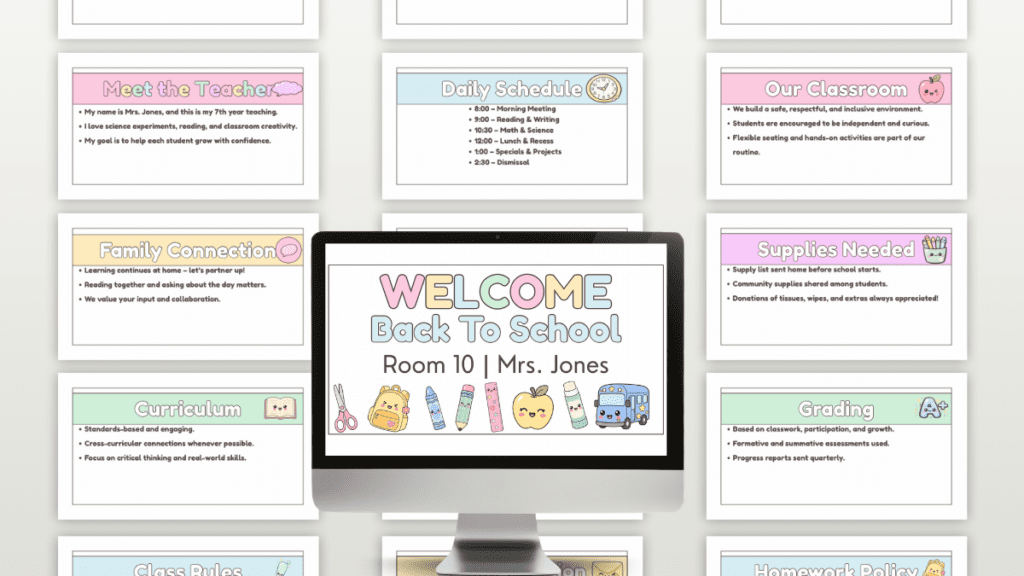
The best way to minimize stressful questions is to address the most common ones before they’re asked — right in your presentation. A dedicated FAQ slide that tackles the top three to five questions you get every year shows parents that you know your community and you’ve thought of them.
If you’re building your presentation from scratch, that’s one of 23 slides I’ve already included in my Back to School Night Presentation Template — a fully editable Canva template with kawaii illustrations, a pastel color palette, and every key slide already laid out.
You just fill in your own details and you’re ready to go.
Back to School Night Q&A doesn’t have to feel like a pop quiz. When you’ve anticipated what’s coming — and built a presentation that gets ahead of it — you’ll walk in ready for almost anything.
Looking for more Back to School Night ideas and resources? Check out these related posts:
- What to Include in a successful Back to School Night Presentation: 23 Essential Slides for Teachers
- Cute Editable Meet the Teacher Template & Printables: The Ultimate Back-to-School Bundle
- 25 Fun First Day of School Activities for Kindergarten & Elementary Students.
Final Thoughts
The best Back to School Night presentations answer questions before parents even have to ask them. When families leave feeling informed, welcomed, and confident in your classroom, you’ve already taken a huge step toward building a successful school year.
By preparing for these common Back to School Night questions ahead of time, you’ll feel more confident, your presentation will run more smoothly, and parents will leave with the information they need.
Leave a Reply
You must be logged in to post a comment.