
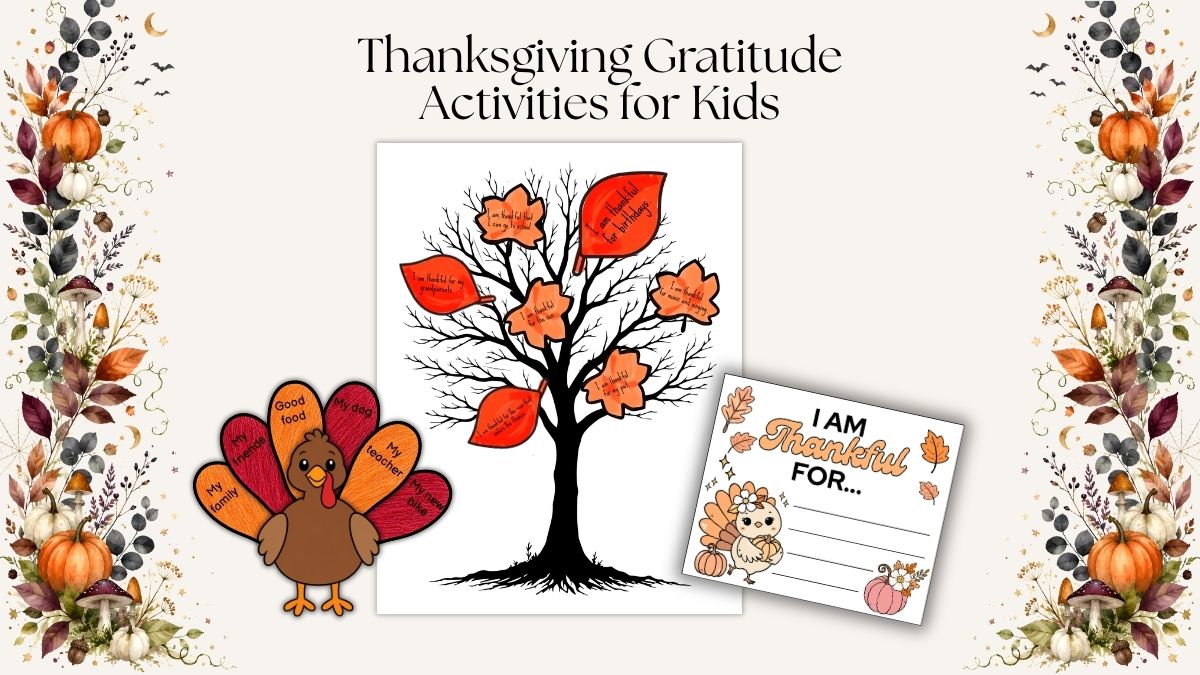
Thanksgiving naturally brings conversations about being thankful into classrooms and homes. Kids hear the word “grateful” a lot in November, but that doesn’t mean they always know what to do with it. Simple writing, discussion, crafts, and games give children something concrete to hold onto — a way to think about the people, places, experiences, and everyday things they appreciate, instead of just repeating the word back.
Below are nine Thanksgiving gratitude activities for kids that work in a classroom, at home, or both. You don’t need all of them. Pick one, adapt it for the age group you’re working with, or string a few together across November as a low-key gratitude unit.
1. Make a Thankful Turkey
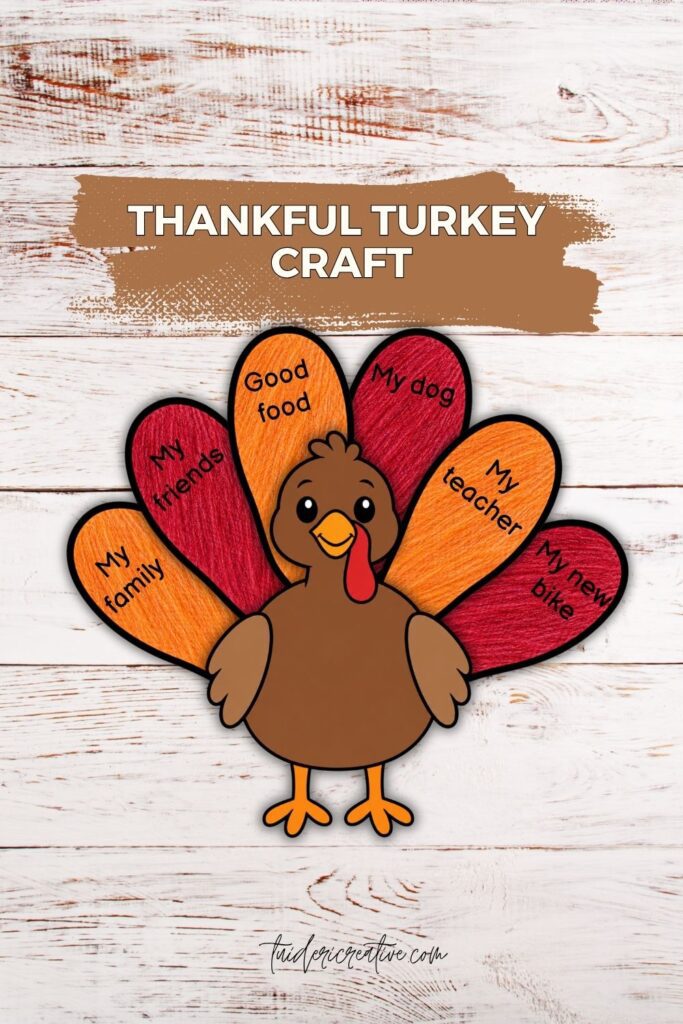
The thankful turkey is a classroom staple for a reason: it’s flexible, it’s visual, and it gives kids a reason to think past the first answer that comes to mind. The basic idea is simple — children build a turkey, then add feathers listing things they’re thankful for.
To get past the usual “toys” and “video games” answers, prompt a little more specifically. Feathers can represent:
- family members
- friends
- pets
- a favorite place
- something they learned
- someone who helped them
- something that makes them feel safe or happy
This works fine as a solo craft, but it also makes a good group project — one shared turkey body with feathers contributed by the whole class, or individual turkeys mounted together on a shared board.
If you’d rather skip the cutting and assembling, I have a printable Thankful Turkey Craft where kids write what they’re thankful for on individual feathers and put the turkey together themselves. It’s meant as a print-and-go version of the same activity, not a replacement for the DIY version — use whichever fits your prep time. Either way, the finished turkeys make a nice start to a Thanksgiving or fall bulletin board.
2. Use Gratitude Cards for Quick Writing
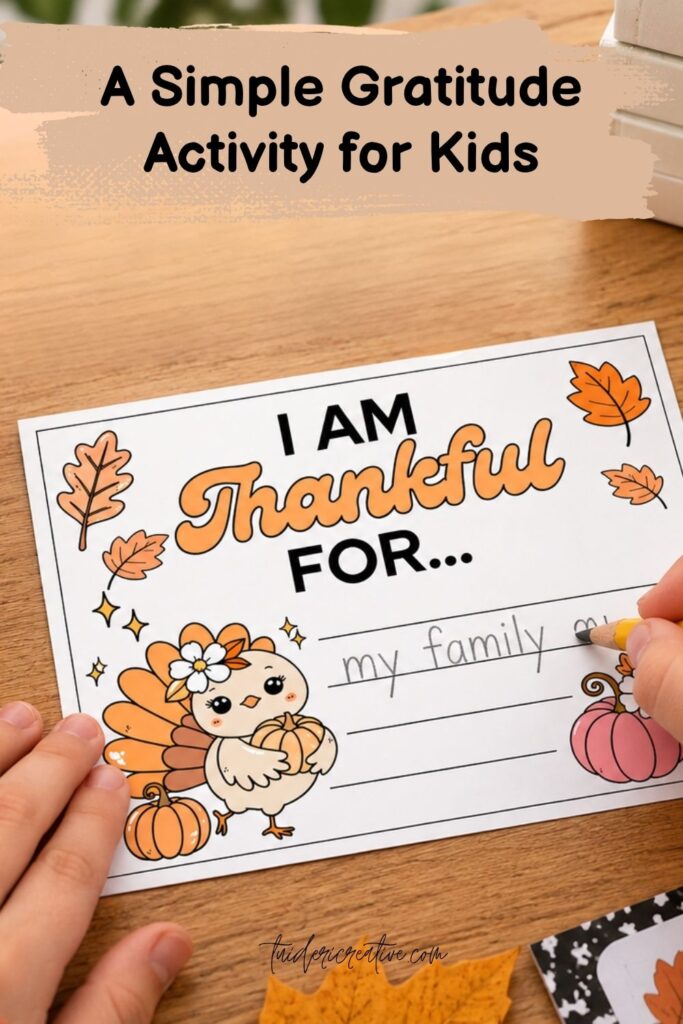
Not every gratitude activity needs to be a craft. Sometimes the most useful version is a simple “I am thankful for…” card that kids fill in during a few spare minutes.
These cards work well as:
- morning work
- a writing center option
- an early finisher activity
- a Thanksgiving week warm-up
- a small-group discussion starter
- a take-home reflection
For younger children, let them draw instead of write, or have an adult jot down what they say out loud. For older elementary students, push for specifics — “my grandma, because she taught me to bake” says more than “my grandma” on its own, and it’s an easy way to model that in the moment.
My Thanksgiving Gratitude Cards printable uses this same “I AM THANKFUL FOR…” format, with space for kids to record several responses at once. It’s a straightforward option if you want something ready to hand out rather than formatting your own template.
3. Create a Thankful Tree
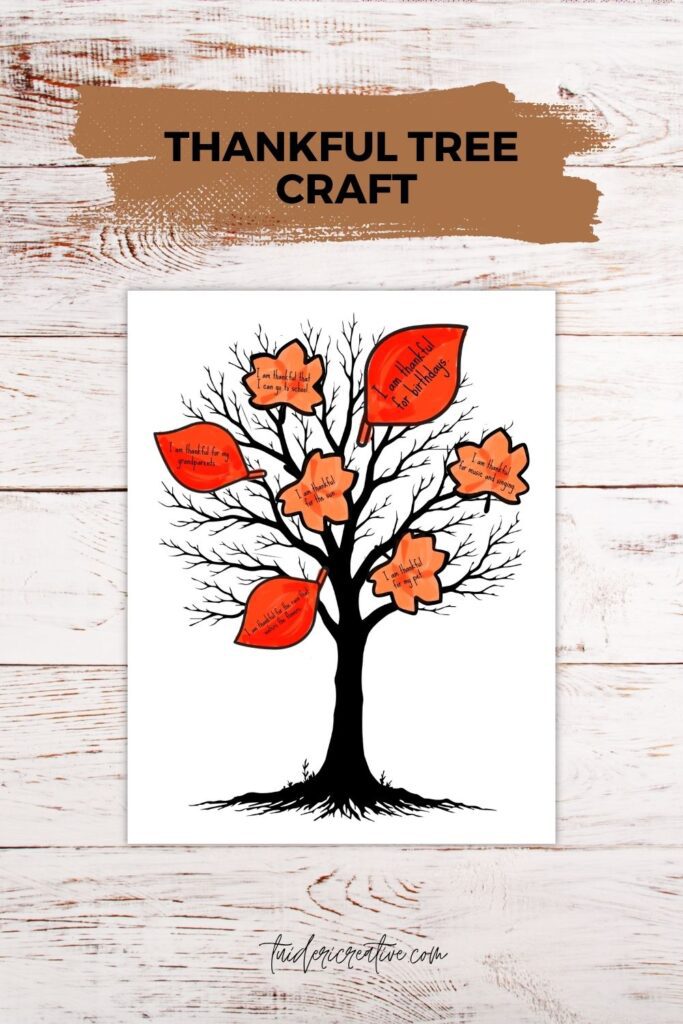
The thankful tree is another classic, and it holds up well because it’s ongoing rather than a one-and-done worksheet. Draw or tape up a bare tree trunk on a bulletin board, then have kids add paper leaves with things they appreciate written or drawn on them.
Rather than trying to fill the tree in one sitting, let it grow across November — a leaf or two a week works better than a rushed single session, and it gives the display somewhere to go as the month goes on. It also happens to be one of the easier gratitude activities to run as a whole-class effort, since everyone is contributing to the same visual.
If you’d rather not cut out dozens of leaf shapes by hand, a printable Thankful Tree Craft can save some of that prep time while keeping the same idea intact.
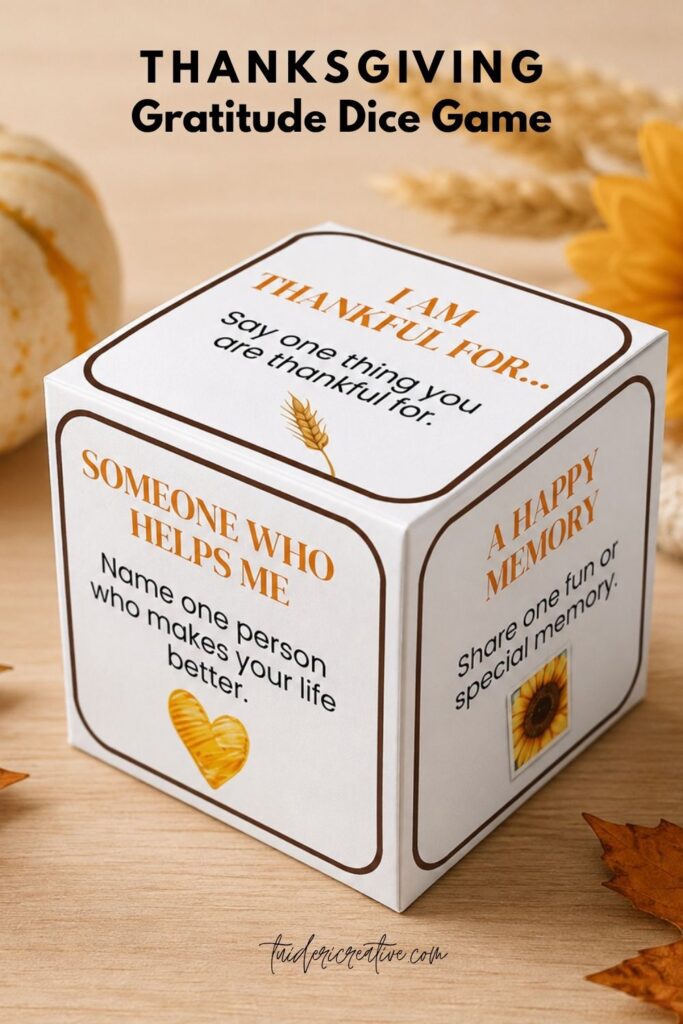
4. Play a Gratitude Dice Game
Some kids freeze up when you ask, “What are you thankful for?” It’s a big, open question, and a blank stare is a common response. A dice game narrows things down by turning the question into a series of smaller, specific prompts.
Each roll can correspond to a different category, such as:
- a person you appreciate
- a place you love
- something that makes you laugh
- something you’re good at
- something someone did for you
- something you enjoyed this week
I put together a printable Gratitude Dice Game that works this way — roll, land on a category, and answer. It’s a good fit for morning meeting, small groups, partner work, or even around the Thanksgiving table at home, where a game format tends to get more out of kids than a direct question does.
5. Write a Thank-You Letter
Most gratitude activities ask kids to list things. A thank-you letter shifts the focus to a person instead, which tends to produce more thoughtful answers because it’s harder to give a one-word response about a person than about a toy.
Have each child pick someone they appreciate and write a short letter to them.
For younger children, keep it simple: a drawing plus a sentence starter like “Thank you for ______.”
For older children, ask for a little more structure — who the person is, what they did, and why it mattered. That last part is usually where the more genuine writing shows up.
If you’re already working through a broader unit, my Thanksgiving Unit Study includes a letter-writing activity built around this same idea, so you don’t have to create the prompt from scratch.
6. Try Simple Thanksgiving Gratitude Writing Prompts
Specific prompts tend to get more thoughtful answers than repeatedly asking “What are you thankful for?” — kids run out of new things to say to the same open question fairly quickly. Here are a few Thanksgiving gratitude writing prompts you can use directly, no printable required:
- Someone I am thankful for is…
- Something that made me happy this week was…
- A place that makes me feel happy is…
- Something I can do now that I couldn’t do last year is…
- Someone who helped me recently was…
- One small thing I appreciate every day is…
- Something in nature I am thankful for is…
- One way I can show someone I appreciate them is…
Rotate through a few of these across the week instead of using just one, and you’ll likely get a wider range of answers than a single repeated worksheet would produce.
7. Start a Gratitude Routine
A single Thanksgiving worksheet is fine, but a short recurring routine tends to stick better and doesn’t require much extra planning. A few low-effort options:
- one “thankful thought” shared during morning meeting
- adding one leaf to the thankful tree each week
- completing one gratitude prompt every Friday in November
None of these need daily prep — the point is repetition, not complexity. Coming back to the idea more than once seems to help kids notice smaller, everyday things they might otherwise skip past, rather than only thinking about gratitude when a worksheet tells them to.
8. Turn Gratitude Into a Classroom Display
Whatever gratitude work your class produces can double as classroom decor with very little extra effort. Thankful turkeys, gratitude cards, thankful tree leaves, and short writing pieces all work well pinned up together on a single board.
If you want more specific layout ideas, I’ve written a separate post on Thanksgiving Bulletin Board Ideas that covers this in more detail — it’s worth a look if you’re trying to fill wall space without starting from scratch.
9. Combine Gratitude With a Thanksgiving Unit Study
Gratitude doesn’t have to stand on its own. It fits naturally as one piece of a broader Thanksgiving unit that also touches on history and social studies, fall and harvest science, math, literacy, and craft work.
If you’re building out a fuller unit rather than a single gratitude activity, my post on Thanksgiving Unit Study Ideas for Grades 1–3 walks through how those pieces fit together.
Keeping It Simple
A gratitude activity doesn’t need to be elaborate to be worthwhile. A short conversation, one written response, a growing paper tree, a quick craft, or a simple dice game can all give kids a real, concrete chance to think about what they appreciate — no full lesson plan required. If you’d rather skip some of the prep, printable versions of several of these activities are available as ready-to-use options.
Leave a Reply
You must be logged in to post a comment.