
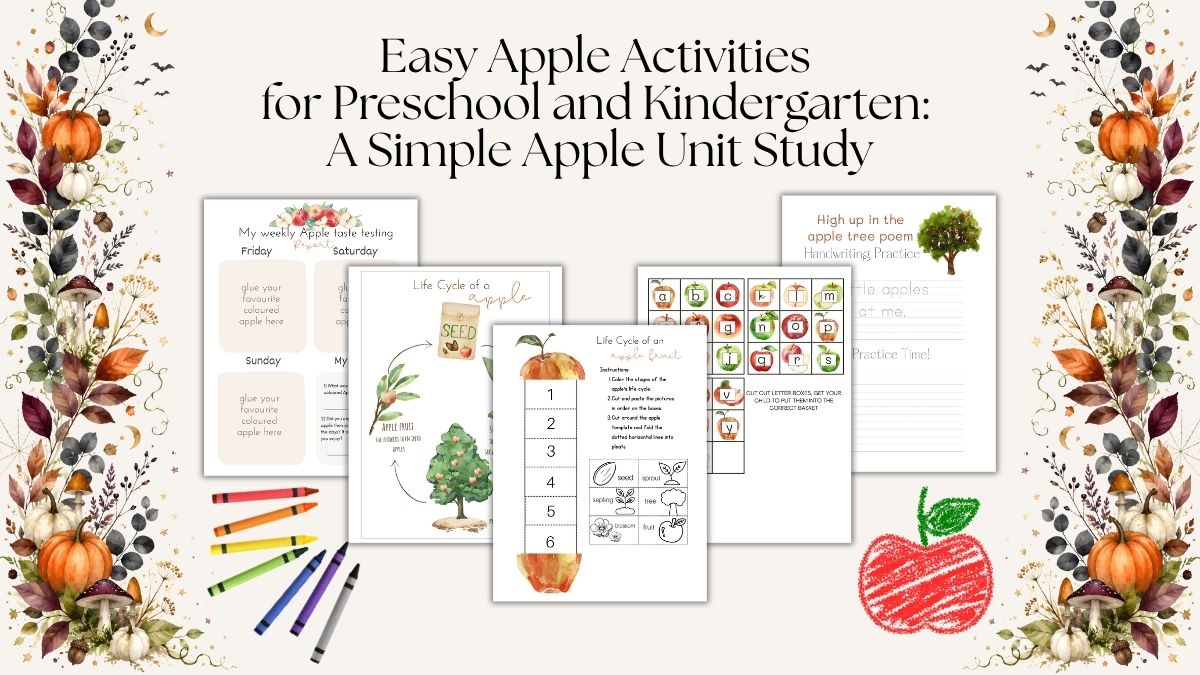
An apple theme can support science, observation, vocabulary, math, literacy, sequencing, and art — all from one familiar object. Apple activities for preschool and kindergarten are a useful way to cover several subjects without switching materials constantly. Many of the activities below can be set up with simple materials you may already have at home or in the classroom.
Below are ten quick activity ideas, followed by dedicated sections on the apple life cycle, the parts of an apple, and a simple science experiment, along with a materials list and a sample weekly plan.
10 Easy Apple Activities for Preschool and Kindergarten
1. Explore the Parts of an Apple
Look at a real apple together, then cut it open to see the flesh, core, and seeds. The full parts-of-an-apple activity is explained in more detail below.
2. Learn the Apple Life Cycle
Introduce the stages in order: seed, sprout, young tree, mature tree, blossom, apple. See the full apple life cycle section below for ways to practice the sequence.
3. Sequence the Apple Life Cycle
Use picture cards or a cut-and-paste page to put the life cycle stages in order, then have children retell the sequence out loud.
4. Try an Apple Browning Experiment
Compare an untreated apple slice to one dipped in lemon juice. The complete science activity, including discussion questions, is explained later in this post.
5. Sort Apples
Sort by color, size, or variety. This introduces comparison words like “more,” “fewer,” “same,” and “different.”
6. Make an Apple Graph
Ask a simple question — favorite apple color, for example — and have children add their answer to a graph. This works well as a small-group or whole-class activity.
7. Build Apple Vocabulary
Words like orchard, blossom, seed, core, crisp, and juicy give children new vocabulary tied to something they’ve seen and tasted.
8. Describe an Apple With Adjectives
Ask what an apple looks, feels, smells, and tastes like. Words like smooth, round, crunchy, and tart give children a starting point for early writing.
9. Add Apple Art
Apple printing, apple blossom art, or a simple drawing of a cut apple give children another way to revisit the anatomy and life cycle content.
10. Use Apple Puzzles or Morning Work
Matching cards, simple puzzles, and sequencing activities work well for a classroom center, homeschool morning basket, or independent work time.
Apple Life Cycle Activities for Kids
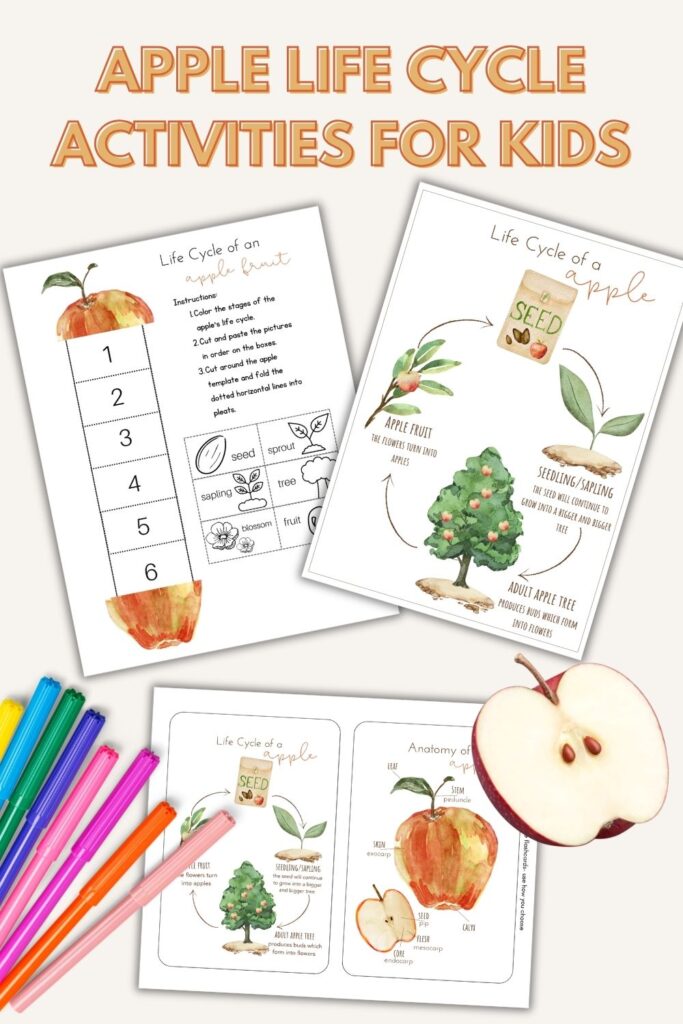
The apple life cycle has six stages that are simple enough to picture at this age: seed, sprout, young tree, mature tree, blossom, apple.
A few ways to work through apple life cycle activities for kids:
- Sequencing cards — put picture cards for each stage in order
- Cut-and-paste activity — glue each stage onto a life cycle wheel or timeline
- Drawing — draw and label each stage
- Oral retelling — explain the cycle out loud, stage by stage
- Matching — match a picture of each stage to its written label
- Acting it out — children move through each stage physically (curling up as a seed, standing up as a sprout, and so on), which works well for preschool
Using more than one of these — sequencing plus retelling, for example — gives children a second chance to work with the same information in a different way.
Parts of an Apple Activity
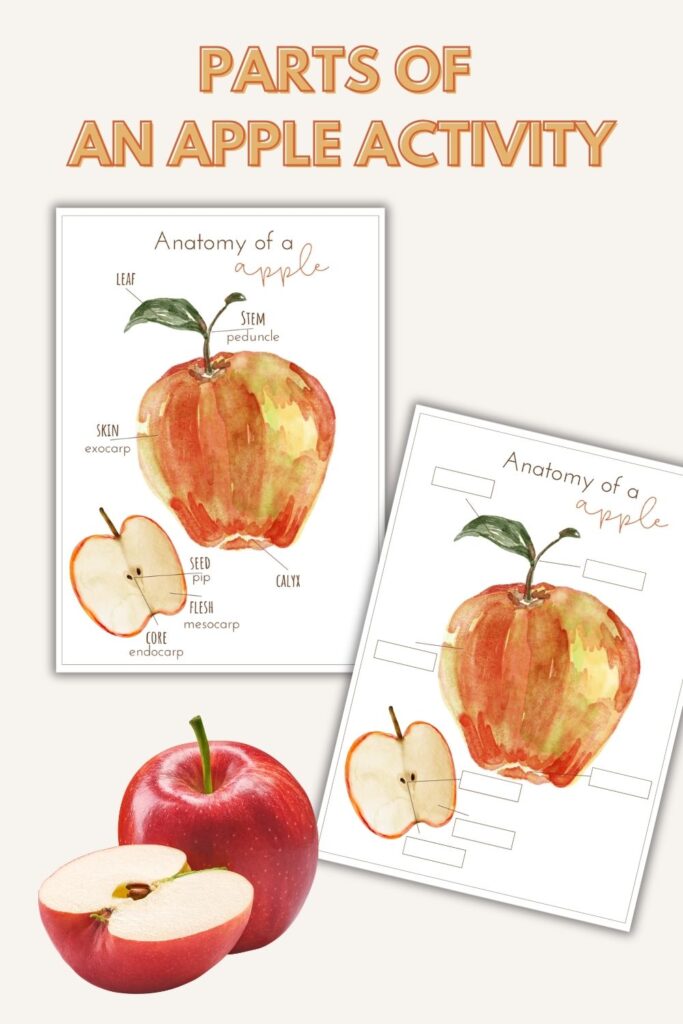
This works best starting with a real apple rather than a diagram.
- Look at the whole apple and name what’s visible from the outside.
- Identify the stem and the skin.
- Cut the apple in half (adult-led).
- Look at the flesh, the core, and the seeds.
- Count the seeds together.
- Label a parts-of-an-apple diagram afterward.
Observing a real apple first gives children a concrete object to connect with the vocabulary on the worksheet — stem, skin, flesh, core, and seeds are all things they’ve just seen and touched, rather than only read as labels.
Easy Apple Science Experiment: Why Do Apples Turn Brown?
This apple browning experiment uses materials most classrooms and homes already have.
What you’ll need:
- An apple
- A knife (for adult use)
- Small plates
- Lemon juice
- Water (optional, for a three-way comparison)
Steps:
- Cut several slices from the apple.
- Leave one slice untreated.
- Dip a second slice in lemon juice.
- Optionally, dip a third slice in plain water for comparison.
- Set the slices on separate plates and check back after 10–20 minutes.
What’s happening: When an apple is cut and exposed to air, a natural process called enzymatic browning begins. Oxygen reacts with compounds in the apple, causing the cut surface to gradually turn brown. Lemon juice helps slow this reaction. The University of Missouri Integrated Pest Management program has a short explanation of the science behind this if you’d like more detail before leading the activity.
For children, a simpler version works fine: “When the inside of the apple touches the air, it slowly changes color. The lemon juice helps slow that down.”
Questions to ask:
- Which slice changed color first?
- Which slice stayed the lightest?
- What do you think the lemon juice did?
Apple Math and Literacy Activities
Apple Math Activities
- Counting apple seeds
- Sorting by color, size, or variety
- Graphing favorite apple colors or varieties
- Comparing apple sizes
- Simple patterns using apple pictures or counters
Apple Literacy Activities
- Vocabulary building (orchard, blossom, core, seed)
- Alphabet sorting with apple-themed images
- Descriptive/adjective practice
- Apple-themed poems
- Simple writing prompts, such as:
- My favorite apple is…
- An apple feels…
- If I had an apple tree…
- I see…
If you’re looking for more seasonal literacy ideas, these Fall Alphabet Activities for Preschool & Kindergarten include additional ways to practice letter recognition, matching, and beginning sounds.
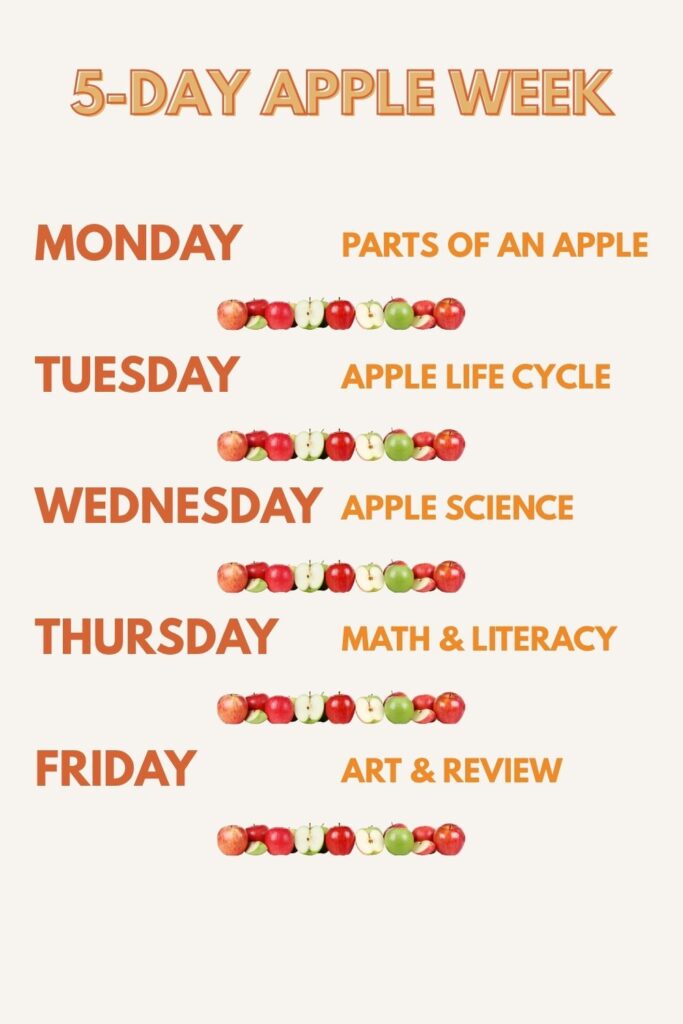
A Simple 5-Day Apple Theme Week
| Day | Focus | Activity Ideas |
|---|---|---|
| Monday | Parts of an Apple | Real apple observation + anatomy diagram |
| Tuesday | Apple Life Cycle | Learn the stages + sequencing activity |
| Wednesday | Apple Science | Browning experiment |
| Thursday | Math & Literacy | Sorting, graphing, vocabulary |
| Friday | Art & Review | Apple printing, writing prompts, puzzles |
This plan can be condensed into two or three days by combining sessions, or spread out over two weeks with extra practice days for sequencing and writing — whichever fits your setting better.
For more simple seasonal ideas outside the classroom, see 30 Fun Fall Bucket List Ideas for Kids.
What Do You Need for an Apple Theme?
Most of the activities above use a small set of materials:
- A few real apples
- Paper
- Crayons or markers
- Child-safe scissors
- Glue
- Lemon juice (for the browning experiment)
- Small plates or bowls
- Printable activity pages, if you’re using them
Not every activity requires every item — the sequencing and vocabulary activities, for instance, only need paper and something to write with.
Printable Apple Unit Study
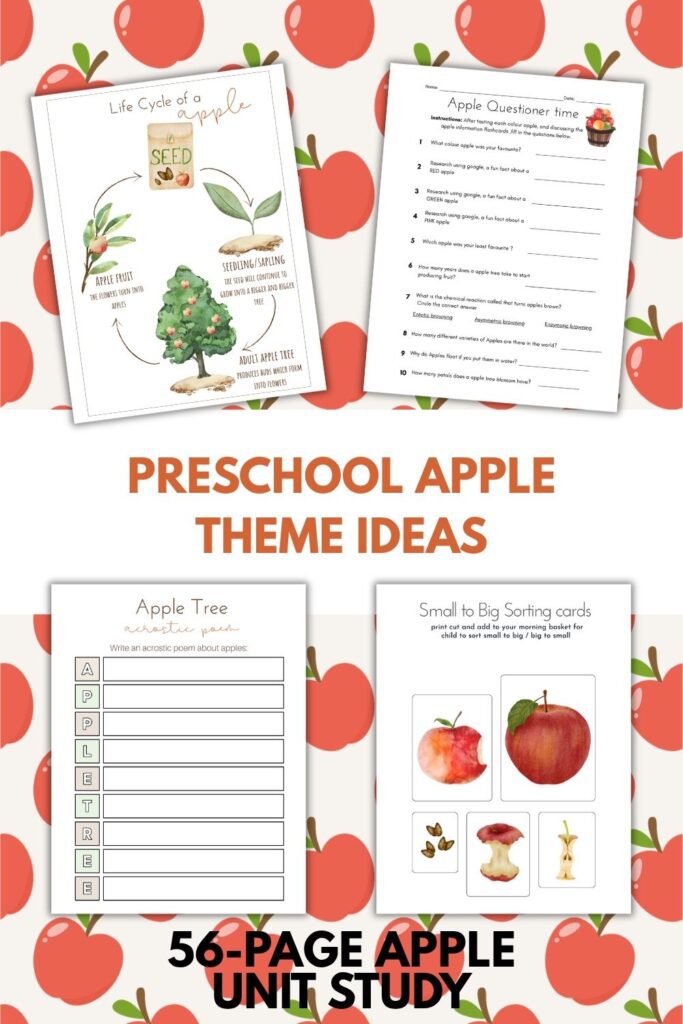
If you’d rather have many of these activities ready to print, the Apple Unit Study brings several of the science, life cycle, literacy, math, and art activities together in one printable pack. It’s 56 pages and includes life cycle and anatomy pages, science fact pages, vocabulary flashcards, matching activities, alphabet and adjective practice, apple tree poems and writing prompts, size sorting and graphing worksheets, apple and apple blossom art pages, morning basket puzzles, a cut-and-paste life cycle activity, and a blank worksheet template. Some pages work on their own; the anatomy and browning sections pair naturally with a real apple.
If you’re new to themed learning, you can also read more about using printable unit studies with young learners.
Shop the Apple Unit Study on Etsy →
Frequently Asked Questions
What age is an apple unit study suitable for?
Apple unit study activities work primarily for preschool and kindergarten, with several — like graphing, writing prompts, and the science experiment — adaptable for early elementary.
What can preschoolers learn from an apple theme?
An apple theme can support science observation, vocabulary building, sequencing, counting, sorting, and fine-motor practice through cutting, gluing, and tracing.
How do you teach the apple life cycle to preschoolers?
Introduce the stages — seed, sprout, young tree, mature tree, blossom, apple — using simple language, then practice the order through sequencing cards, drawing, or retelling.
What are some easy apple science activities?
The parts-of-an-apple observation and the apple browning experiment both use a real apple and a few household items.
When is the best time for an apple theme?
Late summer and fall, especially around apple-picking season, are common times for an apple theme, though the science and life cycle content works at any time of year.
Leave a Reply
You must be logged in to post a comment.