
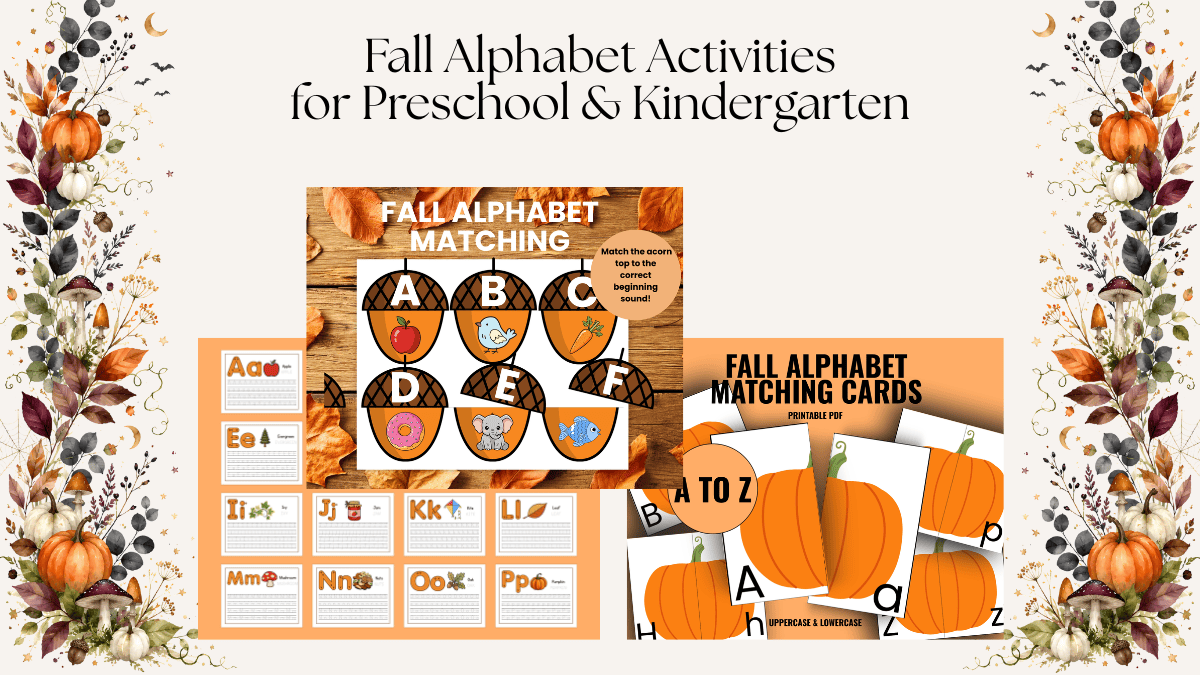
Fall is one of the easiest seasons to work with when it comes to early literacy. Pumpkins, acorns, leaves, apples, woodland animals, and familiar fall foods give children something new to look at while they practice the same core skills they’ve been building all along. The visuals change, but the learning goals stay the same: letter recognition, uppercase and lowercase matching, beginning sounds, and letter formation.
Young children need many repeated opportunities to work with letters before recognition becomes automatic, and they don’t need to encounter those letters in the same format every time. A worksheet is one way to practice, but tracing, matching, sorting, and simple hands-on games all give children a different way to interact with the alphabet while reinforcing the same underlying skills.
This article walks through practical fall alphabet activities for preschool and kindergarten, including tracing, matching, beginning sounds practice, uppercase/lowercase recognition, ideas for setting up a fall literacy center, and a few low-prep printable resources that can make seasonal alphabet practice easier to put together.
What Alphabet Skills Can Preschoolers and Kindergarteners Practice in Fall?
Before choosing specific activities, it helps to know which skills they’re actually building. Alphabet work usually falls into a few related but distinct categories.
Letter Recognition
This is the ability to name and identify letters when a child sees them, whether they appear on a card, in a book, on a sign, or in a game. Seeing the same letters in different contexts and formats gives children repeated opportunities to recognize them outside a single worksheet or alphabet chart.
Uppercase and Lowercase Matching
Knowing that A and a represent the same letter is a separate skill from simply reciting the alphabet or naming uppercase letters alone. Many children can identify uppercase letters well before they’re equally confident with lowercase forms, so matching the two together is worth practicing on its own.
Letter Formation
Tracing and forming letters helps children build familiarity with the shape and stroke pattern of each letter. Tracing can be a useful part of this process, though it works best as one piece of a broader approach to letter formation rather than the only method used.
Beginning Sounds
This involves connecting a picture or spoken word with its initial sound and the letter that represents it — for example, recognizing that “apple” starts with the /a/ sound and the letter A, “leaf” starts with /l/, or “pumpkin” starts with /p/. This is a different skill from letter recognition alone. A child might know the letter B by sight without yet reliably hearing /b/ at the beginning of a spoken word like “bear.”
These four skills overlap, but they aren’t identical, and a child can be strong in one area while still developing another. That’s part of why it helps to rotate through a few different types of activities rather than relying on a single format all season.
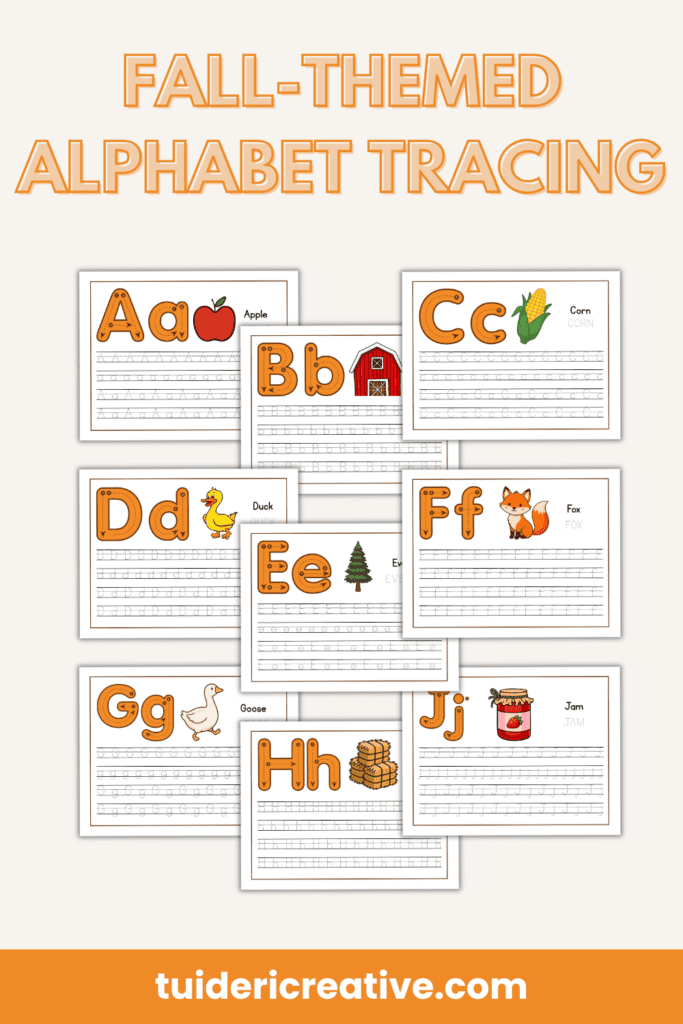
1. Practice Letter Formation with Fall Alphabet Tracing Cards
Tracing cards are a straightforward way to give children repeated practice with letter shapes, one letter at a time, in a format that’s less overwhelming than a full worksheet page. A set built around a fall theme — covering the full alphabet from A to Z — keeps the visuals seasonal while the underlying practice stays focused on recognition, uppercase and lowercase forms, and letter formation.
Working with individual cards rather than a bound packet has some practical advantages for early learners. A child can focus on a single letter without the visual clutter of an entire page, and cards are easy to hand out one at a time during a literacy center, morning work, or a quiet moment of independent practice. They also work well for small-group review, where each child can trace a different letter and then trade.
For homeschool settings, tracing cards can slot into a short daily routine without requiring a lot of setup. Some families find it useful to laminate the cards or slip them into reusable sleeves so children can practice with a dry-erase marker and wipe the card clean for the next round — this is simply an optional way to extend the cards’ use, not something that changes the core printable itself.
If you’d rather have the alphabet cards ready to print instead of designing your own, the Fall Alphabet Tracing Cards provide a full A–Z seasonal set for letter formation and recognition practice.
2. Practice Letters and Beginning Sounds with a Fall Alphabet Matching Game
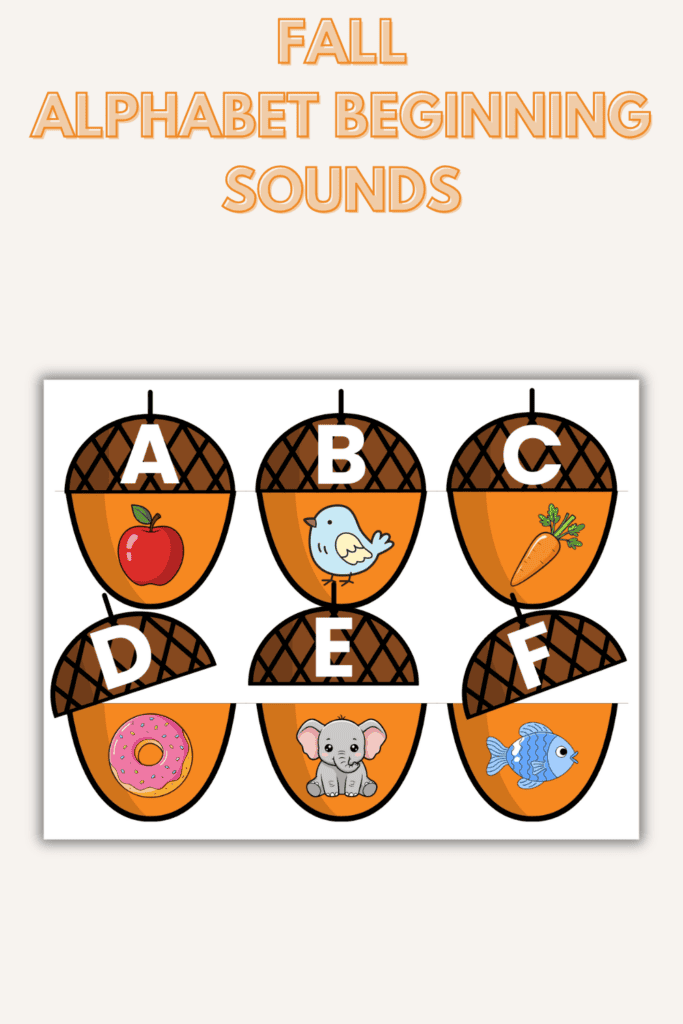
Matching activities give children a hands-on alternative to tracing, and they’re especially useful for connecting letters with beginning sounds. A fall-themed alphabet matching game uses seasonal imagery to pair letters with the sounds they represent, which asks children to do something slightly different from simply naming a letter on sight.
As mentioned above, recognizing a letter and hearing its sound at the beginning of a word are related but separate skills. A child may know the letter B confidently and still be working on isolating the /b/ sound at the start of “bear” or “bird.” A matching format that pairs letters with pictures gives children repeated, low-pressure practice connecting the two.
This kind of activity fits naturally into a literacy center, where it can be set out for independent or partner use. It also works well as a small-group review activity, a partner game during homeschool lessons, or a quiet independent task once the routine has been introduced. Because it’s hands-on rather than paper-and-pencil, it offers a different kind of engagement than tracing or worksheet practice.
The Fall Alphabet Matching Game uses fall-themed imagery to give children practice with letter recognition and beginning sounds in a matching format.
3. Match Uppercase and Lowercase Letters with a Pumpkin Alphabet Activity
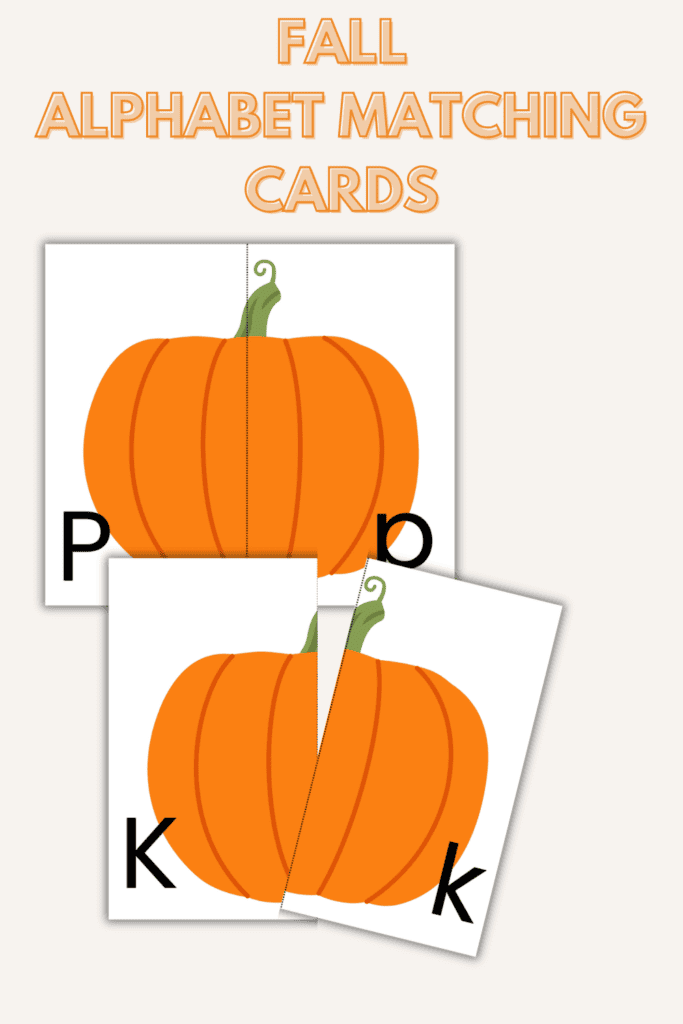
Uppercase and lowercase matching deserves its own dedicated practice, since a child who knows uppercase A well may still need more exposure before lowercase a feels equally familiar. A pumpkin-themed matching activity focuses specifically on this skill, using pumpkin-themed matching pieces to pair each uppercase letter with its lowercase counterpart.
Because the visual theme centers on pumpkins rather than Halloween specifically, this kind of activity works well across a broader stretch of the fall season — September, October, and into November — rather than being limited to a single holiday. That makes it a useful fit for a general pumpkin unit, a fall literacy center, or seasonal review at any point in autumn.
Practical uses include a preschool or kindergarten literacy center, fall morning work, small-group instruction, partner matching, or homeschool practice. As with the other activities in this article, it’s meant to give children one more way to interact with letters — in this case, specifically reinforcing the connection between uppercase and lowercase forms.
The Pumpkin Alphabet Matching Activity focuses on uppercase and lowercase letter matching using a pumpkin theme suited to a fall or pumpkin unit.
Why Use More Than One Type of Alphabet Activity?
Tracing, matching, letter recognition, and beginning sounds are related, but they aren’t interchangeable. A child may recognize a letter by sight but still struggle to form it on paper. Another child may trace letters accurately without yet recognizing the lowercase version of the same letter. A third may know the whole alphabet in order but still be developing the ability to hear beginning sounds in spoken words.
Rotating between different activity types gives children more chances to interact with the same letters in different ways, which can support the skills they’re currently working on without requiring you to guess exactly which format will click for a particular child. This is part of why the three fall resources described above are worth using together rather than choosing only one: each one emphasizes a different skill, so they complement rather than repeat each other.
Fall Alphabet Activities Beyond Printables
Printables aren’t the only way to practice these skills, and a well-rounded approach to alphabet work usually mixes in some free, hands-on ideas as well. Here are a few simple options that require little to no prep.
Fall Letter Hunt
Write letters on paper leaves or index cards and hide them around a room or outdoor space. Children search for and identify each letter as they find it. You can vary the difficulty by asking children to find only uppercase letters, only lowercase letters, or to match uppercase and lowercase pairs as they go.
Leaf Letter Matching
Write uppercase letters on one set of paper leaves and lowercase letters on a second set, then scatter both sets for children to find and pair together.
Pumpkin Letter Hunt
Place letter cards around a pretend pumpkin patch, a sensory bin, or another play area themed around fall for children to search out and name.
Fall Beginning Sounds Basket
Gather a few safe household objects, picture cards, or small toys and have children sort them by beginning sound — for example, grouping everything that starts with /a/ together.
Play Dough Letters
Children roll and shape play dough into letter forms, which offers a tactile alternative to tracing on paper for practicing letter formation.
Alphabet Sensory Bin
Hide alphabet pieces, cards, or magnetic letters in a fall-themed sensory bin filled with materials like dried corn kernels or shredded paper. As always, choose age-appropriate materials and supervise young children closely around small objects.
Fall Alphabet Book
Children create a simple homemade alphabet book using fall-themed words and their own drawings, which can be a nice ongoing project across several weeks of the season.
These ideas work well as a supplement to printable resources, not a replacement, and can be mixed in whenever you want a lower-prep or more open-ended option.
How to Set Up a Fall Literacy Center
A fall literacy center doesn’t need to include many activities running at once. In fact, keeping it simple tends to work better for young children, who benefit from a manageable number of clear choices rather than a table full of options.
A few practical setup ideas:
- Keep materials organized in separate trays, envelopes, or folders so each activity is self-contained.
- Introduce one activity to the group before expecting children to use it independently.
- Keep instructions visually simple — a picture or two showing what to do often works better than written directions for this age group.
- Rotate activities on a schedule rather than putting everything out at once.
- Choose which activity to feature based on the specific skill currently being practiced, whether that’s tracing, matching, or beginning sounds.
Printable alphabet activities can be especially useful for a literacy center because the materials can be prepared once, laminated or placed in sleeves if desired, and reused across the season, cutting down on ongoing prep time.
A Simple Week of Fall Alphabet Practice
This is only an example schedule. A preschooler may need more time on letter recognition and tracing, while a kindergartner who already recognizes most letters may spend more of the week on beginning sounds or independent matching work.
| Day | Alphabet Focus | Activity Idea |
|---|---|---|
| Monday | Letter recognition | Fall letter hunt combined with alphabet cards |
| Tuesday | Letter formation | Fall Alphabet Tracing Cards |
| Wednesday | Uppercase/lowercase recognition | Pumpkin Alphabet Matching |
| Thursday | Beginning sounds | Fall Alphabet Matching Game |
| Friday | Mixed review | Choose a favorite activity, or combine two centers |
Which Fall Alphabet Activity Should You Choose?
If you’re deciding where to start, this comparison may help.
| Activity | Main Skill | How Children Interact | Useful For |
|---|---|---|---|
| Fall Alphabet Tracing Cards | Letter recognition and formation | Trace and write each letter | Individual practice, literacy centers |
| Fall Alphabet Matching Game | Letter recognition and beginning sounds | Match letters and pictures | Centers, partner work, homeschool |
| Pumpkin Alphabet Matching | Uppercase/lowercase recognition | Match uppercase and lowercase pairs | Centers, seasonal review |
There’s no need to pick just one skill to focus on for the whole season. Children can rotate between all three activities depending on what they’re currently working on, using each one for a different piece of the alphabet puzzle.
Fall Alphabet Activities for Preschool
Younger learners often benefit from a lighter touch with alphabet work: recognizing and naming letters, matching obvious pairs, tracing with some adult support, and identifying beginning sounds for familiar, high-interest words. Preschool alphabet practice doesn’t need to mean completing long worksheets or sitting through extended activities. Short, hands-on matching tasks and brief tracing sessions can be mixed with alphabet songs, picture books, imaginative play, and everyday conversation about letters children notice around them.
Keep sessions short and follow the child’s interest level. Depending on the child, some preschoolers may be ready for more structured practice, while others do best with mostly playful, low-pressure exposure to letters.
Fall Alphabet Activities for Kindergarten
The same activities can be extended for children who are ready for more challenge. This might include faster uppercase and lowercase recognition, more independent beginning sounds work, tracing or writing letters with less support, sorting pictures by initial sound, finding several words that begin with a given letter, or using fall vocabulary in simple words or short sentences.
Not every kindergartner will be at the same point, and that’s expected. Some children may still benefit from the same lighter-touch approach used in preschool, while others are ready to apply these skills to early reading and writing tasks.
Use the Same Alphabet Skills Through Every Season
Alphabet practice doesn’t need to end when fall does. Letter recognition, formation, uppercase/lowercase matching, and beginning sounds stay relevant all year, and seasonal themes are simply a way to refresh familiar practice without changing the underlying skill.
Similar seasonal alphabet activities are available for winter, spring, and summer, so you can keep the same rotation of tracing, matching, and beginning sounds practice going through the rest of the school year with fresh visuals each season.
More Fall Learning Activities
If you’re building out a broader fall unit, alphabet practice pairs naturally with other seasonal learning areas, including fall preschool activities more generally, pumpkin-themed activities, halloween math practice, fall fine motor activities, and Thanksgiving-themed learning as the season progresses.
Frequently Asked Questions About Fall Alphabet Activities
What alphabet skills should preschoolers practice?
Most preschoolers benefit from practice with letter recognition, naming letters, matching obvious uppercase and lowercase pairs, and simple beginning sounds work, though the right level of challenge depends on the individual child.
What alphabet skills should kindergarteners practice?
This depends on the child’s current literacy development. Some kindergartners are ready for independent beginning sounds and writing practice, while others may still be building foundational letter recognition.
How can I make alphabet practice more hands-on?
Matching games, letter hunts, play dough letters, and sensory activities all give children a hands-on alternative to worksheet-style practice.
How do you teach uppercase and lowercase matching?
Pairing activities that ask children to physically match an uppercase letter to its lowercase counterpart, such as a card-matching game, give repeated practice with this specific skill.
How can I practice beginning sounds?
Picture sorting and picture-to-letter matching activities are a practical way to connect spoken sounds with the letters that represent them.
Are tracing activities useful for preschoolers?
Tracing can be one useful way to practice letter formation, but it works best alongside other alphabet experiences rather than as the only method used.
How can I use alphabet printables in literacy centers?
Keep materials organized in separate folders or trays, introduce one activity at a time, and rotate through different printables based on the skill currently being practiced.
Can these fall alphabet activities be used for homeschool?
Yes. They can be adapted for a single child or for siblings working at different levels, since each activity type can be used at whatever pace fits the child.
When can I use fall alphabet activities?
Fall themes generally work well across September, October, and November, rather than being limited to Halloween specifically.
Final Thoughts
Fall alphabet activities don’t require a completely new curriculum or a big overhaul of your literacy routine. The same core skills — letter recognition, letter formation, uppercase and lowercase matching, and beginning sounds — can simply be practiced through seasonal materials and hands-on activities that keep things feeling fresh through September, October, and November.
Combining tracing, matching, and a few free hands-on ideas gives children variety throughout the season while still reinforcing the same foundational skills. Whether you reach for the Fall Alphabet Tracing Cards for letter formation, the Fall Alphabet Matching Game for beginning sounds, or the Pumpkin Alphabet Matching Activity for uppercase and lowercase recognition, each one offers a slightly different way to work through the alphabet this fall.
Leave a Reply
You must be logged in to post a comment.