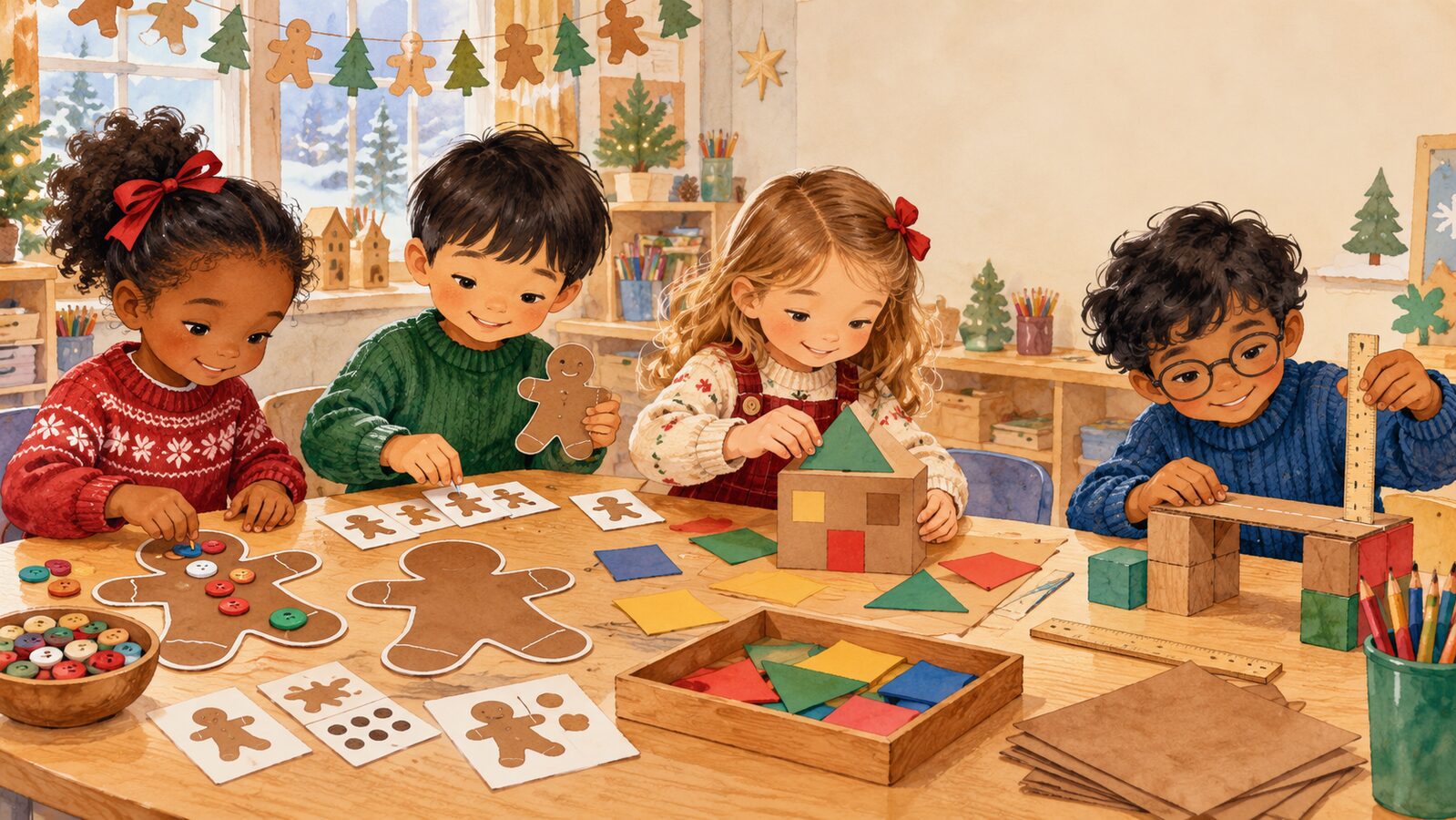
Gingerbread activities for kindergarten can bring fresh energy to December lessons without changing the routines children already know. A simple paper character can become a story prompt, a counting mat, a measurement tool, or the passenger in a bridge-building challenge. You can cover literacy, math, and STEM with construction paper, cubes, blocks, crayons, and tape—no baking required.
The eight ideas below are designed for busy classrooms, homeschool days, and family learning. Most can be prepared in a few minutes and adapted for preschool through third grade. Choose two or three for one lesson, or spread them across a gingerbread-themed week.
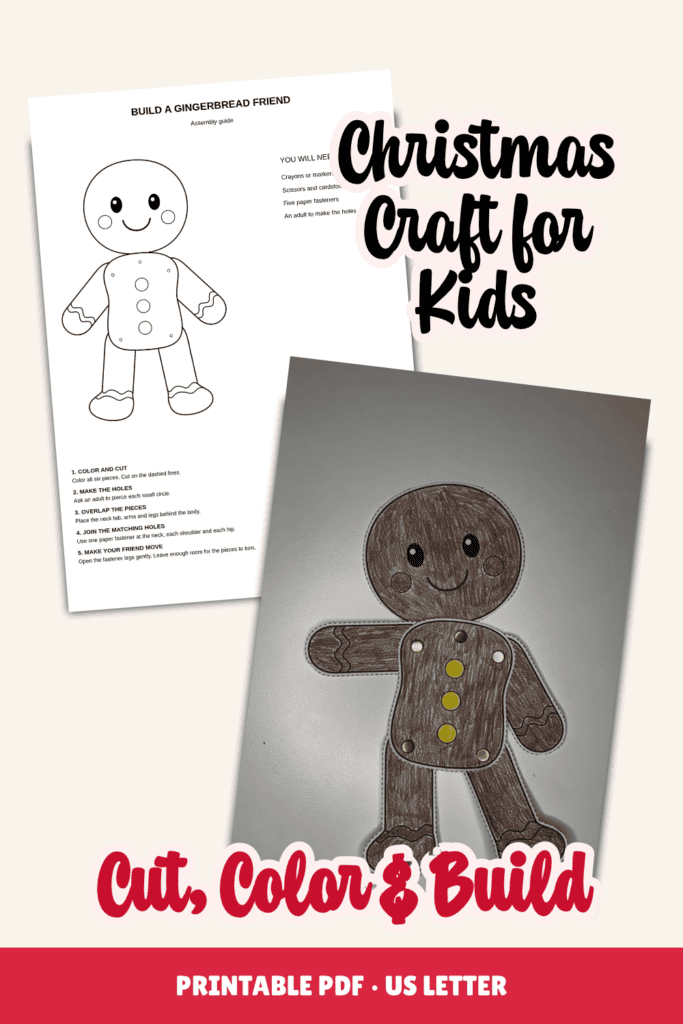
If you’d like a ready-made craft to go with these ideas, find the Build a Gingerbread Friend craft.
A Gingerbread Theme Without Classroom Food
Gingerbread lessons often involve decorating or testing cookies, but a food-free version is easier to use with a whole group. The CDC’s school food allergy guidance encourages schools to prevent allergen exposure, and Food Allergy Research & Education specifically recommends avoiding food in classroom art, science, and other projects.
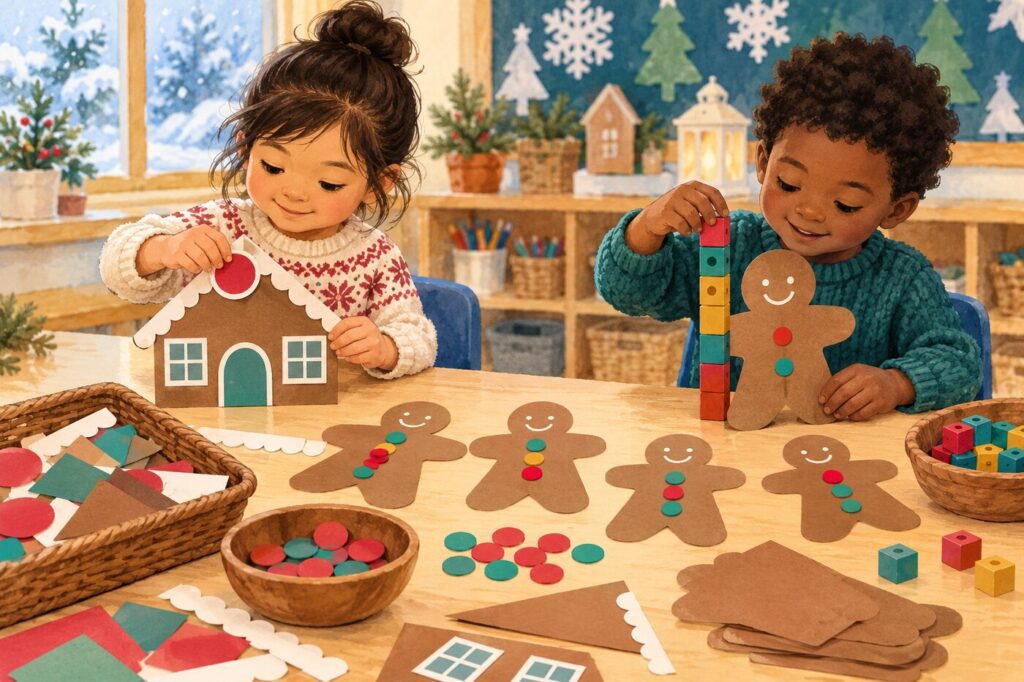
Paper gingerbread figures still provide the color, shapes, and playful story connection children enjoy. They also last longer, cost less, and can move between literacy, math, and building centers.
Simple Materials to Gather
- Brown construction paper or recycled cardboard
- Crayons, pencils, child-safe scissors, and glue
- Paper circles, buttons, counters, or bottle caps
- Connecting cubes or paper clips for measuring
- Blocks, cardboard strips, craft sticks, and masking tape
- Blue paper or fabric for a pretend river
Cut a stack of plain gingerbread shapes ahead of time if fine-motor practice is not the main goal. Older children can trace and cut their own.
8 Low-Prep Gingerbread Activities for Kindergarten
1. Retell a Gingerbread Story with a Paper Path
After reading your chosen version of a traditional gingerbread tale, place a large paper gingerbread character at the beginning of a path. Children add simple drawings for the important places and characters in the story, then move the figure along the path as they retell what happened.
Keep the prompts open because story versions differ: Who did the character meet? Where did the character go? What was the problem? How did the story end? Kindergarteners can retell with pictures and oral language. First and second graders can add beginning, middle, and end captions.
2. Sort Beginning Sounds into Gingerbread Houses
Draw two or three large paper houses and place one target letter on each. Give children picture cards cut from old worksheets, magazines, or their own drawings. They say each word slowly and place it on the house with the matching beginning sound.
For younger children, use two sounds that are easy to hear, such as m and s. Older learners can sort short-vowel word families or write one additional word for each house.
3. Clap Syllables and Add Paper Buttons
Give each child a paper gingerbread figure. Say a winter or classroom word, clap its syllables together, and add one paper button for each clap. Try words such as snow, mitten, gingerbread, December, and children’s names.
Children can compare figures afterward: Which word needed the most buttons? Which words had the same number? This turns phonological awareness into something children can see and touch.
4. Build Button Numbers and Math Stories
Use the same paper figures for counting. Show a numeral card and ask children to place that many counters on the gingerbread character. Kindergarteners can work within 10 or 20. Preschoolers may count 1–5, while first graders can use two figures for addition and subtraction stories.
For example: “One gingerbread friend has four buttons. Another has three. How many buttons are there altogether?” Children can move the counters while explaining their thinking.
5. Measure and Compare Paper Gingerbread Figures
Cut figures in three different sizes and measure them with connecting cubes or paper clips. Begin at the feet, line up the units without gaps, and count how many units tall each figure is.
Ask children to order the figures from shortest to tallest and describe the difference between two measurements. Older children can estimate first or record results in a simple table.
6. Design a House with 2D Shapes
Set out paper squares, rectangles, triangles, and circles. Children combine them to build a gingerbread house, then count how many of each shape they used. Encourage them to name the shapes by their properties: a triangle has three sides, while a rectangle has four sides and four corners.
For an extra challenge, give older students one rule, such as including two different ways to make a window or creating a symmetrical front.
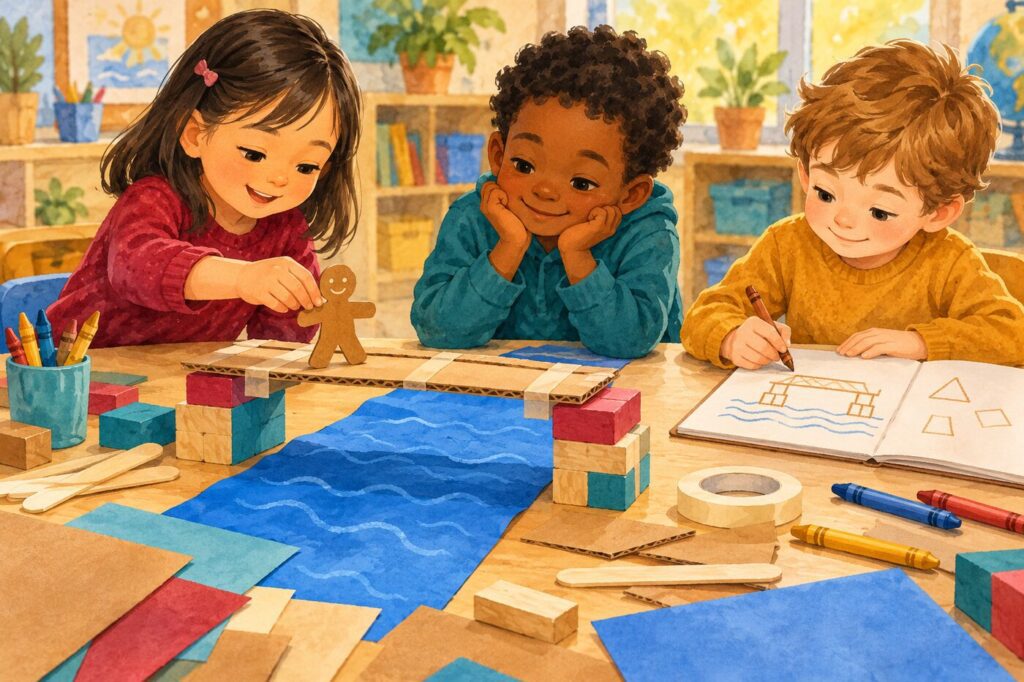
7. Build a Bridge Across the River
Create a river from blue paper and pose a simple problem: How can the gingerbread character cross without getting wet? Small groups sketch an idea, build a bridge, test it with a paper figure, and make one improvement.
Useful materials include blocks, cardboard strips, craft sticks, folded paper, and masking tape. The goal is not to produce identical bridges. Children should notice which shapes feel stable, where a bridge bends, and what changes after testing.
This plan-build-test-improve sequence fits the Next Generation Science Standards for K–2 engineering design, which emphasize defining a simple problem, representing a solution, testing it, and comparing how designs perform.
8. Map the Runaway Gingerbread Route
Draw a simple grid or classroom map with a start and finish. Children guide a paper character using direction cards or spoken instructions: forward, turn left, turn right, stop. Add two or three obstacles such as a chair, puddle, tree, or stack of books.
Preschoolers can follow a physical route taped on the floor. Kindergarteners can arrange arrow cards. Older children can write a numbered route and challenge a partner to follow it exactly.
A Simple 40-Minute Gingerbread Lesson
| Time | Activity |
|---|---|
| 0–7 minutes | Read or briefly retell a gingerbread story and name the problem |
| 7–15 minutes | Retell the story with a paper path |
| 15–25 minutes | Choose button counting, syllables, or shape-house math |
| 25–37 minutes | Plan and test a bridge across the paper river |
| 37–40 minutes | Share one observation and tidy materials |
For a larger group, run the literacy and math tasks as table stations while one small group works on the bridge with an adult. If time is short, save the bridge improvement for the next day.
Adaptations for Preschool Through Grade 3
- Preschool: Use large shapes, count within five, clap names, and follow a route with whole-body movement.
- Kindergarten: Practice beginning sounds, counting within 10 or 20, nonstandard measurement, and oral retelling.
- First grade: Add written sequence words, addition and subtraction stories, estimates, and labeled bridge plans.
- Second and third grade: Compare two bridge designs, record test results, write directions, and explain which change improved the structure.
An Optional Gingerbread Name Activity
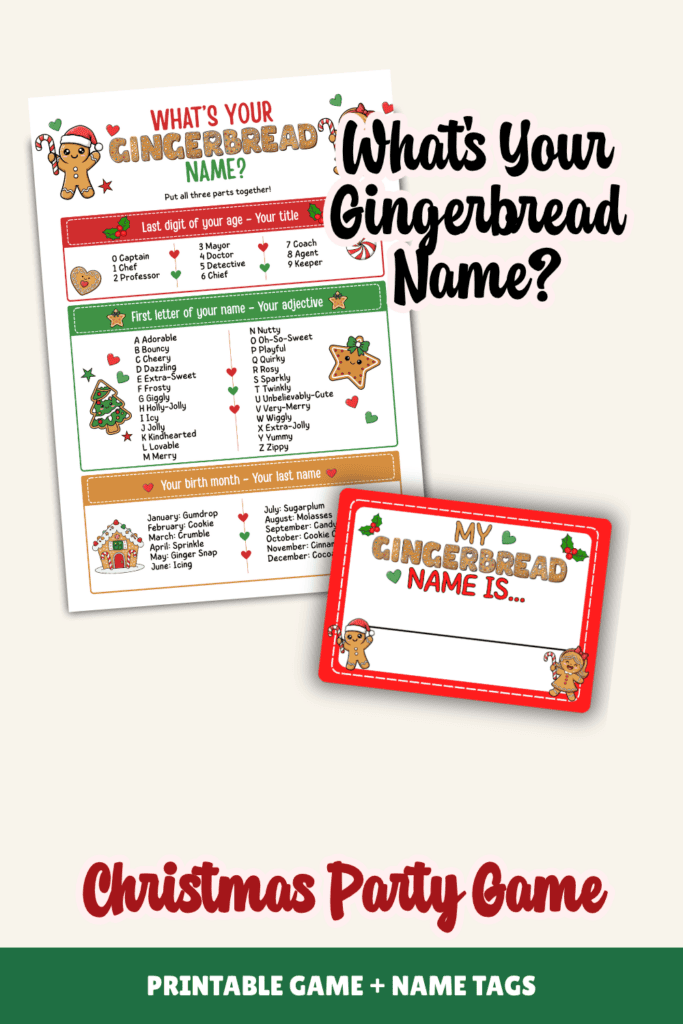
If you want a quick social activity for morning meeting or a December party, a gingerbread name game is an easy fit. Each child builds a silly gingerbread name from simple details about themselves, then shares it with the group. Younger children may need an adult or buddy to help.
Want it ready to print? My What’s My Gingerbread Name? game is available on Etsy.
For more party ideas, see Simple Christmas Party Games for Kids. For more seasonal learning, try these indoor winter activities for kindergarten. If your group enjoys cutting, folding, and gluing, the collection of easy paper activities for kidsoffers more ways to use simple supplies.
Keep the Theme Simple
One stack of gingerbread figures can support story retelling, sound work, counting, measurement, geometry, directions, and engineering. Choose the skills your children are already practicing, add the gingerbread theme, and keep your familiar routines in place. That is usually enough to make December learning feel special without creating extra work.