
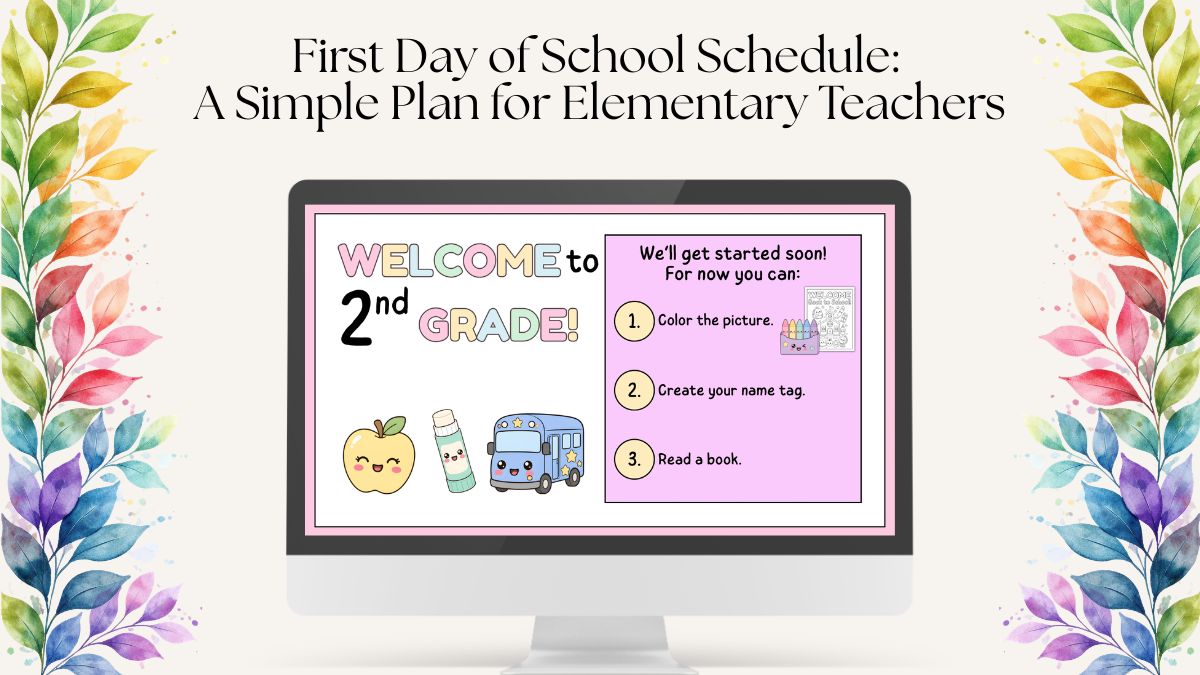
Planning the first day of school can feel surprisingly overwhelming. Between decorating the classroom, organizing supplies, preparing welcome activities, and introducing new routines, it’s easy to create a schedule that’s packed from morning until dismissal. The good news? Your first day doesn’t have to be perfect—it just needs to help students feel welcomed, safe, and excited to come back tomorrow.
Here’s something worth remembering before diving into any planning: the first day doesn’t need to accomplish everything. It doesn’t need to cover every classroom procedure, introduce every center, or squeeze in a full academic lesson. Many of the goals that matter most on day one aren’t academic at all — they’re about helping students feel safe, showing them what the classroom feels like, and giving them a reason to look forward to day two.
This article provides one sample schedule only. There is no perfect first-day schedule, and no single timeline works for every classroom, every school building, or every group of students. What follows is a flexible sample meant to be picked apart — read through it, take what’s useful, skip what isn’t, and adapt the order to fit an actual timetable, bell schedule, and group of students.
That overwhelmed feeling shows up almost every August, no matter how many years someone has been teaching. New teachers often feel it because everything is untested and unfamiliar. Veteran teachers feel it because a new group of students means starting the relationship-building process all over again. Either way, the pressure to have a flawless, fully-scheduled day can turn what should be an exciting milestone into a source of dread.
It helps to separate two different goals that often get blended together: getting through the academic content, and helping students feel comfortable in their new environment. On the first day, the second goal almost always deserves more attention than the first. Students who feel unsettled or anxious aren’t in a great position to absorb new academic material anyway, so investing time in comfort and routine on day one tends to pay off later, even if it means less “covered” content in the moment.
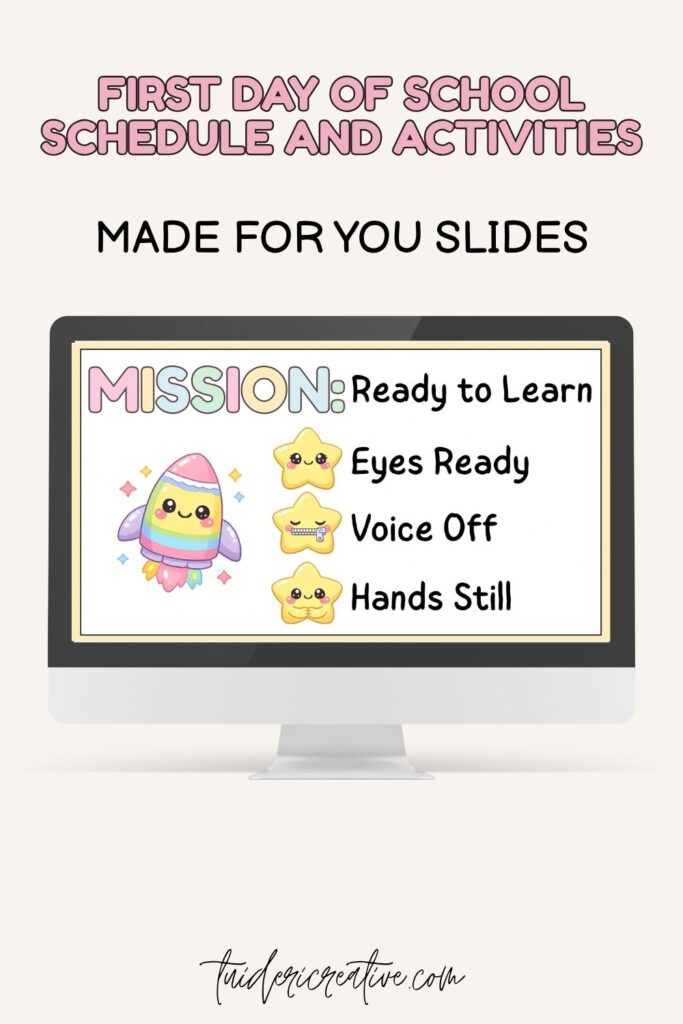
Quick Overview: A Flexible First Day Schedule
✔ Arrival & Welcome
✔ Morning Community Time
✔ Classroom Tour
✔ Lunch & Recess Routines
✔ Movement Break
✔ Read Aloud
✔ Getting to Know You Activity
✔ STEM Team Challenge
✔ Reflection & Dismissal
- Why the First Day of School Matters
- Before Students Arrive
- A Sample First Day of School Schedule
- Common First Day Mistakes
- Tips for a Successful First Day
- First Day Preparation Checklist
- Frequently Asked Questions
- Final Thoughts
Why the First Day of School Matters
The first day sets a tone. Long before students remember what was written on the board or which worksheet they completed, they’ll remember how the classroom felt. Did it feel calm? Did the teacher seem happy to see them? Did they know where to put their backpack without having to guess?
A lot of the value of day one comes down to a few themes that show up again and again in early childhood and elementary education writing.
- Building trust. Students, especially younger ones, are watching closely to figure out whether this new adult is safe, fair, and predictable.
- Helping students feel safe. Knowing where the bathroom is, what happens at lunch, and what to do if they’re unsure removes a surprising amount of first-day anxiety.
- Creating excitement. A warm welcome and a couple of genuinely fun moments can turn nervous energy into curiosity.
- Introducing routines gradually. Nobody remembers ten new procedures taught back-to-back. A few clear, well-practiced routines tend to stick better than a long list.
- Leaving students looking forward to Day Two. If students walk out excited rather than exhausted, the rest of the first week tends to go more smoothly.
Teacher Reminder: If the day feels lighter on academics than expected, that’s not a sign of falling behind. Orientation and relationship-building are the real work of day one, and the curriculum has the rest of the year to catch up.
Before Students Arrive
A calm first day usually starts with preparation that happens well before the first knock on the door. None of this needs to be elaborate, but having a few key things ready in advance can take a lot of pressure off the morning itself.
Consider having these pieces prepared ahead of time:
- A welcome slide. Something simple projected at the front of the room — the teacher’s name, a friendly greeting, and maybe a “what to do first” instruction — gives students something to look at and follow the moment they walk in. An editable slide template can make this a five-minute task instead of a from-scratch design project.
- Music. Soft background music during arrival can make an unfamiliar room feel less sterile and gives students something to focus on besides their own nerves.
- A morning activity. A simple task waiting at each seat, like a coloring page or an “All About Me” sheet, gives students something purposeful to do the moment they sit down instead of sitting and waiting.
- Name tags. Whether they’re for desks, cubbies, or lanyards, name tags help both the teacher and classmates start learning names faster.
- Desks and seating. Deciding on a seating arrangement ahead of time, even a temporary one, removes one more decision from an already busy morning.
- Supplies organized and accessible. Sorting supplies in advance means less time spent troubleshooting mid-lesson.
- A visual schedule. A simple picture or word schedule posted where students can see it helps them understand what’s coming next, which can ease anxiety for the whole group.
None of this preparation needs to be perfect. The goal is simply to reduce the number of decisions that have to be made in the moment, so there’s more mental space available for the students themselves.
It can also help to think about preparation in two categories: what needs to be ready before students physically walk in, and what needs to be ready in the teacher’s own head. The physical setup — desks, name tags, supplies — is the easier part to plan for, since it can be done a day or two ahead of time without much guesswork. The mental preparation is a little different. It means walking through the day in advance and asking simple questions: What happens if this activity finishes early? What happens if a student needs the bathroom during the read aloud? What’s the plan if the class seems more tired than expected by midday? None of these need firm answers, but having thought about them even briefly can make it much easier to stay calm if the day doesn’t go exactly as planned.
Some teachers also find it useful to prepare a simple backup activity — something quiet and low-effort, like a coloring page or a short game — that can fill in gaps if a section of the schedule finishes faster than expected. A day with a little extra breathing room tends to feel calmer than one planned down to the minute.
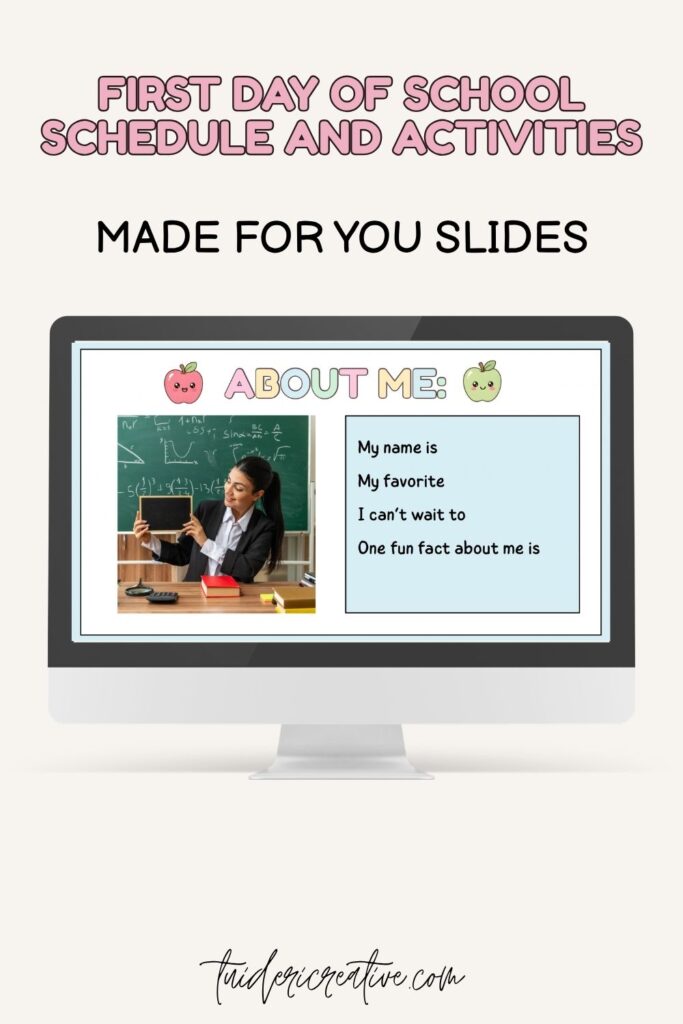
What Should a First Day of School Schedule Include?
A successful first day of school schedule doesn’t need to be packed from bell to bell. Instead, it should balance structure, relationship-building, movement, and simple routines that help students feel comfortable in their new classroom. While every teacher’s schedule will look a little different, most first days include the same core elements.
- A welcoming arrival activity that gives students something meaningful to do as they enter the classroom.
- A class meeting or icebreaker to begin building relationships and create a positive classroom community.
- A classroom or school tour so students know where important spaces, supplies, and routines are located.
- A few simple classroom expectations and procedures introduced gradually instead of trying to teach every rule at once.
- Time for movement to help students reset after long periods of sitting and listening.
- A getting-to-know-you activity that encourages conversation and helps students make connections with their classmates.
- A collaborative activity, such as a simple STEM or team-building challenge, that promotes communication and problem-solving in a low-pressure way.
- A calm reflection before dismissal so students leave the classroom feeling successful and excited to return the next day.
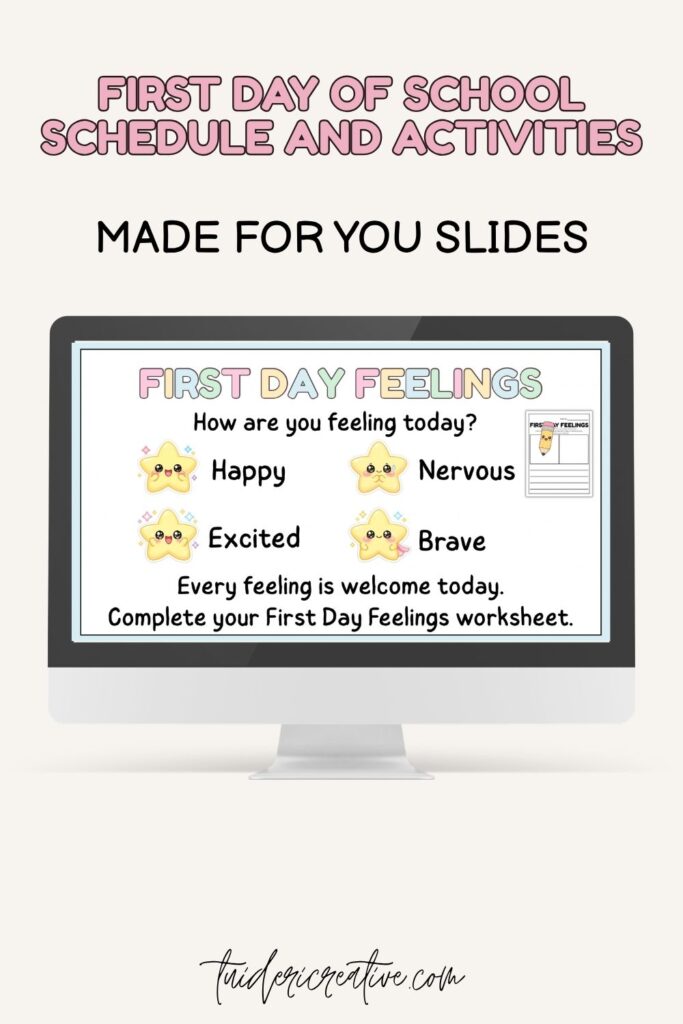
You don’t have to create every activity from scratch, either. Many teachers prefer to combine ready-made resources into a schedule that fits their own classroom. For example, you might start the morning with editable welcome slides, follow with a Question of the Day, complete a classroom scavenger hunt or school tour, introduce a few expectations, add a short STEM team challenge, and finish with a simple reflection activity. Mixing and matching activities makes it easy to build a schedule that feels organized without being overly scripted.
The goal isn’t to fit every possible activity into a single day. It’s to create a welcoming flow that helps students feel safe, connected, and confident as they begin the new school year.
A Sample First Day of School Schedule
Before getting into specific sections, it’s worth repeating: this is not a lesson plan, and it isn’t meant to be followed exactly. Think of it as one possible flow for the day — a starting point that can be rearranged, shortened, extended, or partially ignored depending on what actually fits a real classroom and timetable.
Rather than assigning exact clock times, the sections below use flexible sequence headings. Depending on the length of the school day, some sections might take fifteen minutes and others might stretch to forty-five. Some might not happen at all, and that’s fine too.
| Part of the Day | Purpose |
|---|---|
| Arrival & Welcome | Ease students into the room and reduce first-day nerves |
| Morning Community Time | Build connection and set a calm, welcoming tone |
| Getting to Know the Classroom | Orient students to spaces, supplies, and safety basics |
| Lunch, Recess & Midday Routines | Set expectations for transitions outside the classroom |
| Movement Break | Reset energy and attention after periods of sitting |
| Read Aloud | Create a shared, low-pressure classroom experience |
| Getting to Know You Activity & Team Challenge | Help students and teacher begin learning about one another |
| Reflection | Close the day with a calm, predictable routine |
Arrival & Welcome
Arrival is often the most nerve-wracking part of the day for students, so this section carries a lot of weight even though it may only last a few minutes. A calm, predictable arrival routine gives students an early signal that this classroom is a manageable, friendly place to be.
Some classrooms include a personal teacher greeting at the door — a wave, a high five, or a simple “I’m glad you’re here.” Others pair arrival with a quiet morning activity, such as name tag coloring, a simple “About Me” page, or a puzzle at each desk. The specific activity matters less than giving students something familiar and low-pressure to do while the rest of the class trickles in.
Morning Community Time
Once most students have arrived, many classrooms shift into some form of community time — a morning meeting, a question of the day, or a short, simple sharing activity. This doesn’t need to be elaborate on day one. A basic icebreaker or a “would you rather” question projected on the board can be enough to get students talking and listening to one another.
The purpose here isn’t to complete a full morning meeting routine exactly as it might look later in the year. It’s to plant the first seeds of a classroom community and give students an early, low-stakes chance to speak in front of the group.
Getting to Know the Classroom
Students, especially younger ones, often carry a quiet worry about practical logistics: where’s the bathroom, what happens if I need help, where do I put my folder. Addressing these questions directly and early can prevent a surprising amount of first-day stress.
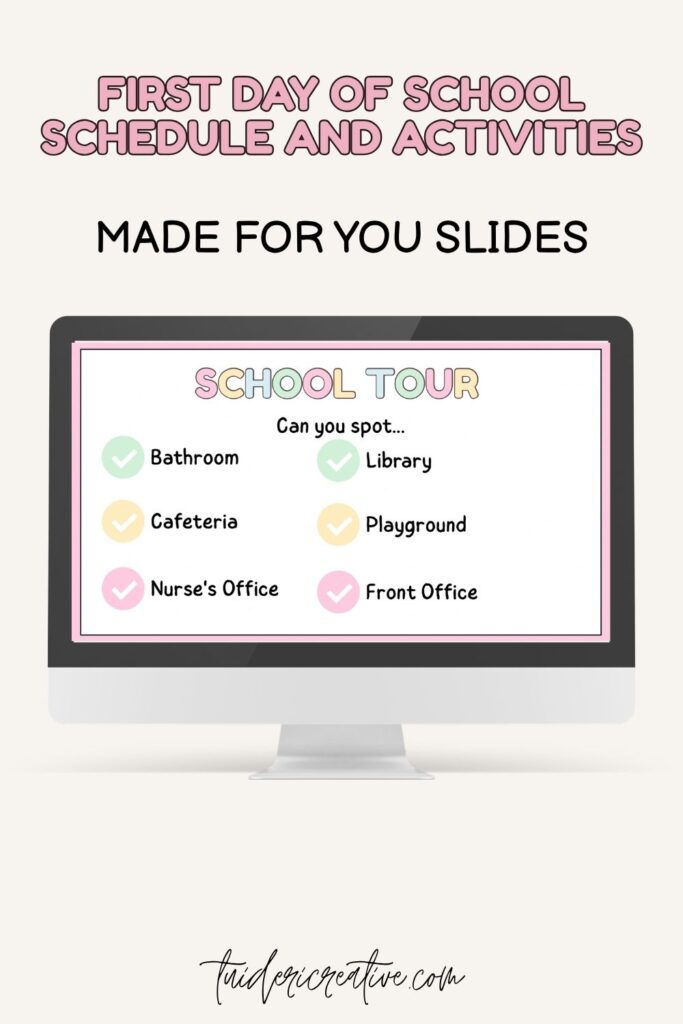
This section might include a short classroom tour covering important locations, supply stations, and the bathroom, along with a simple explanation of what to do in an emergency. If time and school layout allow, some teachers also build in a broader school tour — the library, the office, the playground, and the lunchroom — so students have a mental map of the building beyond their own classroom.
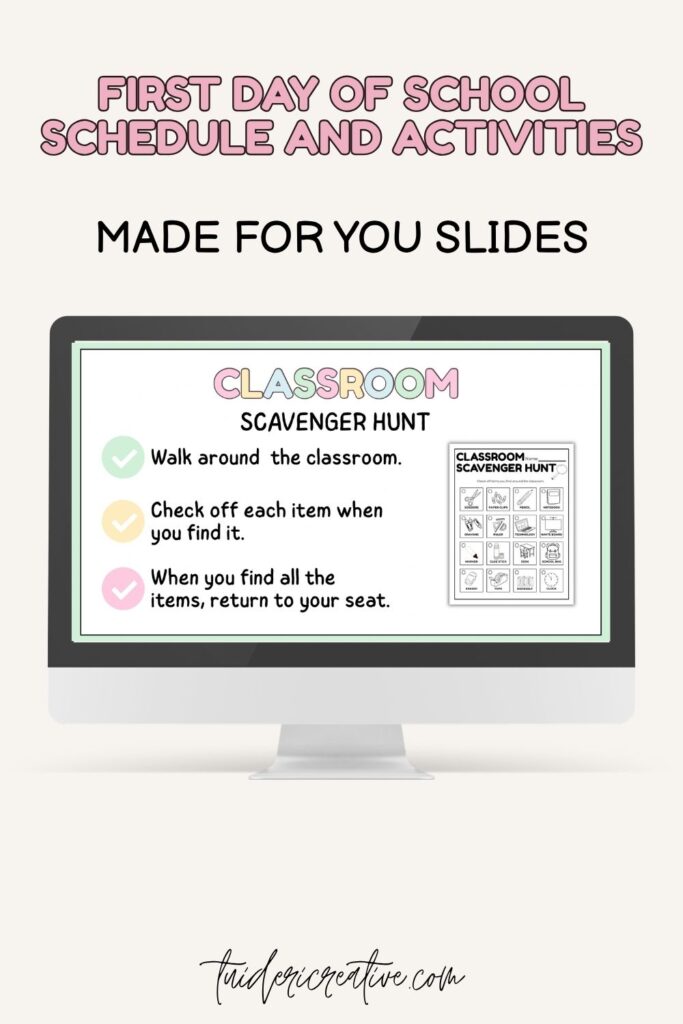
For younger grades especially, it can help to physically walk the space rather than simply describing it. Pointing to the pencil sharpener while explaining how it’s used, or actually walking the route to the bathroom as a group, tends to stick better than verbal instructions alone. Some classrooms turn this into a simple scavenger hunt, giving students a short list of spots to find around the room, which keeps the orientation active rather than passive.
Introduce Classroom Expectations
It can be tempting to lay out a full list of classroom rules on day one, but shorter is almost always better here. Choosing just three to five core classroom expectations, stated in simple and positive language, tends to be far more memorable than a long list read once and never revisited.
Fewer expectations also means there’s time to actually discuss them, model them, and let students ask questions, rather than rushing through a checklist.
Teach One or Two Procedures
The same logic applies to classroom procedures. Rather than trying to teach every routine that will exist throughout the year, many teachers choose just one or two to introduce and practice on the first day — often an attention signal, a lining-up routine, or how to ask for the bathroom.
It’s worth repeating directly: do not try to teach every procedure on day one. Procedures introduced without enough practice time are unlikely to stick, and cramming too many into a single day can leave both students and teacher feeling rushed. The remaining procedures can be layered in gradually across the first week or two.
An attention signal is often a good first choice, since it gets used repeatedly throughout the very first day and gives students an early, low-pressure chance to practice responding to it. Some classrooms pair this with a simple set of classroom hand signals — for things like needing the bathroom or asking for help — introduced one at a time rather than all at once. Procedures for what to do after finishing an activity early, sometimes covered through a bank of early finisher activities, can usually wait until later in the first week, once the basics feel more settled.
Lunch, Recess & Midday Routines
The middle of the day brings its own set of first-day unknowns, and it’s often where things start to feel less predictable for both students and teacher. A little groundwork here goes a long way toward keeping the rest of the day calm.
Before heading to lunch, many classrooms walk through the basics together: how to line up, what the lunchroom expectations are, and where to sit. A quick bathroom reminder before leaving the room can also save a few midday interruptions. Recess brings its own version of the same idea — a short reminder of playground boundaries and expectations before students head out can prevent a lot of confusion once they’re there.
Returning from recess is worth planning for as well. Students tend to come back with a lot of leftover energy, so building in a brief, calm transition — a few minutes of quiet time, a short stretch, or simply lining up and waiting until everyone is settled before moving on — can make the switch back into classroom mode much smoother. None of this needs a formal script. A simple, consistent routine that’s repeated the same way each day tends to be what actually sticks.
Movement Break
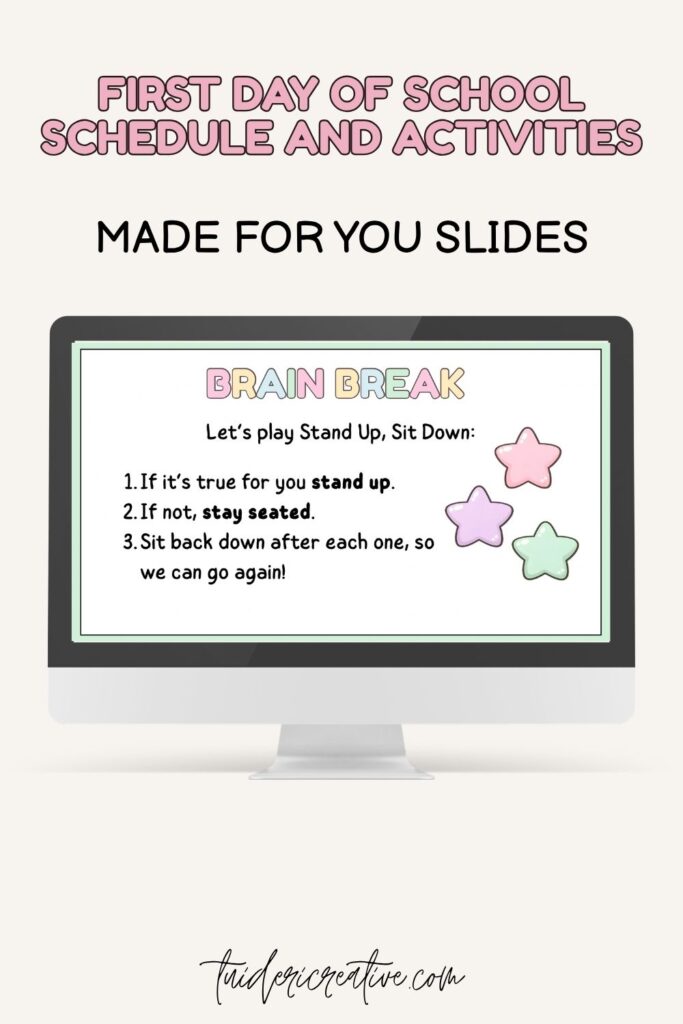
By this point in the day, students have likely been sitting, listening, and processing a lot of new information. A short movement break — some stretching, a simple dance video, or a quick game — helps reset attention and energy before the next activity.
This is a natural place to draw from a bank of brain break activities that can be reused throughout the year, not just on day one.

Read Aloud
A read aloud is a gentle, low-pressure way to bring the class together. Everyone listens to the same story at the same time, which creates an early shared experience without requiring any particular skill level or reading ability.
Picture books about starting school, making friends, or feeling nervous tend to work well here, since they can open up a short, natural discussion afterward. A few simple questions — What did the character feel like? Have you ever felt that way? — can turn the read aloud into a quiet bridge toward the getting-to-know-you activities that often follow.
Getting to Know You Activity
This is where the day starts to feel more personal. Simple, low-stakes activities give students a chance to share something about themselves and start noticing things they have in common with classmates.
- Would You Rather questions, either as a whole-group discussion or a simple movement activity where students walk to one side of the room or the other.
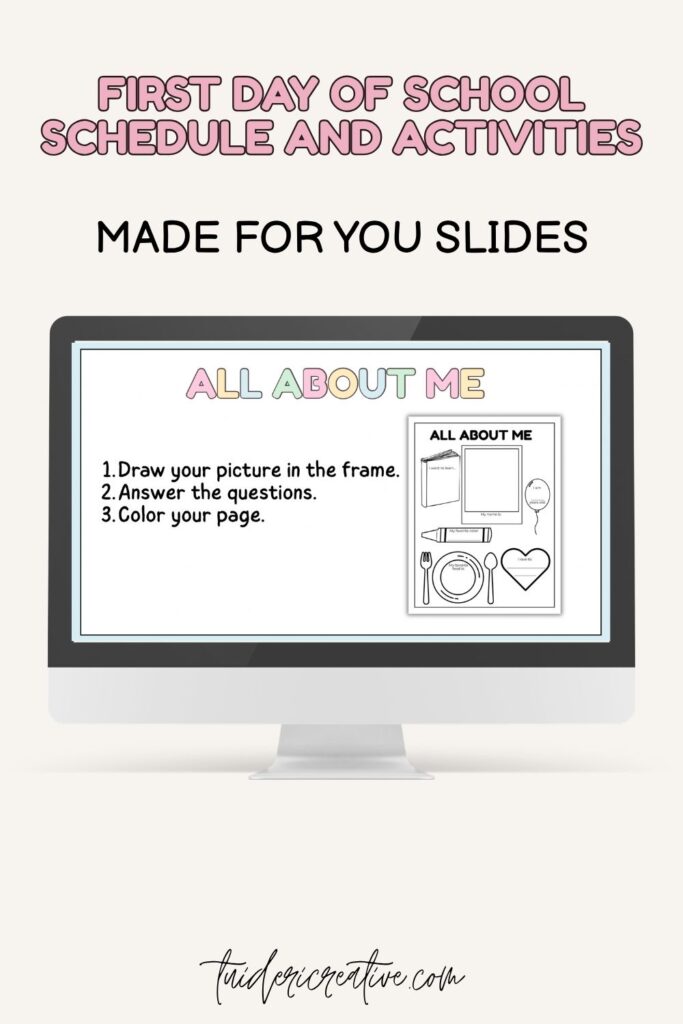
- All About Me pages, which double nicely as an early keepsake or bulletin board display.
- Partner interviews, where students ask each other a short list of simple questions.
- Question of the Day, a quick daily habit that can continue well beyond the first week.
Simple STEM or Team Challenge
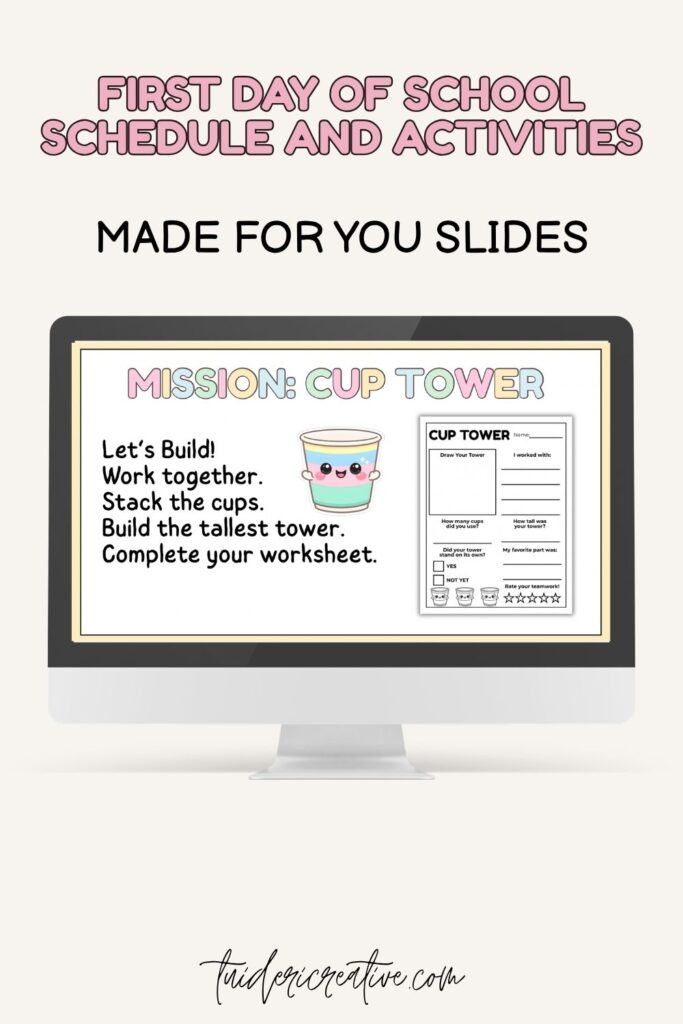
Once students have had a chance to talk and share a little, a simple team challenge can build on that same momentum. Something like building the tallest tower with limited supplies, or working together to move a small object across the room without touching it, gives students a reason to problem-solve alongside someone they may not know yet.
The point on day one isn’t the STEM content itself — it’s the teamwork and communication that happen along the way. Framing the challenge around collaboration rather than winning keeps the focus on working together instead of being first or best, which tends to feel more welcoming for a group that’s still getting to know each other. A quick debrief afterward, asking what worked and what students might try differently, can turn even a five-minute challenge into a small early lesson in teamwork.
Reflection
Closing the day with a short, predictable reflection routine gives students a calm landing point and gives the teacher a quick window into how the day went. This could be as simple as a favorite-moment share, a one-word exit ticket, or a quick prompt about what students are looking forward to tomorrow.
Ending on a consistent note — even something as small as the same closing song or the same goodbye phrase — can also become the first thread of a daily routine that carries through the rest of the year, alongside whatever classroom morning routine starts to take shape in the days that follow.
Common First Day Mistakes
Even experienced teachers occasionally fall into a few predictable traps on day one. Most of these mistakes come from a good place — a desire to be thorough, organized, and prepared — but they can end up working against the goal of a calm, welcoming start to the year. Knowing what they are ahead of time makes them easier to avoid.
| Mistake | Why It’s Worth Avoiding |
|---|---|
| Trying to teach everything | Overloading day one leaves little time for anything to be practiced well, and students are unlikely to retain it all anyway. |
| Talking too much | Long stretches of listening are tiring on a day already full of new information; shorter explanations paired with activity tend to land better. |
| Skipping movement | Students who sit for extended periods without a break often become restless, which can make the rest of the day harder to manage. |
| Too many rules | A long list of expectations introduced at once is difficult to remember and can feel intimidating rather than welcoming. |
| Too many procedures | Procedures need repetition to stick; cramming several into one day usually means none of them are practiced enough. |
| No transition time | Jumping straight from one activity to the next without any buffer can make the day feel rushed for both students and teacher. |
| No flexibility | A rigid plan that doesn’t leave room to slow down, speed up, or skip something can create unnecessary stress when the day doesn’t go exactly as expected. |
Tips for a Successful First Day
- Stay flexible. If an activity is running long or falling flat, it’s fine to shorten it or cut it altogether.
- Set a warm, calm tone from the first hello. The way a teacher greets students at the door often shapes how the rest of the day feels more than any single planned activity.
- Keep transitions simple. A consistent signal or phrase for moving between activities can reduce a lot of first-day chaos.
- Celebrate small wins. Noticing when the class does something well, even something small, helps build early momentum.
- Focus on connection. Prioritizing relationships over content on day one tends to pay off for the rest of the year.
- Leave students excited to return tomorrow. Ending on a positive note is often more valuable than finishing every planned activity.
Quick Tip: If the day starts to feel off track, it’s usually safe to drop an activity rather than rush through it. A calm, unhurried day that skips a planned section is almost always better than a full day that feels frantic.
First Day Preparation Checklist
A short checklist can help make sure the essentials are covered without adding extra pressure to the week before school starts.
- ☐ Welcome slide ready
- ☐ Name tags prepared
- ☐ Morning activity prepared
- ☐ Read aloud selected
- ☐ Brain break chosen
- ☐ Getting-to-know-you activity planned
- ☐ Reflection activity ready
- ☐ Dismissal routine planned
Frequently Asked Questions
How much academic work should happen on the first day?
Generally very little. Many classrooms focus day one on relationships, routines, and orientation, saving most academic content for the days that follow.
Should I assign homework on the first day?
Many teachers choose not to, since the first day is already full of new information for students to process.
Should I teach all of my classroom procedures on day one?
Not usually. Introducing one or two well-practiced procedures tends to work better than rushing through a long list.
What if I don’t finish everything on my schedule?
That’s common, and it’s fine. A sample schedule is meant to be a flexible guide, not a checklist that has to be completed in full.
How long should icebreakers last?
This depends on the age group and how engaged students seem. Some classrooms keep icebreakers to five or ten minutes, while others let a particularly engaging one run longer.
Should students choose their own seats on the first day?
Some teachers prefer assigned seating for the first day to reduce decision fatigue, while others allow choice. Either approach can work depending on classroom style and group size.
What if students seem nervous or upset?
A calm, patient response and a quiet, low-pressure activity can help. Some students take longer than others to settle in, and that’s a normal part of the first day.
What should happen right before dismissal?
Many classrooms end with a predictable, calm routine — a reflection activity, a closing song, or simply reviewing what to expect tomorrow — to send students off on a positive note.
How do I handle the first day if I’m a student teacher or new to the classroom?
Student teachers are often working within a mentor teacher’s existing schedule and classroom systems rather than building their own from scratch, so the sample flow above is more useful as background context than as something to follow directly. It can still help to understand the reasoning behind each part of the day — why expectations stay short, why procedures are introduced gradually — since that thinking carries over into any classroom, even one that isn’t fully a student teacher’s own yet.
Is it okay to change the schedule partway through the day?
Yes. Adjusting on the fly based on how the class is responding is a normal and often necessary part of teaching, not a sign that the original plan was wrong.
Final Thoughts
Connection first. Routine second. Curriculum later. That order tends to serve both teachers and students well on the first day of school, even though it can feel counterintuitive when there’s so much material waiting to be covered.
There is no perfect first-day-of-school schedule, and trying to build one is likely to add stress rather than remove it. A calm, welcoming day where students feel safe and seen is worth far more than a day where every planned activity gets checked off the list. Pick a few pieces from the sample schedule above, adapt them freely, and let the rest of the year be where the rest of the learning happens.
Leave a Reply
You must be logged in to post a comment.