
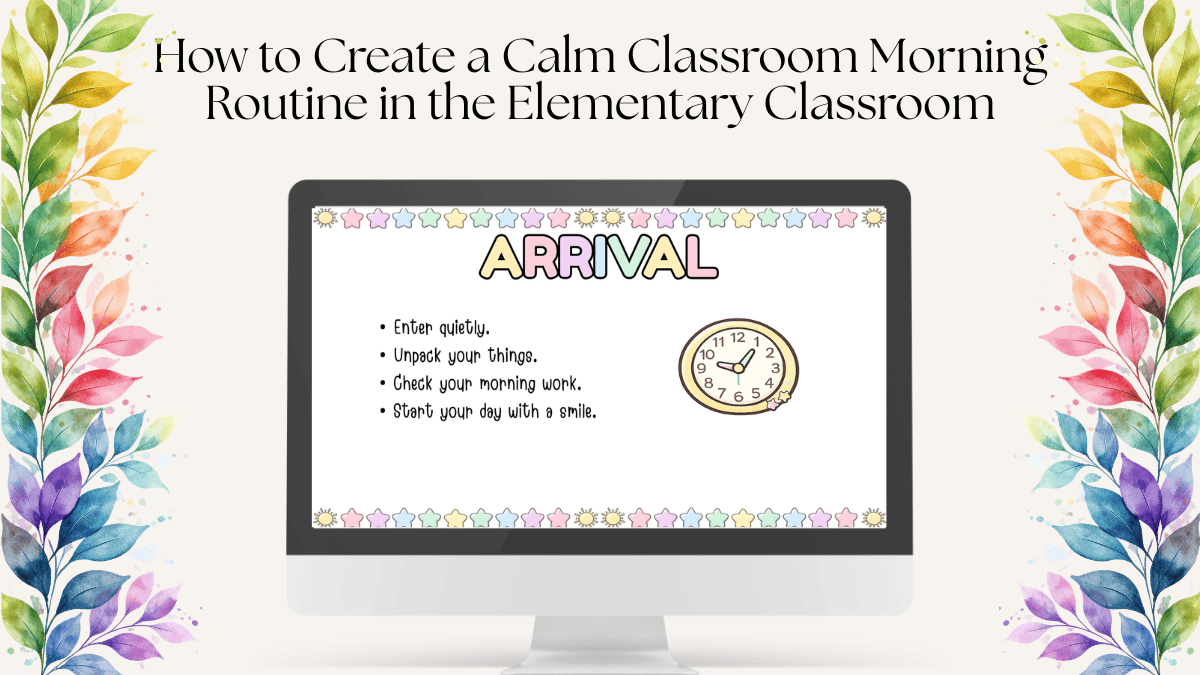
The first fifteen minutes of the school day can shape everything that follows. A well-designed classroom morning routine helps students transition from home to school, gives teachers a predictable window for attendance and other essential tasks, and reduces the confusion that can delay the start of learning.
A calm morning does not require an elaborate schedule or a large collection of materials. In most cases, the simplest routines are the easiest for students to remember. When children know where to place their belongings, what to do after entering the room, and how to prepare for the first lesson, they can begin the day with growing independence.
This guide covers the main elements of an effective elementary classroom morning routine, including arrival procedures, morning work ideas, soft starts, morning meetings, visual reminders, and a sample schedule. The ideas can be adapted for traditional elementary classrooms, homeschool settings, and learning co-ops.
Table of Contents
- Why a Calm Morning Routine Matters
- What Should Students Do When They Enter the Classroom?
- Morning Work Ideas for Elementary Students
- How to Choose the Right Morning Work
- Should You Use a Morning Meeting?
- Sample Elementary Classroom Morning Routine
- Tips for Creating a Successful Classroom Morning Routine
- Common Morning Routine Mistakes
- Calm Morning Routine Planning Checklist
- Frequently Asked Questions
- Final Thoughts
Why a Calm Morning Routine Matters
School mornings are naturally unpredictable. Some students arrive feeling rested and ready to talk. Others may be tired, worried, rushed, or still adjusting to the transition away from home. A few students may arrive early, while others enter after the morning routine has already started.
An effective elementary classroom morning routine absorbs those differences and replaces them with a familiar sequence. Students do not need to wait for individual instructions or watch their classmates to figure out what comes next. The routine itself guides them through the beginning of the day.
Predictability can be especially helpful for young learners. When the same basic steps happen each morning, students can focus on completing those steps instead of using their energy to interpret a changing situation. Over time, putting away a backpack, turning in a folder, and beginning morning work can become almost automatic.
Did You Know? A consistent daily routine can make the school day feel more predictable for young children. When students know what happens next, they can spend less energy figuring out the routine and more energy settling in and getting ready to learn.
A strong classroom arrival routine also protects the planned start of the day. Every minute spent locating missing supplies, repeating directions, or redirecting students who do not know what to do is time taken away from the first lesson. A predictable sequence reduces many of those repeated interruptions by removing the guesswork.
Morning routines also give students an early opportunity to practice independence. Simple responsibilities such as checking a visual schedule, placing homework in the correct tray, or beginning a task without a reminder help children learn to manage familiar routines on their own.
These small acts of independence can support other parts of the day. Students who become comfortable following a morning sequence may be better prepared to manage classroom transitions, collect materials, work independently, and complete end-of-day routines.
A calm morning does not mean every child must be silent or that every day will begin perfectly. It means there is a dependable structure that helps the class recover from the natural unpredictability of arrival and move toward learning together.
What Should Students Do When They Enter the Classroom?
The classroom morning routine begins the moment students enter the room. A clear arrival sequence answers the immediate questions children may have: Where do my belongings go? What should I turn in? What materials do I need? What should I do after I sit down?
The most effective arrival routines usually contain only a few essential steps. Too many tasks can make the process harder to remember, especially for younger students. The goal is to create a sequence that students can eventually complete with minimal adult direction.
1. Greet the Student
A brief greeting at the door can create a clear transition into the school day. It may be as simple as eye contact and a friendly hello, or it may include a handshake, wave, fist bump, or another classroom greeting.
The greeting also provides a quick opportunity to notice how a student is arriving. A child who appears upset, unusually quiet, or especially energetic may need additional support later in the morning.
2. Put Away Backpacks and Coats
Students should have a clearly designated place for backpacks, coats, lunch bags, and other personal belongings. Labels, pictures, or matching colors can make the system easier for younger students to follow.
Keeping belongings in one consistent location reduces clutter and prevents students from searching for items later in the day.
3. Turn In Homework and Folders
Homework, communication folders, notes from home, and library books should each have an established collection point. A labeled tray or basket near the entrance often works better than having students hand papers directly to the teacher.
A self-service collection system allows the teacher to greet students and manage other arrival needs without collecting papers individually.
4. Complete Attendance or Lunch Count Tasks
Some classrooms use a name magnet, clip chart, pocket chart, or digital check-in to record attendance or lunch choices. When students can complete part of this process independently, the task becomes part of the arrival routine rather than a separate interruption.
The final attendance record may still need to be completed by an adult, depending on school procedures, but student check-ins can make missing names easier to identify.
5. Check Essential Supplies
Broken pencils, empty water bottles, and missing materials often become distractions once instruction begins. A simple supply check during arrival can prevent these problems from interrupting the first academic block.
For example, students might exchange an unsharpened pencil for a prepared one rather than using the pencil sharpener during a lesson. Shared table supplies can also be checked and restocked before morning work begins.
6. Begin the Posted Morning Activity
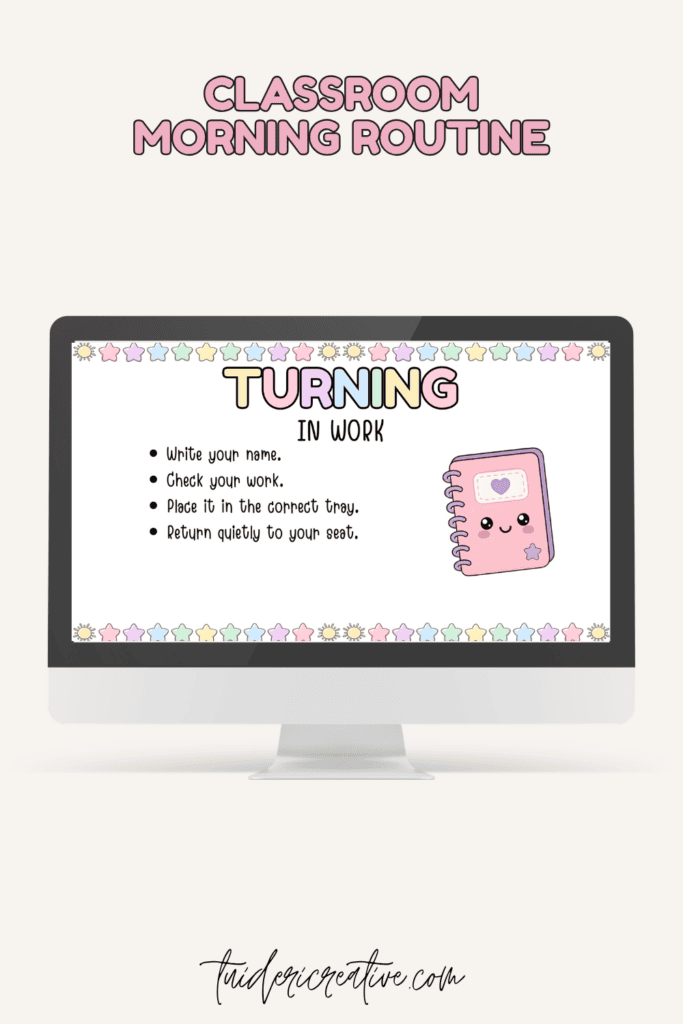
After completing the physical arrival tasks, students should know exactly where to look for their first activity. This might be displayed on a board, projected on a morning slide, placed on each desk, or shown on a visual choice chart.
A posted routine gives students a clear next step and reduces the need to ask, “What are we doing?” each morning.
| Arrival Task | Purpose |
|---|---|
| Greeting | Creates connection and provides a quick emotional check-in |
| Backpacks and coats away | Keeps belongings organized and the room clear |
| Homework turned in | Creates a consistent system for collecting papers |
| Attendance or lunch check-in | Supports required morning recordkeeping |
| Supply check | Prevents avoidable interruptions during instruction |
| Morning activity started | Provides a purposeful task while the class arrives |
A visual list near the classroom entrance can help students remember the sequence. Pictures or simple icons are useful for pre-readers, while older elementary students may only need a short numbered list.
These arrival steps are part of a larger system of classroom procedures. Like any other procedure, the routine should be explained, modeled, practiced, and revisited until students can complete it confidently.
Create a Plan for Late Arrivals
Late arrivals need a routine too. Without one, a student entering after instruction begins may need a complete verbal explanation of everything that has already happened.
A quiet late-arrival procedure can help the student join the class without disrupting the lesson. For example, late students might:
- Enter quietly and greet the teacher when appropriate.
- Put away their belongings.
- Turn in any folders or notes.
- Check a posted morning slide or visual schedule.
- Join the current activity.
The goal is not to make a late student feel unwelcome. It is to provide a simple path back into the routine so the child can settle in without requiring the entire class to pause.
Morning Work Ideas for Elementary Students
Once students have completed their arrival tasks, they need something purposeful to do while classmates continue entering and the teacher handles attendance, messages, and unexpected morning needs.
Morning work should generally be familiar, manageable, and flexible enough to accommodate different arrival times. It should not require a long explanation every day or depend on every student starting at exactly the same moment.
There is no single morning work option that fits every classroom. The best choice depends on the students’ age, the amount of available time, classroom goals, and how much preparation the teacher wants to manage.
Morning Work Worksheets
Short worksheets are a familiar form of morning work for elementary students. They may include math review, handwriting practice, vocabulary, grammar, puzzles, or a quick writing prompt.
Worksheets are easy to organize and can provide useful review, especially when students already understand the format. They are most effective when the work can be completed independently and does not introduce an entirely new concept.
The main drawback is repetition. If students complete a similar page every morning, the task can begin to feel like busywork. Morning worksheets should have a clear purpose and should not be more difficult than students can manage without direct instruction.
Morning Tubs
Morning tubs are containers filled with hands-on activities such as pattern blocks, linking cubes, puzzles, playdough, fine motor tasks, letter-building materials, or simple construction challenges.
They are especially suitable for kindergarten and early elementary classrooms because they offer a gentle transition into the school day. The activities can support fine motor skills, problem-solving, and social interaction without feeling like a formal lesson.
Morning tubs do require storage, rotation, and a clear cleanup procedure. Students also need to know whether they may work with a partner, how many materials they may take, and what signal means it is time to put everything away.
Soft Start Activities
A soft start classroom uses low-pressure activities such as coloring, drawing, building, quiet games, or relaxed conversation during the first few minutes of the day. This approach gives students time to settle before academic work begins, especially when arrival experiences vary widely from child to child.
Soft starts still need a clear structure. A limited choice board, expectations for noise, and an established cleanup signal help prevent the activity from turning into completely unstructured free time.
A soft start does not need to last for the entire morning block. Even five or ten minutes of calm choice time can provide a transition before the class moves into a morning meeting or academic review.
Independent Reading
Reading is a simple, self-paced morning activity. Students who arrive early can read for a longer period, while students who arrive later can join without missing essential instructions.
Independent reading can also support reading stamina and provide regular access to books. For younger students, the reading choices may include picture books, familiar decodable books, magazines, poetry, or individual book boxes.
This option works best when books are easy to access and students already understand how to select, read, and return them.
STEM Bins
STEM bins may contain building materials, logic puzzles, task cards, or simple design challenges. They can offer a more engaging alternative to paper-based morning work and are especially helpful for students who enjoy constructing and experimenting.
The activities should remain simple enough to begin without a lengthy explanation. Open-ended prompts such as “Build a bridge that can hold three cubes” are often easier to manage than complicated challenges with several steps.
Clear expectations for materials, volume, sharing, and cleanup are essential if STEM bins are used during arrival.
Quiet Choice Activities
A quiet choice system allows students to select from a small group of approved activities. Choices might include reading, drawing, completing a puzzle, writing in a journal, using a math game, or working with a morning tub.
Giving students a limited amount of choice can increase their willingness to begin the morning task. However, the available options should be clearly defined. A visual choice board is usually easier to manage than completely open-ended free time.
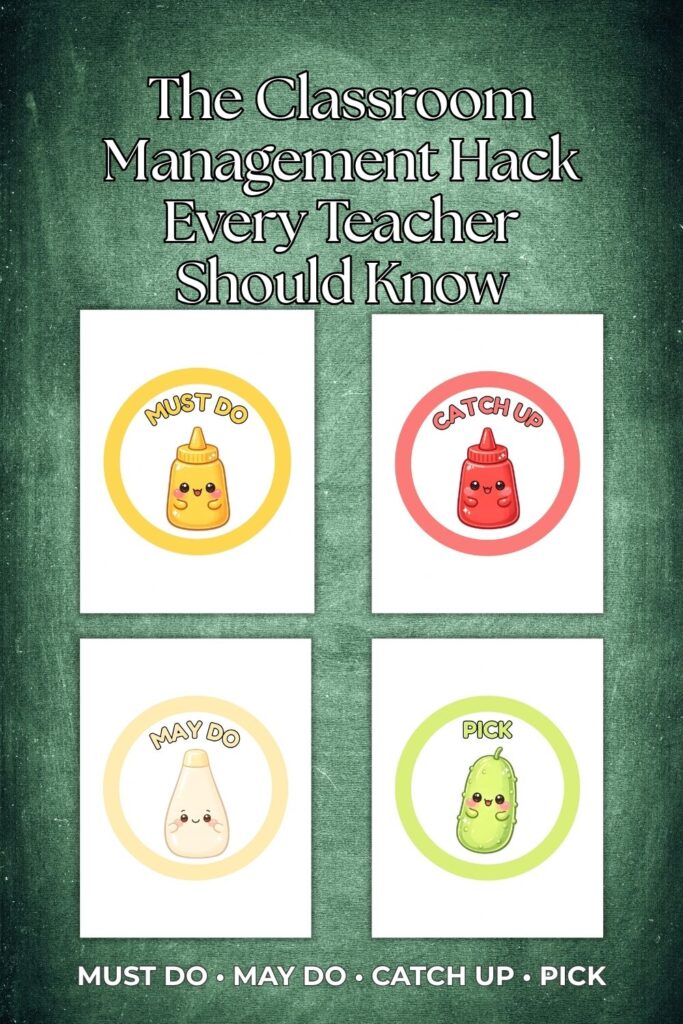
A structure such as Must Do, May Do, Catch Up, Pick can also be adapted for the morning. Students might complete one required arrival task before selecting from a short list of quiet activities.
Journal Writing
Morning journals can include short questions, picture prompts, gratitude entries, weekend reflections, or simple creative writing. They provide a calm activity that can be adjusted for different writing abilities.
Young students may draw a picture and label it, while older students may respond with several sentences. Prompts should remain optional enough to allow creativity but focused enough that students can begin without waiting for help.
Journal entries may also give the teacher helpful insight into student interests, worries, and experiences. However, students should know whether their writing will be read, shared, or kept private.
Question of the Day
A daily question can provide an easy entry point for writing, discussion, or graphing. Students might respond on a sticky note, move a name card to show their answer, or write one sentence in a notebook.
Questions can be academic, seasonal, or community-building. For example:
- Would you rather read indoors or outside?
- What is one goal you have for today?
- Which season do you enjoy most?
- Would you rather explore the ocean or space?
A consistent Question of the Day routine can also lead naturally into a morning meeting or whole-group discussion.
| Morning Work Option | Best For | Considerations |
|---|---|---|
| Worksheets | Review and simple independent practice | Can become repetitive without variety |
| Morning tubs | Younger students and hands-on learning | Require storage, rotation, and cleanup routines |
| Soft start | Providing a gentle transition into school | Needs clear choices and noise expectations |
| Independent reading | Flexible arrival times and reading stamina | Requires accessible, appropriate books |
| STEM bins | Building, problem-solving, and creativity | Materials must be easy to manage independently |
| Quiet choice | Student independence and variety | Works best with a limited visual menu |
| Journal writing | Reflection and writing practice | Some students may need visual or sentence prompts |
| Question of the Day | Community building and quick responses | Needs a simple system for recording answers |
How to Choose the Right Morning Work
Morning work should make the beginning of the day easier, not create another complicated lesson to manage. Before choosing an activity, consider what the students need and what the teacher must accomplish during the arrival window.
A useful morning activity should meet several basic criteria:
- Students can begin it without a new whole-group explanation.
- It works with staggered arrival times.
- It can be completed or paused without frustration.
- It matches the students’ current level of independence.
- Materials can be collected and cleaned up efficiently.
- Early finishers have a clear next step.
Some classes may benefit from academic review, while others need a softer transition. The choice may also change during the year. A kindergarten class that begins with morning tubs in September may be ready for reading or journal writing later in the year.
Quick Tip: Choose one simple morning work format first. Once students can manage it independently, add variety gradually rather than introducing several different systems during the first week.
It can also help to separate the required task from optional activities. For example, every student might first unpack and complete a short check-in. After that, students who have time may read, draw, or choose from an early finisher menu.
A clear early finisher routine is particularly important when arrival times vary. A small collection of early finisher activities can prevent students who finish quickly from interrupting classmates who are still settling in.
Should You Use a Morning Meeting?
A morning meeting is a short, structured gathering that helps the class shift from individual arrival tasks into the shared school day. It often includes a greeting, a question or sharing activity, a brief group activity, and a preview of what will happen next.
Morning meetings can support classroom community by ensuring that every student begins the day as part of the group. They also provide a regular opportunity to practice listening, speaking, taking turns, and responding respectfully to classmates.
A morning meeting often fits naturally after attendance and morning work. At that point, most students have arrived, belongings are put away, and the class is ready to gather before the first academic block.
A Simple Morning Meeting Structure
A morning meeting does not need to be elaborate. A predictable format can make planning easier and help students understand what to expect.
- Greeting: Students greet the teacher or one another.
- Share or check-in: Students answer a short question or reflect on how they feel.
- Group activity: The class completes a brief game, movement activity, affirmation, or community-building task.
- Morning message: The teacher previews the date, schedule, learning goals, or special events.
- Transition: A clear signal moves students into the first academic activity.
Kindergarten and first-grade meetings often work best when they are short, visual, and active. Songs, hand motions, simple questions, and brief movement activities can help maintain attention.
Older elementary students may be ready for longer discussions, goal setting, classroom problem-solving, or more reflective questions. Even so, the meeting should have a clear endpoint so it does not take time away from the rest of the morning.
Not every classroom needs a full morning meeting every day. Some teachers use a shorter check-in on busy days or hold a longer meeting only a few times each week. The most important consideration is whether the meeting supports the classroom’s goals and fits comfortably into the available schedule.
A collection of structured Morning Meeting Ideas can make it easier to vary the content while keeping the overall format familiar.
Plan the Transition Out of Morning Meeting
The end of the meeting should be as predictable as the beginning. Without a transition routine, students may remain in a social or conversational mode when it is time to begin academic work.
A chime, countdown, call and response, hand signal, or short verbal direction can mark the shift. A consistent signal is more effective than introducing a different transition every morning.
Visual Classroom Hand Signals or an attention signal can also help students move from the meeting into the first lesson without repeated verbal reminders.
Sample Elementary Classroom Morning Routine
Seeing the full sequence in one place can make it easier to plan a classroom morning routine. The schedule below is only an example. The exact timing will depend on the school day, students’ ages, class size, and whether every student arrives at the same time.
| Time | Activity |
|---|---|
| 8:00 | Arrival, greeting, backpacks away, and homework turned in |
| 8:05 | Morning work, morning tub, reading, or quiet choice |
| 8:15 | Attendance, lunch count, and final arrival tasks |
| 8:20 | Morning meeting, question of the day, or daily message |
| 8:35 | Transition into the first academic block |
A classroom with a shorter arrival period might combine morning work, attendance, and lunch count into one overlapping block. A class with a longer morning may include independent reading or a short Brain Break before beginning academic instruction.
The schedule should not be so crowded that students are rushed through every step. A calm routine needs enough flexibility to accommodate a slow arrival, a missing folder, an emotional check-in, or another small need without causing the entire plan to collapse.
Looking for a ready-made morning meeting structure?
Editable Morning Meeting Slides can give students a familiar visual routine to follow each morning. The slides include calendars, daily schedules, questions of the day, affirmations, brain breaks, and other activities that can be mixed and matched to suit the class schedule.
Tips for Creating a Successful Classroom Morning Routine
Designing the routine is only the first step. Students need to be taught how to follow it just as carefully as they are taught any other classroom procedure.
Model the Entire Routine
During the first week of school, walk through the routine from the beginning. Show students what it looks like to enter, put away belongings, turn in folders, check the posted activity, and begin working.
It can be helpful to demonstrate both an effective version and a deliberately confusing version. Students can then identify what made one arrival calm and the other difficult.
Practice Before the Routine Is Needed
Explaining a routine is not the same as practicing it. Students may understand the instructions but still struggle to complete all the steps when the classroom is busy.
Invite the class to rehearse the routine during a calm part of the day. Students can practice entering, completing the steps, sitting down, and then repeating the sequence. Younger children may need several practice rounds.
Keep the Sequence Consistent
A predictable order helps students form a habit. If the routine changes completely from one morning to the next, children have to stop and interpret a new set of instructions each day.
The activity itself can vary while the overall structure remains the same. For example, morning work might change from reading to a journal prompt, but students can still follow the same sequence of unpacking, checking the board, collecting materials, and beginning independently.
Use Visual Reminders
Visual reminders reduce the number of verbal directions students need. Depending on the grade level, the routine might be shown through:
- Picture cards near the entrance
- A numbered checklist on the wall
- A projected morning slide
- Labels on trays and storage areas
- A visual timer
- Color-coded folders or bins
Editable morning slides, routine cards, procedure posters, and visual schedules all provide students with an independent reference. Instead of asking what comes next, students can learn to check the posted routine.
Teach Expectations in Positive Language
Students need to understand not only the steps of the routine but also what successful behavior looks and sounds like.
Positive, specific directions are usually clearer than general warnings. For example:
- “Walk to your cubby” is clearer than “Don’t run.”
- “Use a quiet voice” is clearer than “Stop being loud.”
- “Begin the task shown on the board” is clearer than “Get to work.”
These directions can be connected to broader classroom expectations such as responsibility, respect, and readiness to learn.
Give Students Ownership
Students may be more invested in the routine when they have a meaningful role in it. Classroom jobs can include:
- Door greeter
- Attendance helper
- Lunch count helper
- Morning materials monitor
- Calendar helper
- Morning meeting leader
Jobs should support the routine rather than make it more complicated. Each role needs a clear description, and younger students may need visual reminders of their responsibilities.
Prepare Materials in Advance
Morning work is much easier to begin when materials are already available. Worksheets can be placed on desks, morning tubs can be set on tables, and the daily slide can be ready before students arrive.
Preparing the afternoon before also reduces morning pressure for the teacher. Even a simple plan is more effective when it is ready to use.
Build in Flexibility
Fire drills, announcements, assemblies, substitute teachers, and difficult mornings will interrupt the routine occasionally. The routine should be simple enough to shorten or adjust without losing its basic structure.
For example, on a shortened morning, students might unpack, complete attendance tasks, and move directly into a brief morning message instead of completing the full morning work and meeting sequence.
Re-Teach After Breaks
Even a strong routine may lose consistency after a holiday, long weekend, or extended absence. A short review can prevent small changes from becoming new habits.
Quick Tip: Revisit the morning routine as a short mini-lesson after every extended break. A few minutes of modeling and practice can help the class return to familiar expectations.
Common Morning Routine Mistakes
When a classroom morning feels rushed or chaotic, the problem is not always student behavior. Often, one part of the routine is unclear, too complicated, or difficult to complete independently.
Giving Too Many Directions at Once
A long verbal list is difficult for young students to remember, especially immediately after arriving. Students may complete the first step and forget everything that follows.
Break the routine into a short sequence and post it visually. Introduce additional steps only after the essential routine is working.
Changing the Routine Too Often
Variety can make morning activities interesting, but changing the entire system every day prevents students from forming independent habits.
Keep the arrival steps and basic order consistent. The morning task can vary within that familiar structure.
Choosing Work That Requires Constant Help
Morning work should not depend on repeated teacher explanations. The teacher may be greeting students, checking messages, taking attendance, or responding to unexpected needs.
Use familiar tasks students can begin and complete with minimal support. Save new or challenging instruction for a time when the whole class is ready.
Leaving Early Arrivals Without a Task
When students have nothing to do while waiting for classmates, noise and off-task behavior can begin before the school day officially starts.
Provide an activity that students can begin immediately and continue for a flexible amount of time, such as reading, drawing, a morning tub, or a quiet choice.
Forgetting About Early Finishers
Some students will complete the morning task much faster than others. Without a clear next step, they may wander the room, interrupt classmates, or repeatedly ask what they should do.
Post one or two approved early finisher choices so students can move to the next task independently.
Using an Unclear Cleanup Signal
A calm morning activity can still lead to a difficult transition if students do not know when or how to clean up.
Use the same signal each day, such as a chime, timer, short song, or countdown. Teach exactly where materials belong and what students should do after cleaning up.
Expecting the Routine to Work Without Practice
Even an easy routine is unlikely to become automatic after one explanation. Students need time to rehearse the steps and receive specific feedback.
Notice successful actions such as beginning work without a reminder, putting folders in the correct tray, or cleaning up before the transition signal ends.
Skipping the Review After a Break
Students may return from a long break remembering the general routine but forgetting smaller details. Waiting until the morning becomes chaotic can create frustration for everyone.
A brief review before the first arrival period helps reset expectations and gives students a chance to practice again.
Calm Morning Routine Planning Checklist
Use this checklist when designing a new morning routine or reviewing one that no longer feels as smooth as it should.
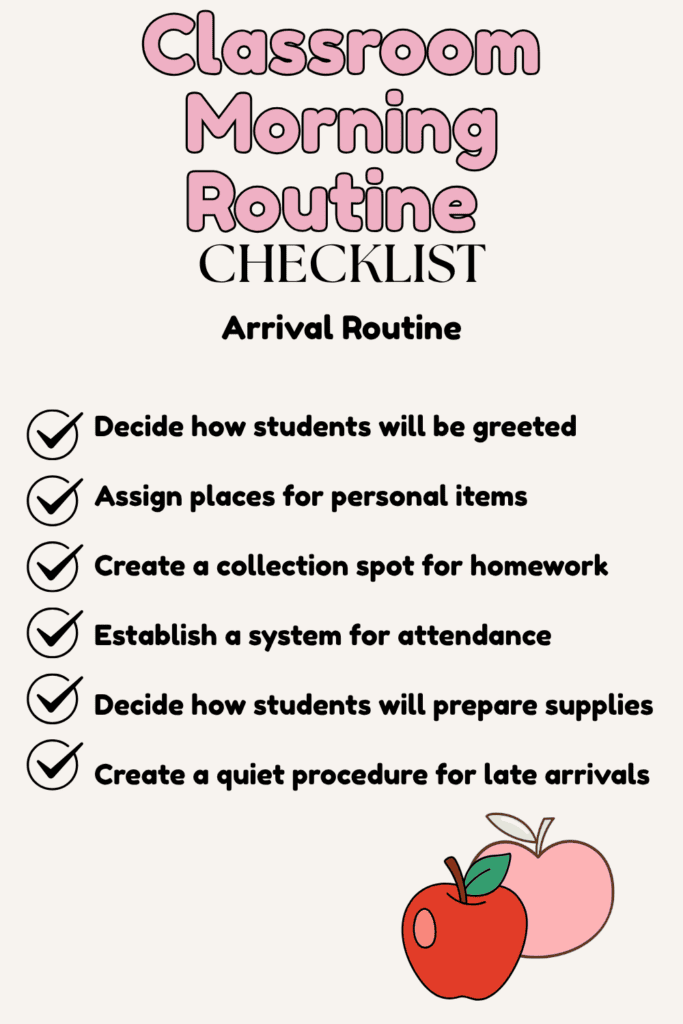
Arrival Routine
☐ Decide how students will be greeted
☐ Assign places for backpacks, coats, and lunch bags
☐ Create a collection spot for homework and folders
☐ Establish a system for attendance and lunch choices
☐ Decide how students will prepare pencils and supplies
☐ Create a quiet procedure for late arrivals
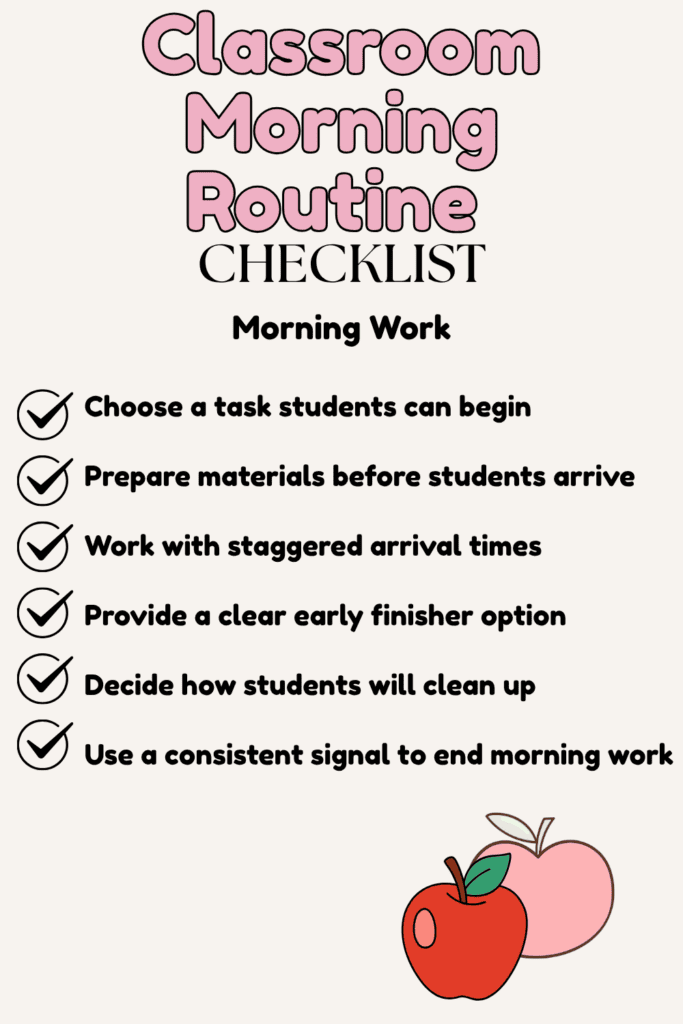
Morning Work
☐ Choose a task students can begin independently
☐ Prepare materials before students arrive
☐ Make sure the activity works with staggered arrival times
☐ Provide a clear early finisher option
☐ Decide how students will clean up materials
☐ Use a consistent signal to end morning work
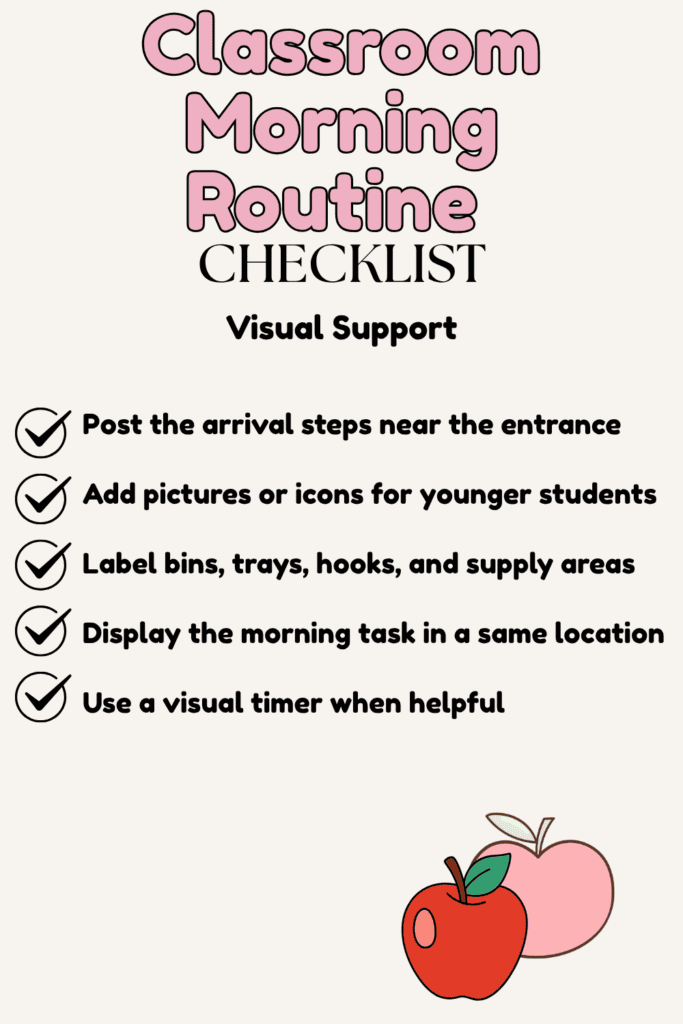
Visual Support
☐ Post the arrival steps near the entrance
☐ Add pictures or icons for younger students
☐ Label bins, trays, hooks, and supply areas
☐ Display the morning task in a consistent location
☐ Use a visual timer or daily slide when helpful
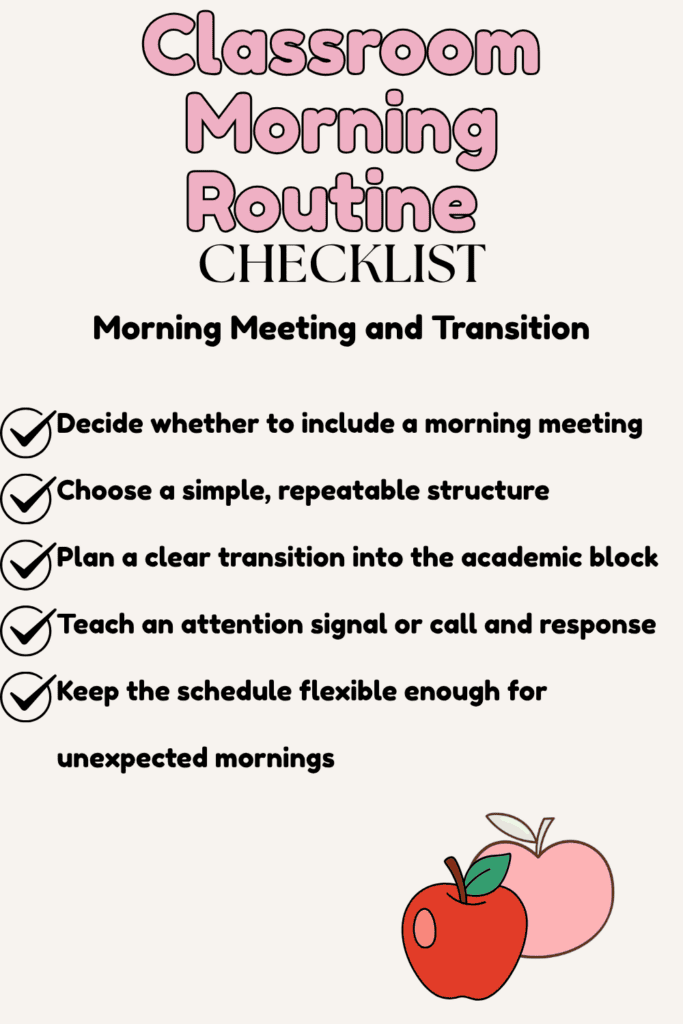
Morning Meeting and Transition
☐ Decide whether to include a morning meeting
☐ Choose a simple, repeatable meeting structure
☐ Plan a clear transition into the first academic block
☐ Teach an attention signal or call and response
☐ Keep the schedule flexible enough for unexpected mornings
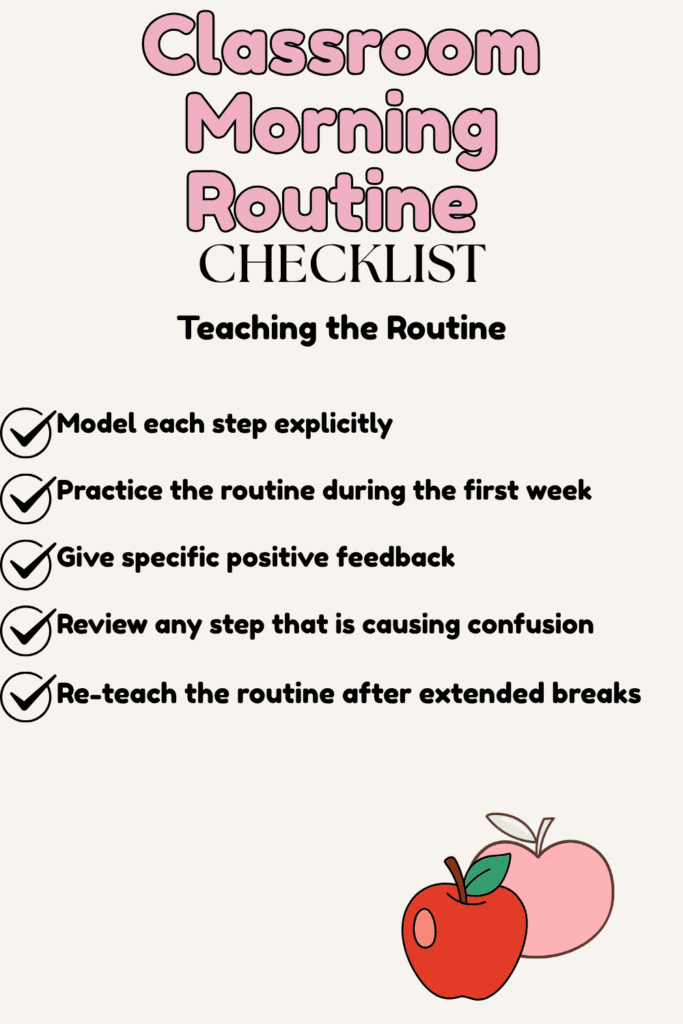
Teaching the Routine
☐ Model each step explicitly
☐ Practice the complete routine during the first week
☐ Give specific positive feedback
☐ Review any step that is causing confusion
☐ Re-teach the routine after extended breaks
Frequently Asked Questions
What Is a Classroom Morning Routine?
A classroom morning routine is the sequence students follow from the moment they enter the room until the first academic lesson begins. It may include putting away belongings, turning in homework, checking attendance, completing morning work, participating in a morning meeting, and transitioning into instruction.
How Long Should an Elementary Classroom Morning Routine Take?
Many elementary morning routines take approximately fifteen to thirty-five minutes, depending on arrival procedures, the school schedule, and whether a full morning meeting is included. The routine should be long enough for students to settle in but not so long that it delays essential instruction.
What Is a Soft Start Classroom?
A soft start provides low-pressure choices such as coloring, building, drawing, reading, or quiet conversation at the beginning of the day. It gives students a gradual transition into school before formal academic work begins.
Should Morning Work Be Academic?
Morning work can be academic, but it does not have to be. Review worksheets, reading, journal writing, puzzles, morning tubs, and creative activities can all serve a useful purpose. The activity should match the needs of the students and the goals of the morning routine.
Should Students Work Independently During the Morning Routine?
Most morning tasks should be manageable without constant adult direction because students often arrive at different times. Some activities may include partners or small groups, but expectations for movement, sharing, and noise should be taught clearly.
What Should Students Do When They Finish Morning Work Early?
Students should have one or two approved next steps, such as independent reading, a puzzle, journal writing, or another quiet early finisher activity. The choices should be visible so students do not need to interrupt the teacher to ask what to do.
Should Every Classroom Have a Morning Meeting?
No. Morning meetings can support classroom community, communication, and transitions, but they are not essential for every classroom. Some classes use a shorter daily check-in, while others hold a longer meeting only on selected days.
What Are Good Morning Work Ideas for Kindergarten?
Kindergarten students often benefit from visual, tactile, and low-reading-demand activities such as playdough, pattern blocks, simple puzzles, picture journals, fine motor tasks, coloring, or familiar books. Activities should be easy to begin and clean up with limited help.
How Can a Morning Routine Be Introduced Partway Through the Year?
Introduce it as if it were the first week of school. Explain why the routine is changing, model each step, practice it with the class, and provide visual reminders. Students may need several days of repetition before the new sequence begins to feel automatic.
What Should Happen When the Morning Routine Is Not Working?
Look for the specific point where the routine begins to break down. The problem may be an unclear direction, missing materials, a task that is too difficult, or a transition without a consistent signal. Adjust one part at a time rather than replacing the entire routine immediately.
Final Thoughts
A calm classroom morning routine is not about creating one perfect schedule. It is about building a simple, predictable sequence that students can learn, practice, and eventually manage with increasing independence.
Arrival tasks, morning work, visual reminders, and an optional morning meeting can all support a smooth start. However, consistency is more important than complexity. A short routine that happens in the same order every day is often more effective than an elaborate plan that is difficult to maintain.
Small adjustments can make a noticeable difference. A labeled homework tray may eliminate repeated questions. A visual arrival chart may help students unpack independently. A better early finisher option may reduce interruptions. A clear transition signal may help the class move into the first lesson without a lengthy reset.
The routine will still need flexibility. Some mornings will include late arrivals, missing folders, emotional moments, announcements, or schedule changes. A strong routine does not prevent those situations, but it gives the classroom a familiar structure to return to once the unexpected moment has passed.
Teachers planning the first weeks of school may also find it helpful to connect the morning routine with related systems such as Classroom Procedures, Classroom Expectations, Classroom Hand Signals, Morning Meeting Ideas, and Early Finisher Activities. Together, these routines can create a more predictable school day from the moment students arrive until dismissal.
Leave a Reply
You must be logged in to post a comment.